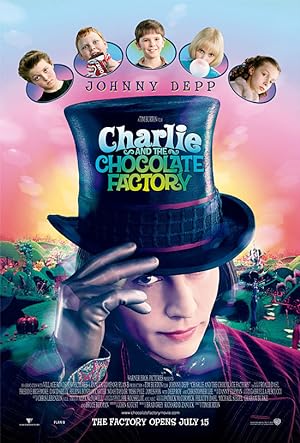
Charlie and the Chocolate Factory
When Willy Wonka decides to let five children into his chocolate factory, he decides to release five golden tickets in five separate chocolate bars, causing complete mayhem. The tickets start to be found, with the fifth going to a very special boy, called Charlie Bucket. With his Grandpa, Charlie joins the rest of the children to experience the most amazing factory ever. But not everything goes to plan within the factory.
Despite a massive budget of $150.0M, Charlie and the Chocolate Factory became a financial success, earning $475.0M worldwide—a 217% return. This commercial performance validated the ambitious narrative scope, showing that audiences embrace distinctive approach even at blockbuster scale.
Nominated for 1 Oscar. 15 wins & 52 nominations


Plot Structure
Story beats plotted across runtime


Narrative Arc
Emotional journey through the story's key moments
Story Circle
Blueprint 15-beat structure
Arcplot Score Breakdown
Weighted: Precision (70%) + Arc (15%) + Theme (15%)
Charlie and the Chocolate Factory (2005) demonstrates meticulously timed narrative design, characteristic of Tim Burton's storytelling approach. This structural analysis examines how the film's 15-point plot structure maps to proven narrative frameworks across 1 hour and 55 minutes. With an Arcplot score of 7.0, the film balances conventional beats with creative variation.
Structural Analysis
The Status Quo at 1 minutes (1% through the runtime) establishes Charlie Bucket lives in extreme poverty with his family in a dilapidated house, working to help support them. His world is small, gray, and hopeless, contrasting with the vibrant chocolate factory nearby.. Significantly, this early placement immediately immerses viewers in the story world.
The inciting incident occurs at 15 minutes when Willy Wonka announces the Golden Ticket contest: five children will win a tour of his factory and a lifetime supply of chocolate. This creates possibility for Charlie to escape his circumstances.. At 13% through the film, this Disruption is delayed, allowing extended setup of the story world. This beat shifts the emotional landscape, launching the protagonist into the central conflict.
The First Threshold at 28 minutes marks the transition into Act II, occurring at 25% of the runtime. This demonstrates the protagonist's commitment to Charlie finds the fifth Golden Ticket. Despite offers to sell it for money his family desperately needs, Charlie chooses to keep it and attend the factory tour with Grandpa Joe., moving from reaction to action.
At 58 minutes, the Midpoint arrives at 50% of the runtime—precisely centered, creating perfect narrative symmetry. Of particular interest, this crucial beat Only Charlie and Mike Teavee remain. Wonka begins to show interest in Charlie specifically. False victory: Charlie appears to be winning, but the true test and Wonka's real agenda have not yet been revealed., fundamentally raising what's at risk. The emotional intensity shifts, dividing the narrative into clear before-and-after phases.
The Collapse moment at 84 minutes (73% through) represents the emotional nadir. Here, Wonka reveals Charlie has won - but the prize is inheriting the factory under one condition: Charlie must leave his family behind forever. Charlie refuses, walking away from everything he dreamed of. His hope and victory die., shows the protagonist at their lowest point. This beat's placement in the final quarter sets up the climactic reversal.
The Second Threshold at 92 minutes initiates the final act resolution at 80% of the runtime. Charlie realizes Wonka needs help reconciling with his father. He offers to help Wonka, not for reward, but because it's right. This act of compassion becomes the key to solving both their problems., demonstrating the transformation achieved throughout the journey.
Emotional Journey
Charlie and the Chocolate Factory's emotional architecture traces a deliberate progression across 15 carefully calibrated beats.
Narrative Framework
This structural analysis employs structural analysis methodology used to understand storytelling architecture. By mapping Charlie and the Chocolate Factory against these established plot points, we can identify how Tim Burton utilizes or subverts traditional narrative conventions. The plot point approach reveals not only adherence to structural principles but also creative choices that distinguish Charlie and the Chocolate Factory within the adventure genre.
Tim Burton's Structural Approach
Among the 19 Tim Burton films analyzed on Arcplot, the average structural score is 6.9, demonstrating varied approaches to story architecture. Charlie and the Chocolate Factory represents one of the director's most structurally precise works. For comparative analysis, explore the complete Tim Burton filmography.
Comparative Analysis
Additional adventure films include The Black Stallion, The Bad Guys and Puss in Boots. For more Tim Burton analyses, see Beetlejuice, Dark Shadows and Pee-wee's Big Adventure.
Plot Points by Act
Act I
SetupStatus Quo
Charlie Bucket lives in extreme poverty with his family in a dilapidated house, working to help support them. His world is small, gray, and hopeless, contrasting with the vibrant chocolate factory nearby.
Theme
Grandpa Joe tells Charlie: "There's plenty of money out there. They print more every day. But this ticket - there're only five of them in the whole world, and that's all there's ever going to be." Theme of valuing what truly matters over material wealth.
Worldbuilding
Introduction to Charlie's family dynamics, Wonka's mysterious factory history through flashbacks, establishment of the Golden Ticket contest, and the media frenzy surrounding the first four winners and their character flaws.
Disruption
Willy Wonka announces the Golden Ticket contest: five children will win a tour of his factory and a lifetime supply of chocolate. This creates possibility for Charlie to escape his circumstances.
Resistance
Charlie resists hope as four tickets are found by spoiled, flawed children. His family encourages him but he has only one bar. He finds money in the snow, debates keeping it versus turning it in, and ultimately buys chocolate.
Act II
ConfrontationFirst Threshold
Charlie finds the fifth Golden Ticket. Despite offers to sell it for money his family desperately needs, Charlie chooses to keep it and attend the factory tour with Grandpa Joe.
Mirror World
Charlie meets Willy Wonka, who is revealed as an eccentric, socially awkward man-child with deep family issues. Wonka serves as a thematic mirror - showing what isolation and rejection of family creates.
Premise
The factory tour delivers wonder and spectacle: the chocolate room, Oompa Loompas, edible garden. One by one, the flawed children succumb to their vices (Augustus in chocolate river, Violet as blueberry, Veruca down garbage chute) while Charlie remains humble and honest.
Midpoint
Only Charlie and Mike Teavee remain. Wonka begins to show interest in Charlie specifically. False victory: Charlie appears to be winning, but the true test and Wonka's real agenda have not yet been revealed.
Opposition
Mike Teavee is eliminated in the TV room. Wonka's childhood trauma with his strict dentist father is revealed through flashbacks. Charlie faces temptation when he and Grandpa Joe sample Fizzy Lifting Drinks against rules, nearly getting killed by fan blades.
Collapse
Wonka reveals Charlie has won - but the prize is inheriting the factory under one condition: Charlie must leave his family behind forever. Charlie refuses, walking away from everything he dreamed of. His hope and victory die.
Crisis
Charlie returns to poverty, heartbroken. Wonka, alone in his factory, realizes his emptiness. Both protagonist and mirror character face their darkest isolation - Charlie without opportunity, Wonka without connection.
Act III
ResolutionSecond Threshold
Charlie realizes Wonka needs help reconciling with his father. He offers to help Wonka, not for reward, but because it's right. This act of compassion becomes the key to solving both their problems.
Synthesis
Charlie helps Wonka reunite with his estranged father. Wonka learns the value of family through Charlie's example. Understanding what he was missing, Wonka revises his offer: Charlie can have the factory AND his family.
Transformation
The Bucket family moves into the chocolate factory together. Charlie has escaped poverty while keeping his integrity and family intact. Wonka has found family. The closing image mirrors the opening but transformed: no longer gray poverty, but colorful abundance with family at the center.