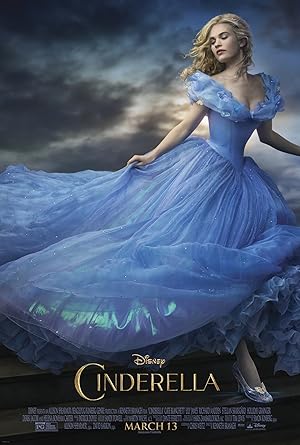
Cinderella
A girl named Ella (Cinderella) has the purest heart living in a cruel world filled with evil stepsisters and an evil stepmother out to ruin Ella's life. Ella becomes one with her pure heart when she meets the Prince and dances her way to a better life with glass shoes, and a little help from her fairy godmother, of course.
Despite a substantial budget of $95.0M, Cinderella became a box office success, earning $543.5M worldwide—a 472% return.
Nominated for 1 Oscar. 10 wins & 40 nominations


Plot Structure
Story beats plotted across runtime


Narrative Arc
Emotional journey through the story's key moments
Story Circle
Blueprint 15-beat structure
Arcplot Score Breakdown
Weighted: Precision (70%) + Arc (15%) + Theme (15%)
Cinderella (2015) exhibits strategically placed dramatic framework, characteristic of Kenneth Branagh's storytelling approach. This structural analysis examines how the film's 15-point plot structure maps to proven narrative frameworks across 1 hour and 45 minutes. With an Arcplot score of 6.9, the film balances conventional beats with creative variation.
Characters
Cast & narrative archetypes

Ella (Cinderella)
Prince Kit
Lady Tremaine
Fairy Godmother
The Grand Duke
The Captain
The King
Main Cast & Characters
Ella (Cinderella)
Played by Lily James
A kind-hearted young woman who maintains her courage and kindness despite being mistreated by her stepfamily.
Prince Kit
Played by Richard Madden
The kingdom's prince who seeks genuine connection and falls in love with Ella before knowing her identity.
Lady Tremaine
Played by Cate Blanchett
Ella's cruel stepmother who is consumed by bitterness and envy, determined to secure her daughters' futures at any cost.
Fairy Godmother
Played by Helena Bonham Carter
A magical benefactor who appears to help Ella attend the royal ball and follow her heart.
The Grand Duke
Played by Stellan Skarsgård
The King's loyal advisor who is tasked with finding the mysterious maiden from the ball.
The Captain
Played by Nonso Anozie
The Prince's best friend and loyal guard captain who supports his choices.
The King
Played by Derek Jacobi
Kit's dying father who wants his son to marry for love rather than political advantage.
Structural Analysis
The Status Quo at 1 minutes (1% through the runtime) establishes Young Ella lives happily with loving parents in their country estate, embodying kindness and courage.. Notably, this early placement immediately immerses viewers in the story world.
The inciting incident occurs at 12 minutes when Ella's father dies on a business trip, leaving her completely at the mercy of her cruel stepmother.. At 11% through the film, this Disruption aligns precisely with traditional story structure. This beat shifts the emotional landscape, launching the protagonist into the central conflict.
The First Threshold at 25 minutes marks the transition into Act II, occurring at 24% of the runtime. This shows the protagonist's commitment to Ella rides into the forest and meets Kit (the Prince disguised as an apprentice), choosing to remain hopeful and engage with life., moving from reaction to action.
At 53 minutes, the Midpoint arrives at 51% of the runtime—precisely centered, creating perfect narrative symmetry. The analysis reveals that this crucial beat Ella and Kit dance at the ball, declaring their love. False victory: they seem destined to be together, but midnight approaches., fundamentally raising what's at risk. The emotional intensity shifts, dividing the narrative into clear before-and-after phases.
The Collapse moment at 78 minutes (75% through) represents the emotional nadir. Here, Ella is imprisoned in the attic, isolated and unable to prove her identity as the glass slipper arrives at the house., illustrates the protagonist at their lowest point. This beat's placement in the final quarter sets up the climactic reversal.
The Second Threshold at 85 minutes initiates the final act resolution at 81% of the runtime. Ella's animal friends help her escape the attic. She confronts her stepmother, choosing forgiveness: "I forgive you."., demonstrating the transformation achieved throughout the journey.
Emotional Journey
Cinderella's emotional architecture traces a deliberate progression across 15 carefully calibrated beats.
Narrative Framework
This structural analysis employs systematic plot point analysis that identifies crucial turning points. By mapping Cinderella against these established plot points, we can identify how Kenneth Branagh utilizes or subverts traditional narrative conventions. The plot point approach reveals not only adherence to structural principles but also creative choices that distinguish Cinderella within the adventure genre.
Kenneth Branagh's Structural Approach
Among the 11 Kenneth Branagh films analyzed on Arcplot, the average structural score is 7.0, reflecting strong command of classical structure. Cinderella takes a more unconventional approach compared to the director's typical style. For comparative analysis, explore the complete Kenneth Branagh filmography.
Comparative Analysis
Additional adventure films include The Black Stallion, The Bad Guys and Puss in Boots. For more Kenneth Branagh analyses, see Much Ado About Nothing, Mary Shelley's Frankenstein and Thor.
Plot Points by Act
Act I
SetupStatus Quo
Young Ella lives happily with loving parents in their country estate, embodying kindness and courage.
Theme
Ella's mother tells her: "Have courage and be kind" - the film's central thematic statement.
Worldbuilding
Establishment of Ella's idyllic childhood, her mother's death, father's remarriage to Lady Tremaine, and introduction of stepsisters.
Disruption
Ella's father dies on a business trip, leaving her completely at the mercy of her cruel stepmother.
Resistance
Ella becomes a servant in her own home, enduring abuse while maintaining kindness. She debates whether to stay or flee.
Act II
ConfrontationFirst Threshold
Ella rides into the forest and meets Kit (the Prince disguised as an apprentice), choosing to remain hopeful and engage with life.
Mirror World
Kit reveals himself as the Prince and becomes enchanted with Ella. The King announces a royal ball for all maidens.
Premise
Preparation for the ball: Ella's hope grows, her stepmother sabotages her dress, the Fairy Godmother appears and transforms Ella for the ball.
Midpoint
Ella and Kit dance at the ball, declaring their love. False victory: they seem destined to be together, but midnight approaches.
Opposition
Ella flees at midnight. The Grand Duke searches for the mystery maiden. Lady Tremaine discovers Ella's identity and locks her in the attic.
Collapse
Ella is imprisoned in the attic, isolated and unable to prove her identity as the glass slipper arrives at the house.
Crisis
Ella sings in despair. The mice and friends hear her. She must choose between freedom and maintaining her courage and kindness.
Act III
ResolutionSecond Threshold
Ella's animal friends help her escape the attic. She confronts her stepmother, choosing forgiveness: "I forgive you."
Synthesis
Ella tries on the glass slipper, reveals her identity, reunites with Kit, and they marry. Her kindness transforms the kingdom.
Transformation
Ella and Kit ride away in a carriage as equals. She has maintained her mother's wisdom while finding love and agency. "They lived happily ever after."