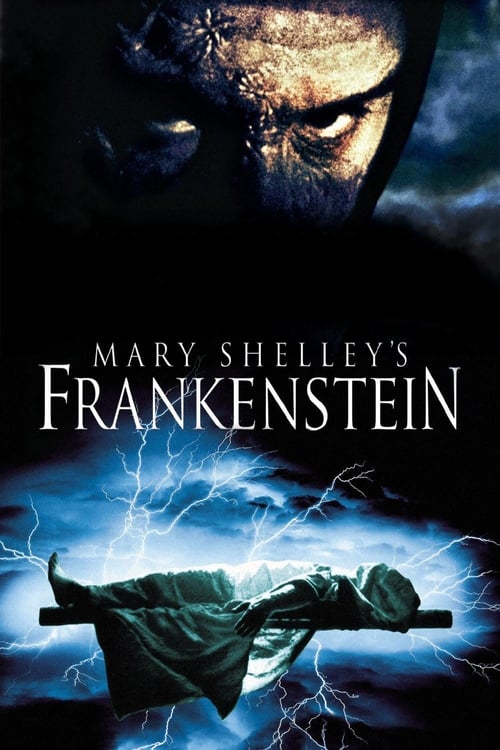
Mary Shelley's Frankenstein
Victor Frankenstein is a promising young doctor who, devastated by the death of his mother during childbirth, becomes obsessed with bringing the dead back to life. His experiments lead to the creation of a monster, which Frankenstein has put together with the remains of corpses. It's not long before Frankenstein regrets his actions.
Despite a moderate budget of $45.0M, Mary Shelley's Frankenstein became a solid performer, earning $112.0M worldwide—a 149% return.
Nominated for 1 Oscar. 20 nominations


Plot Structure
Story beats plotted across runtime


Narrative Arc
Emotional journey through the story's key moments
Story Circle
Blueprint 15-beat structure
Arcplot Score Breakdown
Weighted: Precision (70%) + Arc (15%) + Theme (15%)
Mary Shelley's Frankenstein (1994) showcases deliberately positioned narrative design, characteristic of Kenneth Branagh's storytelling approach. This structural analysis examines how the film's 15-point plot structure maps to proven narrative frameworks across 2 hours and 3 minutes. With an Arcplot score of 7.3, the film balances conventional beats with creative variation.
Characters
Cast & narrative archetypes

Victor Frankenstein
The Creature
Elizabeth Lavenza
Henry Clerval
Robert Walton
Professor Waldman
Main Cast & Characters
Victor Frankenstein
Played by Kenneth Branagh
Brilliant scientist obsessed with conquering death, whose hubris leads to tragic consequences when he creates and abandons a sentient creature.
The Creature
Played by Robert De Niro
Victor's creation, an intelligent being rejected by his creator and society, seeking love and acceptance but driven to vengeance by isolation and betrayal.
Elizabeth Lavenza
Played by Helena Bonham Carter
Victor's beloved adoptive sister and fiancée, a compassionate and devoted woman who becomes a tragic victim of his obsession.
Henry Clerval
Played by Tom Hulce
Victor's loyal childhood friend and companion, a romantic poet who provides moral support but cannot save Victor from himself.
Robert Walton
Played by Aidan Quinn
Arctic explorer who rescues Victor and hears his tragic tale, serving as frame narrator and moral witness to the consequences of ambition.
Professor Waldman
Played by John Cleese
Victor's mentor at university who encourages his scientific pursuits and demonstrates ethical experimentation before his murder.
Structural Analysis
The Status Quo at 1 minutes (1% through the runtime) establishes Captain Walton writes to his sister from his Arctic expedition ship, framing the story. We see Victor Frankenstein discovered on the ice, near death, establishing the narrative device.. Of particular interest, this early placement immediately immerses viewers in the story world.
The inciting incident occurs at 15 minutes when Victor's mother dies from scarlet fever despite the doctor's efforts. This traumatic loss ignites Victor's obsessive quest to conquer death through science, disrupting his normal path.. At 12% through the film, this Disruption aligns precisely with traditional story structure. This beat shifts the emotional landscape, launching the protagonist into the central conflict.
The First Threshold at 31 minutes marks the transition into Act II, occurring at 25% of the runtime. This shows the protagonist's commitment to After Waldman is murdered, Victor actively chooses to steal his mentor's journal and body parts to begin his experiment in reanimation. He commits fully to creating life, crossing the point of no return., moving from reaction to action.
At 62 minutes, the Midpoint arrives at 50% of the runtime—precisely centered, creating perfect narrative symmetry. Significantly, this crucial beat The Creature confronts Victor and tells his story, demanding Victor create a female companion for him. Victor initially refuses, but the Creature threatens: "I will be with you on your wedding night." The stakes are raised; false hope that reasoning will work., fundamentally raising what's at risk. The emotional intensity shifts, dividing the narrative into clear before-and-after phases.
The Collapse moment at 92 minutes (75% through) represents the emotional nadir. Here, On Victor's wedding night, the Creature murders Elizabeth, ripping out her heart. Victor cradles her dead body. All is lost - the woman he loved is dead because of his creation. Death, the thing he sought to defeat, has claimed everything., reveals the protagonist at their lowest point. This beat's placement in the final quarter sets up the climactic reversal.
The Second Threshold at 98 minutes initiates the final act resolution at 80% of the runtime. Elizabeth, reanimated but horrified by what she's become, chooses death over this unnatural existence, immolating herself. Victor realizes the true cost of playing God and vows to destroy his creation, pursuing the Creature to the Arctic., demonstrating the transformation achieved throughout the journey.
Emotional Journey
Mary Shelley's Frankenstein's emotional architecture traces a deliberate progression across 15 carefully calibrated beats.
Narrative Framework
This structural analysis employs structural analysis methodology used to understand storytelling architecture. By mapping Mary Shelley's Frankenstein against these established plot points, we can identify how Kenneth Branagh utilizes or subverts traditional narrative conventions. The plot point approach reveals not only adherence to structural principles but also creative choices that distinguish Mary Shelley's Frankenstein within the drama genre.
Kenneth Branagh's Structural Approach
Among the 11 Kenneth Branagh films analyzed on Arcplot, the average structural score is 7.0, reflecting strong command of classical structure. Mary Shelley's Frankenstein represents one of the director's most structurally precise works. For comparative analysis, explore the complete Kenneth Branagh filmography.
Comparative Analysis
Additional drama films include After Thomas, South Pacific and Dirty Dancing: Havana Nights. For more Kenneth Branagh analyses, see Much Ado About Nothing, Thor and Henry V.
Plot Points by Act
Act I
SetupStatus Quo
Captain Walton writes to his sister from his Arctic expedition ship, framing the story. We see Victor Frankenstein discovered on the ice, near death, establishing the narrative device.
Theme
Victor's mother Caroline tells young Victor: "You must promise me you will never stop loving each other. You must be a family." Theme of love, loss, and the dangerous pursuit of conquering death is introduced.
Worldbuilding
Flashback to Victor's childhood in Geneva: his loving family, adoption of Elizabeth, his mother's death from scarlet fever, his promise to Elizabeth, and his obsession with defeating death. Establishes Victor's world and what drives him.
Disruption
Victor's mother dies from scarlet fever despite the doctor's efforts. This traumatic loss ignites Victor's obsessive quest to conquer death through science, disrupting his normal path.
Resistance
Victor attends Ingolstadt University where Professor Waldman becomes his mentor, teaching him anatomy and the secrets of life. Victor debates whether to pursue this dangerous knowledge, while his father wants him to return home.
Act II
ConfrontationFirst Threshold
After Waldman is murdered, Victor actively chooses to steal his mentor's journal and body parts to begin his experiment in reanimation. He commits fully to creating life, crossing the point of no return.
Mirror World
The Creature is born and immediately rejected by Victor, who flees in horror. The Creature represents the dark mirror of Victor's ambition - a being seeking love and family, the very things Victor took for granted.
Premise
The Creature learns about the world, observes the De Lacey family, educates himself, and seeks connection. Meanwhile, Victor returns home and tries to resume normal life with Elizabeth, denying responsibility for his creation.
Midpoint
The Creature confronts Victor and tells his story, demanding Victor create a female companion for him. Victor initially refuses, but the Creature threatens: "I will be with you on your wedding night." The stakes are raised; false hope that reasoning will work.
Opposition
Victor agrees and begins creating a bride for the Creature. The Creature murders William and frames Justine. Victor destroys the female creature before completion. The Creature's revenge escalates, killing Henry Clerval. Victor's world collapses around him.
Collapse
On Victor's wedding night, the Creature murders Elizabeth, ripping out her heart. Victor cradles her dead body. All is lost - the woman he loved is dead because of his creation. Death, the thing he sought to defeat, has claimed everything.
Crisis
Victor, in deepest despair and madness, makes the horrific decision to reanimate Elizabeth using the same technique that created the Creature. His father dies of grief. Victor has become the monster.
Act III
ResolutionSecond Threshold
Elizabeth, reanimated but horrified by what she's become, chooses death over this unnatural existence, immolating herself. Victor realizes the true cost of playing God and vows to destroy his creation, pursuing the Creature to the Arctic.
Synthesis
Victor pursues the Creature across the frozen wasteland, finally ending up on Walton's ship. He tells his story as a warning. Victor dies, and the Creature appears, mourning his creator, revealing their tragic bond.
Transformation
The Creature, grieving over Victor's body, sets himself on fire on Victor's funeral pyre and disappears into the Arctic darkness. The cycle of revenge and creation ends in mutual destruction. Walton witnesses the cautionary tale complete.