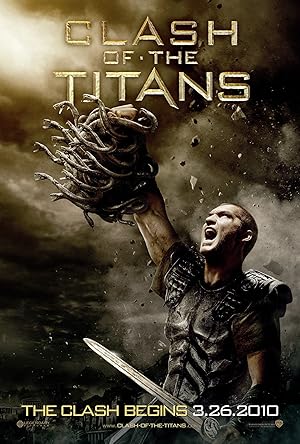
Clash of the Titans
Born of god but raised by humans, Perseus, the demigod son of mighty Zeus, the king of the gods, vows to take his revenge on Hades, the terrifying ruler of the Underworld, when he sees his mortal family perish. As the race of men summons up the courage to rebel against the gods of Olympus, the doomed city of Argos becomes a battlefield, as Hades threatens to unleash the legendary sea-monster, Kraken, unless the fair Princess Andromeda willingly offers herself as a sacrifice. Now, having nothing more to lose, Perseus embarks on a daring, peril-laden quest to stop the forces of evil before Hades plunges the world into chaos and darkness. But, to survive the relentless onslaught of demons and terrible adversaries, Perseus must first embrace his destiny. Will Perseus defy the gods, and save humankind in the clash of the Titans?
Despite a substantial budget of $125.0M, Clash of the Titans became a box office success, earning $493.2M worldwide—a 295% return.
4 wins & 14 nominations


Plot Structure
Story beats plotted across runtime


Narrative Arc
Emotional journey through the story's key moments
Story Circle
Blueprint 15-beat structure
Arcplot Score Breakdown
Weighted: Precision (70%) + Arc (15%) + Theme (15%)
Clash of the Titans (2010) demonstrates strategically placed story structure, characteristic of Louis Leterrier's storytelling approach. This structural analysis examines how the film's 15-point plot structure maps to proven narrative frameworks across 1 hour and 46 minutes. With an Arcplot score of 7.3, the film balances conventional beats with creative variation.
Characters
Cast & narrative archetypes

Perseus
Zeus
Hades
Io
Andromeda
Draco
Calibos
Main Cast & Characters
Perseus
Played by Sam Worthington
A demigod fisherman who reluctantly becomes a hero to save Argos and defeat Hades
Zeus
Played by Liam Neeson
King of the gods who fathered Perseus and struggles between divine politics and fatherly concern
Hades
Played by Ralph Fiennes
God of the underworld who schemes to overthrow Zeus by unleashing the Kraken on humanity
Io
Played by Gemma Arterton
An ageless woman cursed by the gods who guides and mentors Perseus on his journey
Andromeda
Played by Alexa Davalos
Princess of Argos whose sacrifice is demanded to appease the gods and save the city
Draco
Played by Mads Mikkelsen
Veteran soldier of Argos who leads the guard accompanying Perseus on his quest
Calibos
Played by Jason Flemyng
Acrisius transformed into a monstrous creature, driven by revenge against Perseus
Structural Analysis
The Status Quo at 1 minutes (1% through the runtime) establishes Perseus lives as a fisherman with his adoptive family, unaware of his divine parentage. Simple, peaceful life on the water establishes his "mortal" identity before the disruption.. Of particular interest, this early placement immediately immerses viewers in the story world.
The inciting incident occurs at 12 minutes when Hades kills Perseus's entire adoptive family (Spyros, Marmara, and baby) in a single destructive act. Perseus survives, losing everything he loves and his peaceful mortal existence.. At 12% through the film, this Disruption aligns precisely with traditional story structure. This beat shifts the emotional landscape, launching the protagonist into the central conflict.
The First Threshold at 26 minutes marks the transition into Act II, occurring at 24% of the runtime. This shows the protagonist's commitment to Perseus actively chooses to join the quest to find a way to defeat the Kraken, stating "I will do this as a man" - rejecting Zeus's offered gifts but committing to the journey. He chooses action over safety., moving from reaction to action.
At 54 minutes, the Midpoint arrives at 50% of the runtime—precisely centered, creating perfect narrative symmetry. Notably, this crucial beat The Stygian Witches reveal the terrible price: to kill the Kraken, someone must face Medusa in her lair - a near-certain death sentence. The "fun" quest becomes a suicide mission. Stakes are raised when they learn the solution is as deadly as the problem., fundamentally raising what's at risk. The emotional intensity shifts, dividing the narrative into clear before-and-after phases.
The Collapse moment at 78 minutes (74% through) represents the emotional nadir. Here, Inside Medusa's lair, nearly the entire team is slaughtered and turned to stone. Draco and other soldiers die heroically. Perseus barely survives the encounter with Medusa. Multiple deaths create the "whiff of death" - literal loss of companions., indicates the protagonist at their lowest point. This beat's placement in the final quarter sets up the climactic reversal.
The Second Threshold at 84 minutes initiates the final act resolution at 80% of the runtime. Perseus finally accepts his divine heritage and prays to Zeus for help. He accepts the sword and Pegasus. Synthesis of mortal determination and divine power - he will fight as both man AND god. This acceptance unlocks his true potential., demonstrating the transformation achieved throughout the journey.
Emotional Journey
Clash of the Titans's emotional architecture traces a deliberate progression across 15 carefully calibrated beats.
Narrative Framework
This structural analysis employs a 15-point narrative structure framework that maps key story moments. By mapping Clash of the Titans against these established plot points, we can identify how Louis Leterrier utilizes or subverts traditional narrative conventions. The plot point approach reveals not only adherence to structural principles but also creative choices that distinguish Clash of the Titans within the action genre.
Louis Leterrier's Structural Approach
Among the 7 Louis Leterrier films analyzed on Arcplot, the average structural score is 7.1, reflecting strong command of classical structure. Clash of the Titans represents one of the director's most structurally precise works. For comparative analysis, explore the complete Louis Leterrier filmography.
Comparative Analysis
Additional action films include The Bad Guys, Puss in Boots and Venom: The Last Dance. For more Louis Leterrier analyses, see The Incredible Hulk, Unleashed and Now You See Me.
Plot Points by Act
Act I
SetupStatus Quo
Perseus lives as a fisherman with his adoptive family, unaware of his divine parentage. Simple, peaceful life on the water establishes his "mortal" identity before the disruption.
Theme
Spyros (adoptive father) tells Perseus: "Someday, somebody's gonna have to take a stand. Someday, somebody's gonna have to say enough." Foreshadows Perseus's role as the one who must stand against the gods.
Worldbuilding
Introduction to the world of gods and mortals. Zeus creates humanity, humans grow defiant, soldiers destroy statue of Zeus in Argos. Hades appears and massacres soldiers. Perseus's family is killed when Hades destroys their boat.
Disruption
Hades kills Perseus's entire adoptive family (Spyros, Marmara, and baby) in a single destructive act. Perseus survives, losing everything he loves and his peaceful mortal existence.
Resistance
Perseus is brought to Argos as a prisoner. Learns he is a demigod, son of Zeus. Refuses his divine heritage. Witnesses Hades' ultimatum: Argos must sacrifice Princess Andromeda or face the Kraken. Io appears and explains his destiny. Perseus debates whether to accept help from the gods.
Act II
ConfrontationFirst Threshold
Perseus actively chooses to join the quest to find a way to defeat the Kraken, stating "I will do this as a man" - rejecting Zeus's offered gifts but committing to the journey. He chooses action over safety.
Mirror World
Io reveals she has been watching over Perseus his entire life. She joins the quest as his guide and begins teaching him about his true nature. Their relationship represents the thematic tension between mortal and divine.
Premise
The adventure begins - Perseus and soldiers journey to find the Stygian Witches. Battle with giant scorpions. Djinn arrive and save them. Zeus gives Perseus a sword (which he initially rejects). Learn they must face Medusa to get weapon to kill the Kraken.
Midpoint
The Stygian Witches reveal the terrible price: to kill the Kraken, someone must face Medusa in her lair - a near-certain death sentence. The "fun" quest becomes a suicide mission. Stakes are raised when they learn the solution is as deadly as the problem.
Opposition
Journey to Medusa's temple becomes increasingly dangerous. Calibos (cursed Acrisius) attacks repeatedly, corrupted by Hades. Team members die. Perseus struggles with accepting his divine powers. Io cannot enter the temple, revealing limitations. Pressure intensifies.
Collapse
Inside Medusa's lair, nearly the entire team is slaughtered and turned to stone. Draco and other soldiers die heroically. Perseus barely survives the encounter with Medusa. Multiple deaths create the "whiff of death" - literal loss of companions.
Crisis
Perseus escapes with Medusa's head but is devastated by the losses. Io is killed by Calibos. Perseus is alone, grieving. He processes the cost of his quest and the sacrifice of those who believed in him.
Act III
ResolutionSecond Threshold
Perseus finally accepts his divine heritage and prays to Zeus for help. He accepts the sword and Pegasus. Synthesis of mortal determination and divine power - he will fight as both man AND god. This acceptance unlocks his true potential.
Synthesis
Perseus races on Pegasus to Argos. The Kraken is released and begins destroying the city. Andromeda is chained as sacrifice. Perseus battles Hades' forces, uses Medusa's head to petrify the Kraken. Confronts Hades. Zeus intervenes, banishing Hades. Perseus saves Andromeda and the city.
Transformation
Perseus rejects Zeus's offer to join the gods on Olympus, choosing to remain with humanity. However, unlike the opening, he now accepts who he is - both mortal and divine. He has transformed from denying his heritage to embracing it on his own terms. Io is resurrected as his reward.