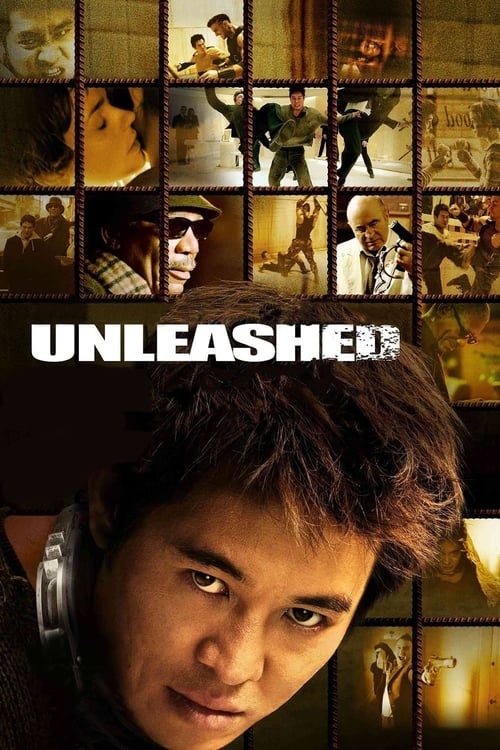
Unleashed
Raised as a slave, Danny is used to fighting for his survival. In fact, his "master," Bart, thinks of him as a pet and goes as far as leashing him with a collar so they can make money in fight clubs, where Danny is the main contender. When Bart's crew is in a car accident, Danny escapes and meets a blind, kindhearted piano tuner who takes him in and uses music to free the fighter's long-buried heart.
Working with a mid-range budget of $45.0M, the film achieved a respectable showing with $50.9M in global revenue (+13% profit margin).


Plot Structure
Story beats plotted across runtime


Narrative Arc
Emotional journey through the story's key moments
Story Circle
Blueprint 15-beat structure
Arcplot Score Breakdown
Weighted: Precision (70%) + Arc (15%) + Theme (15%)
Unleashed (2005) exhibits deliberately positioned dramatic framework, characteristic of Louis Leterrier's storytelling approach. This structural analysis examines how the film's 15-point plot structure maps to proven narrative frameworks across 1 hour and 43 minutes. With an Arcplot score of 7.3, the film balances conventional beats with creative variation.
Characters
Cast & narrative archetypes

Danny
Bart
Sam
Victoria
Main Cast & Characters
Danny
Played by Jet Li
A man raised like a dog and used as a weapon by a loan shark, who discovers humanity and freedom through music and kindness.
Bart
Played by Bob Hoskins
A ruthless crime boss who keeps Danny as his enforcer, using a collar to control him like an attack dog.
Sam
Played by Morgan Freeman
A kind-hearted blind pianist who takes Danny in and helps him discover his humanity through music and compassion.
Victoria
Played by Kerry Condon
Sam's stepdaughter who helps care for Danny and supports his journey toward healing and independence.
Structural Analysis
The Status Quo at 1 minutes (1% through the runtime) establishes Danny lives in a cage beneath Bart's apartment, trained like a dog to fight when his collar is removed. He is property, not a person.. Significantly, this early placement immediately immerses viewers in the story world.
The inciting incident occurs at 12 minutes when A car accident during a debt collection severely injures Bart and his men. Danny escapes the wreckage and wanders free for the first time, confused and lost in an unfamiliar world.. At 12% through the film, this Disruption aligns precisely with traditional story structure. This beat shifts the emotional landscape, launching the protagonist into the central conflict.
The First Threshold at 26 minutes marks the transition into Act II, occurring at 25% of the runtime. This shows the protagonist's commitment to Danny chooses to stay with Sam and Victoria rather than return to Bart. He accepts their offer of the spare room and begins learning to be human - eating at a table, sleeping in a bed, experiencing kindness., moving from reaction to action.
At 52 minutes, the Midpoint arrives at 50% of the runtime—precisely centered, creating perfect narrative symmetry. Structural examination shows that this crucial beat Bart recovers and tracks Danny down. Danny is forced to fight again when thugs attack Sam and Victoria. His violent conditioning resurfaces, revealing he cannot fully escape his past. False defeat: freedom seems impossible., fundamentally raising what's at risk. The emotional intensity shifts, dividing the narrative into clear before-and-after phases.
The Collapse moment at 77 minutes (75% through) represents the emotional nadir. Here, Bart threatens to kill Sam and Victoria if Danny doesn't comply. Danny is forced to participate in a final brutal death match. His spirit breaks - to save those he loves, he must become the animal again. Hope dies., indicates the protagonist at their lowest point. This beat's placement in the final quarter sets up the climactic reversal.
The Second Threshold at 82 minutes initiates the final act resolution at 80% of the runtime. Danny realizes he can choose to fight FOR something (protecting Sam and Victoria) rather than being a mindless weapon. He synthesizes his combat skills with his newfound humanity and love. He breaks free of Bart's control., demonstrating the transformation achieved throughout the journey.
Emotional Journey
Unleashed's emotional architecture traces a deliberate progression across 15 carefully calibrated beats.
Narrative Framework
This structural analysis employs structural analysis methodology used to understand storytelling architecture. By mapping Unleashed against these established plot points, we can identify how Louis Leterrier utilizes or subverts traditional narrative conventions. The plot point approach reveals not only adherence to structural principles but also creative choices that distinguish Unleashed within the action genre.
Louis Leterrier's Structural Approach
Among the 7 Louis Leterrier films analyzed on Arcplot, the average structural score is 7.1, reflecting strong command of classical structure. Unleashed represents one of the director's most structurally precise works. For comparative analysis, explore the complete Louis Leterrier filmography.
Comparative Analysis
Additional action films include The Bad Guys, Puss in Boots and Venom: The Last Dance. For more Louis Leterrier analyses, see The Incredible Hulk, Now You See Me and Clash of the Titans.
Plot Points by Act
Act I
SetupStatus Quo
Danny lives in a cage beneath Bart's apartment, trained like a dog to fight when his collar is removed. He is property, not a person.
Theme
Sam the blind piano tuner tells Victoria: "Music is the language of emotions. It can bring out what's inside." This establishes the thematic question: can Danny's humanity be awakened?
Worldbuilding
Danny's brutal existence as Bart's enforcer is established. He collects debts through violence, lives in captivity, and has no identity beyond his conditioning as a weapon. Bart treats him as a vicious dog.
Disruption
A car accident during a debt collection severely injures Bart and his men. Danny escapes the wreckage and wanders free for the first time, confused and lost in an unfamiliar world.
Resistance
Danny encounters Sam and Victoria, who take him in when he collapses. They offer kindness he's never known. Danny is torn between this new world and his conditioning to return to Bart. Sam becomes his guide to humanity.
Act II
ConfrontationFirst Threshold
Danny chooses to stay with Sam and Victoria rather than return to Bart. He accepts their offer of the spare room and begins learning to be human - eating at a table, sleeping in a bed, experiencing kindness.
Mirror World
Victoria takes Danny shopping for clothes and treats him with genuine care. She represents the possibility of connection and normalcy. Their growing bond shows Danny what a life beyond violence could be.
Premise
Danny experiences human life: sharing meals, learning music from Sam, playing with Victoria, discovering ice cream and simple joys. He begins to shed his animal conditioning and find his humanity through their patient guidance.
Midpoint
Bart recovers and tracks Danny down. Danny is forced to fight again when thugs attack Sam and Victoria. His violent conditioning resurfaces, revealing he cannot fully escape his past. False defeat: freedom seems impossible.
Opposition
Bart recaptures Danny and forces him back into fighting, now in organized death matches. Danny is torn between his programming and his awakened humanity. Bart tightens control while Danny resists internally. Sam and Victoria search for him.
Collapse
Bart threatens to kill Sam and Victoria if Danny doesn't comply. Danny is forced to participate in a final brutal death match. His spirit breaks - to save those he loves, he must become the animal again. Hope dies.
Crisis
Danny fights in the underground arena, but his humanity struggles against his conditioning. He processes the impossible choice: be a weapon to protect his family, or die trying to be free. Dark night of inner conflict.
Act III
ResolutionSecond Threshold
Danny realizes he can choose to fight FOR something (protecting Sam and Victoria) rather than being a mindless weapon. He synthesizes his combat skills with his newfound humanity and love. He breaks free of Bart's control.
Synthesis
Danny confronts Bart and his organization with purpose and agency, not blind obedience. He fights to protect his family and secure his freedom. Final showdown combines his skills with his humanity. Bart is defeated.
Transformation
Danny sits peacefully with Sam and Victoria, playing piano together. The collar is gone forever. He smiles genuinely - no longer a caged animal but a free man with a family. Transformation complete.