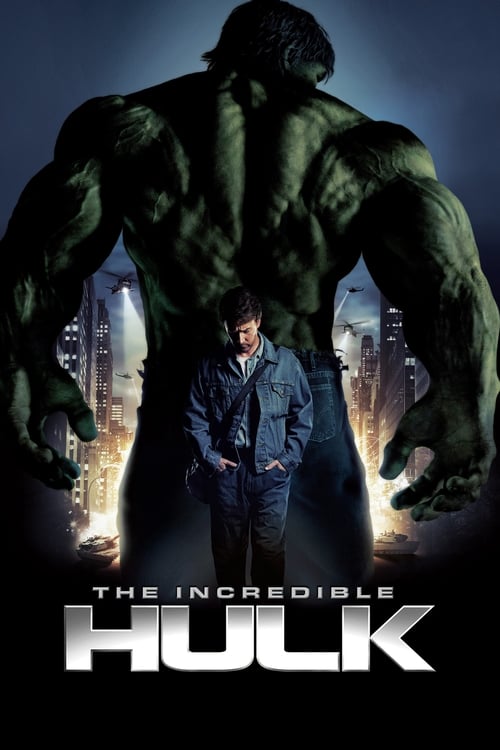
The Incredible Hulk
Scientist Bruce Banner scours the planet for an antidote to the unbridled force of rage within him: the Hulk. But when the military masterminds who dream of exploiting his powers force him back to civilization, he finds himself coming face to face with a new, deadly foe.
Working with a blockbuster budget of $150.0M, the film achieved a modest success with $264.8M in global revenue (+77% profit margin).
2 wins & 10 nominations


Plot Structure
Story beats plotted across runtime


Narrative Arc
Emotional journey through the story's key moments
Story Circle
Blueprint 15-beat structure
Arcplot Score Breakdown
Weighted: Precision (70%) + Arc (15%) + Theme (15%)
The Incredible Hulk (2008) demonstrates precise narrative architecture, characteristic of Louis Leterrier's storytelling approach. This structural analysis examines how the film's 15-point plot structure maps to proven narrative frameworks across 1 hour and 54 minutes. With an Arcplot score of 6.3, the film takes an unconventional approach to traditional narrative frameworks.
Structural Analysis
The Status Quo at 1 minutes (1% through the runtime) establishes Bruce Banner lives in hiding in the favelas of Brazil, working at a bottling factory while practicing meditation and martial arts to control his heart rate and suppress the Hulk. His isolated, fearful existence shows a man desperately trying to contain the monster within.. Significantly, this early placement immediately immerses viewers in the story world.
The inciting incident occurs at 14 minutes when A drop of Bruce's blood accidentally contaminates a bottle at the factory, leading to a poisoning in the United States. This allows General Ross to trace Bruce's location to Brazil, shattering his fragile sanctuary and forcing him to flee.. At 13% through the film, this Disruption is delayed, allowing extended setup of the story world. This beat shifts the emotional landscape, launching the protagonist into the central conflict.
The First Threshold at 29 minutes marks the transition into Act II, occurring at 25% of the runtime. This indicates the protagonist's commitment to Bruce makes the dangerous choice to return to the United States and Culver University, where it all began, to retrieve Dr. Ross's original research data. He crosses from exile back into enemy territory, actively choosing to risk capture for the chance at a cure., moving from reaction to action.
At 57 minutes, the Midpoint arrives at 50% of the runtime—precisely centered, creating perfect narrative symmetry. The analysis reveals that this crucial beat Bruce and Betty reach New York and make contact with Samuel Sterns (Mr. Blue), who reveals he's replicated Bruce's blood and believes he can attempt a cure. This false victory offers hope that Bruce might finally be free of the Hulk and able to live a normal life with Betty., fundamentally raising what's at risk. The emotional intensity shifts, dividing the narrative into clear before-and-after phases.
The Collapse moment at 86 minutes (75% through) represents the emotional nadir. Here, Bruce watches helplessly from a helicopter as the Abomination rampages through Harlem, killing civilians and destroying everything. The monster he helped create is unstoppable, Betty is in danger below, and Bruce has been "cured" - he's powerless to help. His attempt to escape his burden has made everything worse., illustrates the protagonist at their lowest point. This beat's placement in the final quarter sets up the climactic reversal.
The Second Threshold at 92 minutes initiates the final act resolution at 81% of the runtime. Bruce tells General Ross to open the helicopter door and deliberately jumps out, falling toward the street below. He chooses to embrace the Hulk rather than suppress it, trusting that the monster within can be a force for good. He transforms mid-fall and charges into battle., demonstrating the transformation achieved throughout the journey.
Emotional Journey
The Incredible Hulk's emotional architecture traces a deliberate progression across 15 carefully calibrated beats.
Narrative Framework
This structural analysis employs proven narrative structure principles that track dramatic progression. By mapping The Incredible Hulk against these established plot points, we can identify how Louis Leterrier utilizes or subverts traditional narrative conventions. The plot point approach reveals not only adherence to structural principles but also creative choices that distinguish The Incredible Hulk within the science fiction genre.
Louis Leterrier's Structural Approach
Among the 7 Louis Leterrier films analyzed on Arcplot, the average structural score is 7.1, reflecting strong command of classical structure. The Incredible Hulk takes a more unconventional approach compared to the director's typical style. For comparative analysis, explore the complete Louis Leterrier filmography.
Comparative Analysis
Additional science fiction films include The Postman, Mad Max 2 and AVP: Alien vs. Predator. For more Louis Leterrier analyses, see Unleashed, Now You See Me and Clash of the Titans.
Plot Points by Act
Act I
SetupStatus Quo
Bruce Banner lives in hiding in the favelas of Brazil, working at a bottling factory while practicing meditation and martial arts to control his heart rate and suppress the Hulk. His isolated, fearful existence shows a man desperately trying to contain the monster within.
Theme
Bruce's martial arts instructor tells him the key to control is not fighting the emotion but channeling it: "The best way to control your anger is to control your body." This establishes the film's central theme of control versus acceptance of one's true nature.
Worldbuilding
We see Bruce's careful daily routine in Brazil: his factory job, his "days without incident" counter, his secret correspondence with "Mr. Blue" searching for a cure, and his rigorous self-discipline. General Ross and his military team are established as hunting him relentlessly.
Disruption
A drop of Bruce's blood accidentally contaminates a bottle at the factory, leading to a poisoning in the United States. This allows General Ross to trace Bruce's location to Brazil, shattering his fragile sanctuary and forcing him to flee.
Resistance
Emil Blonsky and the military close in on Bruce in Brazil. Bruce is chased through the favelas, transforms into the Hulk when cornered, and escapes. He awakens in Guatemala, realizing he must return to the US to retrieve the data that could cure him, despite the extreme risk.
Act II
ConfrontationFirst Threshold
Bruce makes the dangerous choice to return to the United States and Culver University, where it all began, to retrieve Dr. Ross's original research data. He crosses from exile back into enemy territory, actively choosing to risk capture for the chance at a cure.
Mirror World
Bruce reconnects with Betty Ross, the woman he loves and left behind. She represents the emotional life and human connection he's denied himself. Their reunion embodies the film's theme: Betty accepts Bruce completely, Hulk and all, modeling the self-acceptance he must learn.
Premise
Bruce infiltrates Culver University with Betty's help and retrieves the data. The military attacks, triggering a massive Hulk transformation on campus. Betty calms the Hulk, and they escape together. Bruce and Betty become fugitives, traveling toward "Mr. Blue" while evading Ross.
Midpoint
Bruce and Betty reach New York and make contact with Samuel Sterns (Mr. Blue), who reveals he's replicated Bruce's blood and believes he can attempt a cure. This false victory offers hope that Bruce might finally be free of the Hulk and able to live a normal life with Betty.
Opposition
Sterns's experimental treatment appears to work, suppressing the Hulk. But Blonsky, now enhanced with super-soldier serum and obsessed with power, forces Sterns to inject him with Banner's blood. Blonsky transforms into the Abomination and begins destroying Harlem. The military captures Bruce.
Collapse
Bruce watches helplessly from a helicopter as the Abomination rampages through Harlem, killing civilians and destroying everything. The monster he helped create is unstoppable, Betty is in danger below, and Bruce has been "cured" - he's powerless to help. His attempt to escape his burden has made everything worse.
Crisis
Bruce confronts the reality that running from the Hulk was never the answer. The Abomination represents what he feared becoming, but also what happens when power is pursued without conscience. He realizes the Hulk isn't just a curse - it's also the only thing that can stop this threat.
Act III
ResolutionSecond Threshold
Bruce tells General Ross to open the helicopter door and deliberately jumps out, falling toward the street below. He chooses to embrace the Hulk rather than suppress it, trusting that the monster within can be a force for good. He transforms mid-fall and charges into battle.
Synthesis
The Hulk battles the Abomination through the streets of Harlem in a brutal fight. Unlike Blonsky's rage-fueled destruction, Hulk fights to protect - shielding Betty, saving bystanders, and using his strength purposefully. He defeats the Abomination, choking him until Betty calls him off, then disappears into the night.
Transformation
In British Columbia, Bruce meditates in isolation - but now with purpose, not fear. His eyes flash green as he smiles, revealing he's learning to control the transformation rather than suppress it. He's no longer running from the Hulk but integrating it into who he is.