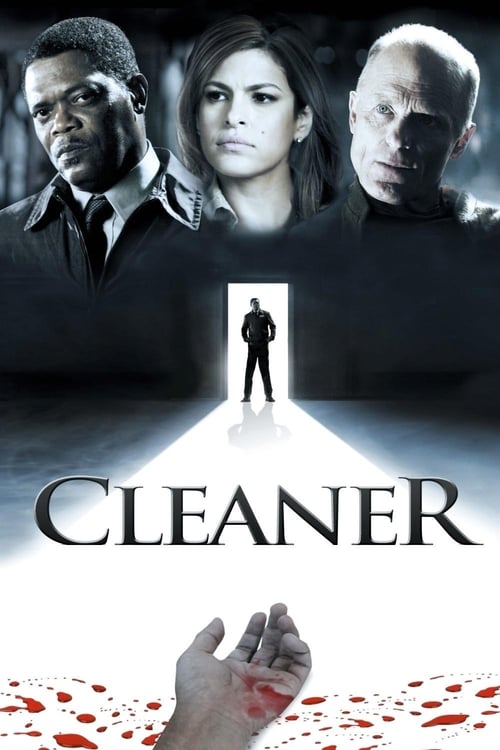
Cleaner
Single father and former cop Tom Cutler has an unusual occupation: he cleans up death scenes. But when he's called in to sterilize a wealthy suburban residence after a brutal shooting, Cutler is shocked to learn he may have unknowingly erased crucial evidence, entangling himself in a dirty criminal cover-up.
The film financial setback against its mid-range budget of $25.0M, earning $5.8M globally (-77% loss). While initial box office returns were modest, the film has gained appreciation for its fresh perspective within the crime genre.


Plot Structure
Story beats plotted across runtime


Narrative Arc
Emotional journey through the story's key moments
Story Circle
Blueprint 15-beat structure
Arcplot Score Breakdown
Weighted: Precision (70%) + Arc (15%) + Theme (15%)
Cleaner (2007) demonstrates meticulously timed narrative design, characteristic of Renny Harlin's storytelling approach. This structural analysis examines how the film's 15-point plot structure maps to proven narrative frameworks across 1 hour and 28 minutes. With an Arcplot score of 7.2, the film balances conventional beats with creative variation.
Characters
Cast & narrative archetypes

Tom Cutler
Ann Norcut
Detective Eddie Lorenzo
Rose Cutler
William Banks
Agent Jim Vargas
Main Cast & Characters
Tom Cutler
Played by Samuel L. Jackson
Former cop turned crime scene cleaner who becomes entangled in a murder conspiracy when he cleans a scene that may not have been a suicide.
Ann Norcut
Played by Eva Mendes
Tom's devoted wife and partner who supports him through his crisis while raising their daughter.
Detective Eddie Lorenzo
Played by Ed Harris
Tom's former police partner and best friend who investigates the suspicious death that Tom cleaned.
Rose Cutler
Played by Keke Palmer
Tom and Ann's young daughter who represents Tom's motivation to maintain his integrity and family life.
William Banks
Played by Luis Guzmán
Mysterious client who hires Tom to clean the crime scene, later revealed to be connected to the conspiracy.
Agent Jim Vargas
Played by Robert Forster
Federal agent investigating corruption who pressures Tom for information about the crime scene.
Structural Analysis
The Status Quo at 1 minutes (1% through the runtime) establishes Tom Cutler methodically cleans a bloody crime scene, demonstrating his meticulous professionalism as a former cop turned crime scene cleaner trying to build a legitimate business and reconnect with his daughter.. The analysis reveals that this early placement immediately immerses viewers in the story world.
The inciting incident occurs at 11 minutes when Tom receives a call to clean up a bloody scene at a suburban house. He arrives and performs his standard cleanup of what appears to be a murder scene, unaware this job will destroy his new life.. At 13% through the film, this Disruption is delayed, allowing extended setup of the story world. This beat shifts the emotional landscape, launching the protagonist into the central conflict.
The First Threshold at 22 minutes marks the transition into Act II, occurring at 25% of the runtime. This demonstrates the protagonist's commitment to Tom makes the active choice to investigate the mystery himself, using his old cop skills to dig into who really hired him and what happened at that house, committing himself to uncovering the conspiracy despite the danger., moving from reaction to action.
At 44 minutes, the Midpoint arrives at 50% of the runtime—precisely centered, creating perfect narrative symmetry. Significantly, this crucial beat Tom discovers the truth about the conspiracy: corrupt cops staged the crime scene to cover up their own crimes, and he was set up as the fall guy. The stakes raise dramatically as he realizes his former colleagues are involved and will kill to protect their secret., fundamentally raising what's at risk. The emotional intensity shifts, dividing the narrative into clear before-and-after phases.
The Collapse moment at 66 minutes (75% through) represents the emotional nadir. Here, Tom is cornered and discredited, his daughter is in danger, and his ally or key witness is killed. His new life is completely destroyed, and he faces the "death" of his hope for redemption and a clean start, seemingly defeated by the conspiracy., reveals the protagonist at their lowest point. This beat's placement in the final quarter sets up the climactic reversal.
The Second Threshold at 71 minutes initiates the final act resolution at 81% of the runtime. Tom synthesizes his crime scene cleaning expertise with his detective skills and moral code. He realizes how to expose the conspiracy and trap the corrupt cops using the very methods they used to frame him, gaining new resolve., demonstrating the transformation achieved throughout the journey.
Emotional Journey
Cleaner's emotional architecture traces a deliberate progression across 15 carefully calibrated beats.
Narrative Framework
This structural analysis employs systematic plot point analysis that identifies crucial turning points. By mapping Cleaner against these established plot points, we can identify how Renny Harlin utilizes or subverts traditional narrative conventions. The plot point approach reveals not only adherence to structural principles but also creative choices that distinguish Cleaner within the crime genre.
Renny Harlin's Structural Approach
Among the 16 Renny Harlin films analyzed on Arcplot, the average structural score is 7.3, reflecting strong command of classical structure. Cleaner takes a more unconventional approach compared to the director's typical style. For comparative analysis, explore the complete Renny Harlin filmography.
Comparative Analysis
Additional crime films include The Bad Guys, Rustom and The Whole Ten Yards. For more Renny Harlin analyses, see Cutthroat Island, Mindhunters and The Legend of Hercules.
Plot Points by Act
Act I
SetupStatus Quo
Tom Cutler methodically cleans a bloody crime scene, demonstrating his meticulous professionalism as a former cop turned crime scene cleaner trying to build a legitimate business and reconnect with his daughter.
Theme
Tom's assistant or colleague mentions that "you can't run from your past" or discusses how the truth always comes out, establishing the theme of confronting one's history and the impossibility of complete erasure.
Worldbuilding
Introduction to Tom's world: his crime scene cleaning business, his strained relationship with his daughter, his past as a cop, and his struggle to leave behind his former life while maintaining professional boundaries in his new work.
Disruption
Tom receives a call to clean up a bloody scene at a suburban house. He arrives and performs his standard cleanup of what appears to be a murder scene, unaware this job will destroy his new life.
Resistance
Tom discovers there's no record of the murder, the crime, or anyone hiring him. His former police colleagues become suspicious of him. He debates whether to investigate or walk away, torn between self-preservation and his need to uncover the truth.
Act II
ConfrontationFirst Threshold
Tom makes the active choice to investigate the mystery himself, using his old cop skills to dig into who really hired him and what happened at that house, committing himself to uncovering the conspiracy despite the danger.
Mirror World
Tom's deepening relationship with his daughter and interactions with the widow of the alleged victim serve as the emotional subplot, representing the normal life and trust he's fighting to preserve and the human cost of secrets.
Premise
Tom investigates the mystery, using his crime scene expertise and cop instincts to piece together clues. He uncovers layers of deception, follows leads, and discovers evidence of a larger conspiracy involving corrupt police officers.
Midpoint
Tom discovers the truth about the conspiracy: corrupt cops staged the crime scene to cover up their own crimes, and he was set up as the fall guy. The stakes raise dramatically as he realizes his former colleagues are involved and will kill to protect their secret.
Opposition
The corrupt officers close in on Tom, threatening his daughter and destroying his credibility. Evidence mounts against him as the conspiracy tightens its grip. Tom's attempts to expose the truth are blocked at every turn by his powerful enemies.
Collapse
Tom is cornered and discredited, his daughter is in danger, and his ally or key witness is killed. His new life is completely destroyed, and he faces the "death" of his hope for redemption and a clean start, seemingly defeated by the conspiracy.
Crisis
Tom processes his lowest point, confronting the reality that he can never truly escape his past as a cop. He faces the darkness of corruption within the system he once served and must decide whether to run or make a final stand.
Act III
ResolutionSecond Threshold
Tom synthesizes his crime scene cleaning expertise with his detective skills and moral code. He realizes how to expose the conspiracy and trap the corrupt cops using the very methods they used to frame him, gaining new resolve.
Synthesis
Tom executes his plan to expose and confront the corrupt officers. He uses evidence, creates his own "crime scene," and forces the truth into the open through a final confrontation that brings justice and clears his name.
Transformation
Tom, having exposed the conspiracy and survived, is shown with his daughter in a moment of peace. Unlike the opening where he was running from his past, he has now integrated both identities—accepting he'll always be both cop and cleaner, protector and truth-seeker.