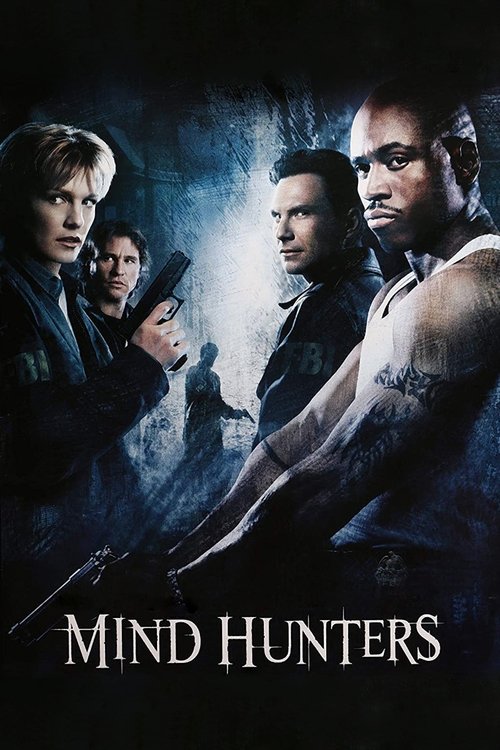
Mindhunters
Trainees in the FBI's psychological profiling program must put their training into practice when they discover a killer in their midst. Based very loosely on Agatha Christie's And Then There Were None.
The film disappointed at the box office against its respectable budget of $27.0M, earning $21.1M globally (-22% loss).


Plot Structure
Story beats plotted across runtime


Narrative Arc
Emotional journey through the story's key moments
Story Circle
Blueprint 15-beat structure
Arcplot Score Breakdown
Weighted: Precision (70%) + Arc (15%) + Theme (15%)
Mindhunters (2004) showcases carefully calibrated story structure, characteristic of Renny Harlin's storytelling approach. This structural analysis examines how the film's 15-point plot structure maps to proven narrative frameworks across 1 hour and 46 minutes. With an Arcplot score of 8.0, the film showcases strong structural fundamentals.
Characters
Cast & narrative archetypes

Sara Moore
Gabe Jensen
J.D. Reston
Lucas Harper
Nicole Willis
Bobby Whitman
Vince Sherman
Rafe Perry
Jake Harris
Main Cast & Characters
Sara Moore
Played by Kathryn Morris
FBI profiler trainee with a history of freezing under pressure, must overcome her fear to survive
Gabe Jensen
Played by LL Cool J
Former Philadelphia police detective turned FBI trainee, street-smart and practical
J.D. Reston
Played by Christian Slater
Arrogant and competitive FBI trainee with exceptional profiling skills
Lucas Harper
Played by Jonny Lee Miller
Brilliant FBI profiler instructor who joins the trainees on the island
Nicole Willis
Played by Patricia Velasquez
Analytical and observant FBI trainee with strong deductive abilities
Bobby Whitman
Played by Eion Bailey
Surveillance expert and tech-savvy FBI trainee
Vince Sherman
Played by Clifton Collins Jr.
Physical and aggressive FBI trainee, former marine
Rafe Perry
Played by Will Kemp
Charming and witty FBI trainee who uses humor to cope with stress
Jake Harris
Played by Val Kilmer
FBI Special Agent overseeing the training exercise
Structural Analysis
The Status Quo at 1 minutes (1% through the runtime) establishes FBI profiler trainees undergo intense psychological training exercises under the supervision of their instructor Jake Harris, demonstrating their skills in criminal profiling and psychological analysis.. The analysis reveals that this early placement immediately immerses viewers in the story world.
The inciting incident occurs at 13 minutes when The team is informed they will undergo their final training exercise on a remote island designed as a mock crime scene town. They must leave immediately, isolated from the outside world.. At 12% through the film, this Disruption aligns precisely with traditional story structure. This beat shifts the emotional landscape, launching the protagonist into the central conflict.
The First Threshold at 26 minutes marks the transition into Act II, occurring at 25% of the runtime. This indicates the protagonist's commitment to The first trainee dies in an elaborate, timed trap involving liquid nitrogen and a watch. The team realizes this is not an exercise—a real killer is hunting them, and he knows their schedules, habits, and psychological profiles., moving from reaction to action.
At 52 minutes, the Midpoint arrives at 49% of the runtime—precisely centered, creating perfect narrative symmetry. The analysis reveals that this crucial beat The group discovers the killer has complete surveillance of the island and has been watching them the entire time. They realize the killer is likely one of them. The stakes raise dramatically—they can't trust each other., fundamentally raising what's at risk. The emotional intensity shifts, dividing the narrative into clear before-and-after phases.
The Collapse moment at 78 minutes (74% through) represents the emotional nadir. Here, A trusted team member is revealed as the killer, and multiple trainees are killed in rapid succession. The survivors are cornered, weaponless, and outnumbered by traps. Hope of escape or rescue dies—they're completely alone., indicates the protagonist at their lowest point. This beat's placement in the final quarter sets up the climactic reversal.
The Second Threshold at 84 minutes initiates the final act resolution at 79% of the runtime. The survivors synthesize their profiling knowledge with improvisation, realizing the killer's weakness: arrogance in his own perfect timing and planning. They can use his precision against him by creating chaos and unpredictability., demonstrating the transformation achieved throughout the journey.
Emotional Journey
Mindhunters's emotional architecture traces a deliberate progression across 15 carefully calibrated beats.
Narrative Framework
This structural analysis employs proven narrative structure principles that track dramatic progression. By mapping Mindhunters against these established plot points, we can identify how Renny Harlin utilizes or subverts traditional narrative conventions. The plot point approach reveals not only adherence to structural principles but also creative choices that distinguish Mindhunters within the mystery genre.
Renny Harlin's Structural Approach
Among the 16 Renny Harlin films analyzed on Arcplot, the average structural score is 7.3, reflecting strong command of classical structure. Mindhunters represents one of the director's most structurally precise works. For comparative analysis, explore the complete Renny Harlin filmography.
Comparative Analysis
Additional mystery films include Lone Star, The Wicker Man and A Soldier's Story. For more Renny Harlin analyses, see Cutthroat Island, The Legend of Hercules and Exorcist: The Beginning.
Plot Points by Act
Act I
SetupStatus Quo
FBI profiler trainees undergo intense psychological training exercises under the supervision of their instructor Jake Harris, demonstrating their skills in criminal profiling and psychological analysis.
Theme
Harris warns the trainees that the best profilers must think like killers, blurring the line between hunter and hunted. The central question: Can you catch a killer without becoming one?
Worldbuilding
Introduction of the elite profiler trainees including Sara, Lucas, Vince, Nicole, Bobby, Rafe, and JD. Their competitive dynamics, individual psychological profiles, and training methods are established, along with the addition of Gabe, an experienced surveillance expert.
Disruption
The team is informed they will undergo their final training exercise on a remote island designed as a mock crime scene town. They must leave immediately, isolated from the outside world.
Resistance
The trainees arrive on the deserted island and begin exploring the elaborately staged crime scenes. Tension builds as they debate methodologies and struggle with limited communication. The group discovers the exercise parameters and begins working the case.
Act II
ConfrontationFirst Threshold
The first trainee dies in an elaborate, timed trap involving liquid nitrogen and a watch. The team realizes this is not an exercise—a real killer is hunting them, and he knows their schedules, habits, and psychological profiles.
Mirror World
Sara and Lucas form an investigative partnership, representing different profiling approaches. Their relationship embodies the theme: Sara's intuitive empathy versus Lucas's cold analytical logic. Together they must balance both to survive.
Premise
The profilers use their training to investigate the killer, analyzing crime scenes, building psychological profiles, and attempting to predict the next move. The killer continues to orchestrate elaborate deaths, each timed precisely, each exploiting a trainee's specific weakness.
Midpoint
The group discovers the killer has complete surveillance of the island and has been watching them the entire time. They realize the killer is likely one of them. The stakes raise dramatically—they can't trust each other.
Opposition
Paranoia fractures the group as more trainees die in increasingly sophisticated traps. Suspects emerge and are eliminated. The survivors turn on each other, their profiling skills weaponized against one another. The killer stays one step ahead.
Collapse
A trusted team member is revealed as the killer, and multiple trainees are killed in rapid succession. The survivors are cornered, weaponless, and outnumbered by traps. Hope of escape or rescue dies—they're completely alone.
Crisis
The remaining survivors process their losses and confront their failure. They realize their training taught them to profile killers, but not to survive one. They must abandon their analytical approach and embrace pure survival instinct.
Act III
ResolutionSecond Threshold
The survivors synthesize their profiling knowledge with improvisation, realizing the killer's weakness: arrogance in his own perfect timing and planning. They can use his precision against him by creating chaos and unpredictability.
Synthesis
The final confrontation unfolds as the survivors set their own trap, disrupting the killer's timeline and forcing him into reactive mode. A violent cat-and-mouse game culminates in the killer's defeat through the very methods he used against them.
Transformation
The lone survivor(s) are rescued from the island, fundamentally changed. Where they began as academic profilers playing psychological games, they end as hardened survivors who understand the reality of evil—not as a profile, but as lived experience.