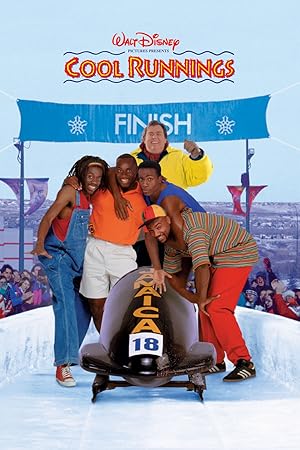
Cool Runnings
Four Jamaicans form their country's first ever bobsled team to compete in the upcoming 1988 Winter Olympics. They enlist the help of a disgraced former Olympic gold winner to reluctantly coach them. However, when they reach Canada they're treated as outsiders by the other teams, who fear they'll only succeed in embarrassing the sport.
Despite its modest budget of $14.0M, Cool Runnings became a box office phenomenon, earning $154.9M worldwide—a remarkable 1006% return. The film's unconventional structure connected with viewers, demonstrating that strong storytelling can transcend budget limitations.
2 wins & 2 nominations


Plot Structure
Story beats plotted across runtime


Narrative Arc
Emotional journey through the story's key moments
Story Circle
Blueprint 15-beat structure
Arcplot Score Breakdown
Weighted: Precision (70%) + Arc (15%) + Theme (15%)
Cool Runnings (1993) showcases strategically placed narrative architecture, characteristic of Jon Turteltaub's storytelling approach. This structural analysis examines how the film's 15-point plot structure maps to proven narrative frameworks across 1 hour and 38 minutes. With an Arcplot score of 7.4, the film balances conventional beats with creative variation.
Characters
Cast & narrative archetypes

Derice Bannock
Irving Blitzer
Sanka Coffie
Junior Bevil
Yul Brenner
Josef Grool
Main Cast & Characters
Derice Bannock
Played by Leon
Aspiring Olympic sprinter who forms Jamaica's first bobsled team after failing to qualify for track. Determined, optimistic leader driven by his father's legacy.
Irving Blitzer
Played by John Candy
Disgraced former Olympic bobsled champion turned reluctant coach. Cynical and jaded but rediscovers his passion through mentoring the Jamaican team.
Sanka Coffie
Played by Doug E. Doug
Derice's best friend and pushcart driver who joins the bobsled team. Comic relief with initial cowardice who finds courage through the journey.
Junior Bevil
Played by Rawle D. Lewis
Wealthy Jamaican sprinter from privileged background trying to escape his father's controlling expectations. Reserved and conflict-averse initially.
Yul Brenner
Played by Malik Yoba
Aggressive sprinter with a chip on his shoulder and fierce competitive drive. Clashes with Junior initially but becomes loyal teammate.
Josef Grool
Played by Joss Ackland
Arrogant East German bobsled champion who mocks and antagonizes the Jamaican team. Represents establishment resistance to underdogs.
Structural Analysis
The Status Quo at 1 minutes (1% through the runtime) establishes Derice Bannock wakes up in Jamaica, immediately beginning his sprint training routine. He is a dedicated Olympic sprinter hopeful, living his dream of representing Jamaica in the Summer Olympics, kissing his father's photo for good luck before heading to the qualifying trials.. Significantly, this early placement immediately immerses viewers in the story world.
The inciting incident occurs at 11 minutes when During the Olympic qualifying race, another runner trips and falls, taking Derice and Junior down with him. Derice's Olympic dreams are shattered in an instant. Despite his protest to the Olympic committee, he is denied a second chance. His lifelong dream has just been destroyed through no fault of his own.. At 11% through the film, this Disruption aligns precisely with traditional story structure. This beat shifts the emotional landscape, launching the protagonist into the central conflict.
The First Threshold at 23 minutes marks the transition into Act II, occurring at 23% of the runtime. This indicates the protagonist's commitment to Derice and the team make the active choice to fully commit to bobsledding, beginning their rigorous training with Irv. They push a practice sled through the streets of Jamaica, enduring mockery from the locals. This is their point of no return—they've chosen to pursue an impossible dream and enter a completely foreign world., moving from reaction to action.
At 48 minutes, the Midpoint arrives at 49% of the runtime—precisely centered, creating perfect narrative symmetry. Notably, this crucial beat The Jamaican team completes a qualifying run that puts them in legitimate contention. They prove they belong at the Olympics, earning the respect of some competitors and media attention. This is their false victory—things seem to be going perfectly, but the Swiss team leader and others still don't take them seriously, and underlying tensions within the team about identity and dignity have not been resolved., fundamentally raising what's at risk. The emotional intensity shifts, dividing the narrative into clear before-and-after phases.
The Collapse moment at 72 minutes (73% through) represents the emotional nadir. Here, The team confronts Irv about his cheating past, and their trust in him collapses. Derice, devastated, realizes his mentor and father figure has feet of clay. The dream itself seems to die—if Irv cheated to win, what does that say about pursuing glory? The "whiff of death" is the death of innocence and the illusion that winning a gold medal is what matters., indicates the protagonist at their lowest point. This beat's placement in the final quarter sets up the climactic reversal.
The Second Threshold at 78 minutes initiates the final act resolution at 80% of the runtime. Irv tells Derice: "If you're not enough without the medal, you'll never be enough with it." Derice finally understands the theme stated at the beginning. The team reconciles, united not by the need to win, but by pride in who they are. They choose to compete in the final race for themselves and for dignity, not for external validation. This synthesizes everything they've learned., demonstrating the transformation achieved throughout the journey.
Emotional Journey
Cool Runnings's emotional architecture traces a deliberate progression across 15 carefully calibrated beats.
Narrative Framework
This structural analysis employs structural analysis methodology used to understand storytelling architecture. By mapping Cool Runnings against these established plot points, we can identify how Jon Turteltaub utilizes or subverts traditional narrative conventions. The plot point approach reveals not only adherence to structural principles but also creative choices that distinguish Cool Runnings within the adventure genre.
Jon Turteltaub's Structural Approach
Among the 9 Jon Turteltaub films analyzed on Arcplot, the average structural score is 7.1, reflecting strong command of classical structure. Cool Runnings represents one of the director's most structurally precise works. For comparative analysis, explore the complete Jon Turteltaub filmography.
Comparative Analysis
Additional adventure films include The Black Stallion, The Bad Guys and Puss in Boots. For more Jon Turteltaub analyses, see The Meg, National Treasure and The Kid.
Plot Points by Act
Act I
SetupStatus Quo
Derice Bannock wakes up in Jamaica, immediately beginning his sprint training routine. He is a dedicated Olympic sprinter hopeful, living his dream of representing Jamaica in the Summer Olympics, kissing his father's photo for good luck before heading to the qualifying trials.
Theme
Sanka Coffie tells Derice, "A gold medal is a wonderful thing, but if you're not enough without it, you'll never be enough with it." This thematic statement about self-worth versus external validation becomes the story's central question.
Worldbuilding
Introduction to Derice's world as an aspiring Olympic sprinter in Jamaica. We meet his best friend Sanka, fellow competitors Yul Brenner and Junior Bevil, and learn about Derice's father Ben Bannock, a former Olympic gold medalist. The setup establishes the stakes of the Olympic qualifying race and Derice's burning desire to follow in his father's footsteps.
Disruption
During the Olympic qualifying race, another runner trips and falls, taking Derice and Junior down with him. Derice's Olympic dreams are shattered in an instant. Despite his protest to the Olympic committee, he is denied a second chance. His lifelong dream has just been destroyed through no fault of his own.
Resistance
Derice desperately searches for another way to the Olympics. He discovers old footage of his father with Irv Blitzer, an American who once tried to form a Jamaican bobsled team. Derice tracks down Irv, now a disgraced former bobsled coach living in Jamaica as a bookie. Despite multiple rejections from Irv, Derice persists, eventually recruiting Sanka, Yul, and Junior. Irv finally agrees to coach them, though reluctantly.
Act II
ConfrontationFirst Threshold
Derice and the team make the active choice to fully commit to bobsledding, beginning their rigorous training with Irv. They push a practice sled through the streets of Jamaica, enduring mockery from the locals. This is their point of no return—they've chosen to pursue an impossible dream and enter a completely foreign world.
Mirror World
Irv Blitzer becomes the thematic mirror for Derice. Irv is a man who once had Olympic glory but cheated to win, was caught, and disgraced. His relationship with Derice will teach both of them about dignity, honor, and what it truly means to be enough. Irv's redemption arc runs parallel to Derice's journey of self-discovery.
Premise
The "fun and games" of Jamaicans learning to bobsled. The team trains in Jamaica using a wheeled sled, learning to work together despite their differences. Yul and Junior overcome their class-based rivalry. The team travels to Calgary for the Winter Olympics, experiencing snow for the first time. They face ridicule and prejudice but begin to prove themselves in practice runs, slowly earning respect and surprising everyone with their natural talent.
Midpoint
The Jamaican team completes a qualifying run that puts them in legitimate contention. They prove they belong at the Olympics, earning the respect of some competitors and media attention. This is their false victory—things seem to be going perfectly, but the Swiss team leader and others still don't take them seriously, and underlying tensions within the team about identity and dignity have not been resolved.
Opposition
Pressure mounts as the competition intensifies. The Swiss team and others actively work to undermine and humiliate the Jamaicans. Junior's father arrives, demanding he come home and threatening to disown him. The team discovers Irv's shameful past as a cheater, causing a crisis of trust. Derice becomes obsessed with winning at all costs, losing sight of why he started. Internal conflicts threaten to tear the team apart as external opposition increases.
Collapse
The team confronts Irv about his cheating past, and their trust in him collapses. Derice, devastated, realizes his mentor and father figure has feet of clay. The dream itself seems to die—if Irv cheated to win, what does that say about pursuing glory? The "whiff of death" is the death of innocence and the illusion that winning a gold medal is what matters.
Crisis
The dark night of the soul. The team nearly disbands. Derice must process what he's learned and decide what really matters. Irv opens up about his past shame and what he learned from it. Junior stands up to his father, choosing his own path. Sanka, Yul, and Derice each grapple with who they are and why they're really doing this.
Act III
ResolutionSecond Threshold
Irv tells Derice: "If you're not enough without the medal, you'll never be enough with it." Derice finally understands the theme stated at the beginning. The team reconciles, united not by the need to win, but by pride in who they are. They choose to compete in the final race for themselves and for dignity, not for external validation. This synthesizes everything they've learned.
Synthesis
The finale. The team prepares for their final Olympic run with newfound purpose and unity. They execute a strong start in the four-man bobsled race, putting in an excellent performance. Tragically, a mechanical failure causes the sled's runner to break, and they crash spectacularly. Rather than quit, the four men lift their broken sled and carry it across the finish line with dignity, receiving a standing ovation from the crowd. They lose the race but win something far greater.
Transformation
The team walks proudly through the Olympic crowds carrying their damaged sled, heads held high, receiving applause and respect from spectators and competitors alike. This mirrors the Status Quo where Derice kissed his father's photo seeking validation—now he needs no external validation. He has become enough without the medal, transformed from someone chasing glory to someone who understands true dignity and self-worth.