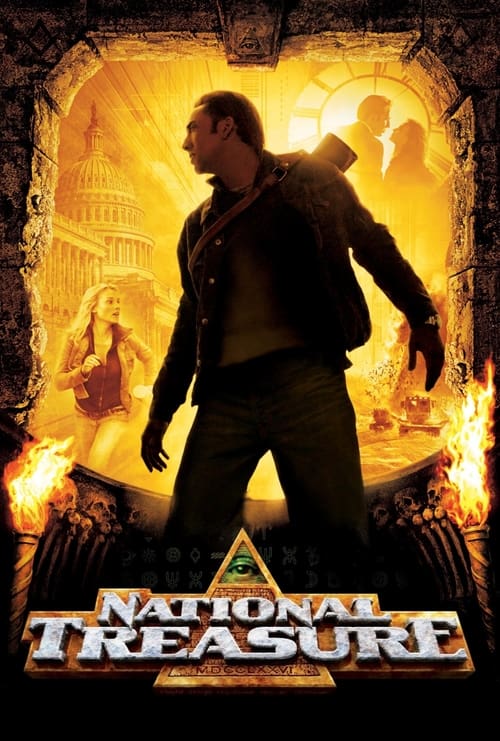
National Treasure
Modern treasure hunters, led by archaeologist Ben Gates, search for a chest of riches rumored to have been stashed away by George Washington, Thomas Jefferson and Benjamin Franklin during the Revolutionary War. The chest's whereabouts may lie in secret clues embedded in the Constitution and the Declaration of Independence, and Gates is in a race to find the gold before his enemies do.
Despite a considerable budget of $100.0M, National Treasure became a financial success, earning $347.5M worldwide—a 248% return.
1 win & 9 nominations


Plot Structure
Story beats plotted across runtime


Narrative Arc
Emotional journey through the story's key moments
Story Circle
Blueprint 15-beat structure
Arcplot Score Breakdown
Weighted: Precision (70%) + Arc (15%) + Theme (15%)
National Treasure (2004) reveals carefully calibrated narrative design, characteristic of Jon Turteltaub's storytelling approach. This structural analysis examines how the film's 15-point plot structure maps to proven narrative frameworks across 2 hours and 11 minutes. With an Arcplot score of 6.3, the film takes an unconventional approach to traditional narrative frameworks.
Structural Analysis
The Status Quo at 1 minutes (1% through the runtime) establishes Young Ben Gates listens to his grandfather's story about the Templar Treasure, establishing the Gates family legacy of treasure hunters dismissed as conspiracy theorists.. Of particular interest, this early placement immediately immerses viewers in the story world.
The inciting incident occurs at 16 minutes when Ian Howe reveals his true intentions to steal the Declaration of Independence and betrays Ben, leaving him and Riley to die in an explosion on the Charlotte ship.. At 12% through the film, this Disruption aligns precisely with traditional story structure. This beat shifts the emotional landscape, launching the protagonist into the central conflict.
The First Threshold at 34 minutes marks the transition into Act II, occurring at 26% of the runtime. This illustrates the protagonist's commitment to Ben makes the active choice to steal the Declaration of Independence during the gala, crossing into the world of crime to protect the treasure and prove his family's legacy., moving from reaction to action.
At 66 minutes, the Midpoint arrives at 50% of the runtime—precisely centered, creating perfect narrative symmetry. The analysis reveals that this crucial beat False victory: Ben solves the Silence Dogood letters and discovers the next clue points to Trinity Church in New York. The team is energized, but stakes raise as both FBI and Ian close in., fundamentally raising what's at risk. The emotional intensity shifts, dividing the narrative into clear before-and-after phases.
The Collapse moment at 99 minutes (75% through) represents the emotional nadir. Here, Ian takes Abigail hostage at gunpoint and forces Ben to lead him to the treasure. Ben must surrender the Declaration and loses control of everything he fought for. His father is in danger, Abigail endangered., shows the protagonist at their lowest point. This beat's placement in the final quarter sets up the climactic reversal.
The Second Threshold at 105 minutes initiates the final act resolution at 80% of the runtime. Ben realizes the treasure is real and uses his knowledge to outsmart Ian. He finds the hidden entrance to the massive treasure chamber, gaining leverage and new hope., demonstrating the transformation achieved throughout the journey.
Emotional Journey
National Treasure's emotional architecture traces a deliberate progression across 15 carefully calibrated beats.
Narrative Framework
This structural analysis employs structural analysis methodology used to understand storytelling architecture. By mapping National Treasure against these established plot points, we can identify how Jon Turteltaub utilizes or subverts traditional narrative conventions. The plot point approach reveals not only adherence to structural principles but also creative choices that distinguish National Treasure within the adventure genre.
Jon Turteltaub's Structural Approach
Among the 9 Jon Turteltaub films analyzed on Arcplot, the average structural score is 7.1, reflecting strong command of classical structure. National Treasure takes a more unconventional approach compared to the director's typical style. For comparative analysis, explore the complete Jon Turteltaub filmography.
Comparative Analysis
Additional adventure films include The Black Stallion, The Bad Guys and Puss in Boots. For more Jon Turteltaub analyses, see The Meg, Cool Runnings and The Kid.
Plot Points by Act
Act I
SetupStatus Quo
Young Ben Gates listens to his grandfather's story about the Templar Treasure, establishing the Gates family legacy of treasure hunters dismissed as conspiracy theorists.
Theme
Grandfather tells young Ben: "The treasure is real. You don't need to believe me, but I need you to believe in yourself." Theme of belief, legacy, and proving your worth stated.
Worldbuilding
Adult Ben leads Arctic expedition, establishes his obsession with the treasure, introduces partner Riley and financier Ian Howe. Shows Ben's knowledge, dedication, and the world of treasure hunting.
Disruption
Ian Howe reveals his true intentions to steal the Declaration of Independence and betrays Ben, leaving him and Riley to die in an explosion on the Charlotte ship.
Resistance
Ben debates whether to steal the Declaration. He tries to warn authorities (FBI, Dr. Chase), but no one believes him. He reluctantly concludes he must steal it himself to protect it from Ian.
Act II
ConfrontationFirst Threshold
Ben makes the active choice to steal the Declaration of Independence during the gala, crossing into the world of crime to protect the treasure and prove his family's legacy.
Mirror World
Dr. Abigail Chase is kidnapped/rescued by Ben, becoming his reluctant partner. She represents academic legitimacy and will teach Ben that the treasure's true value is historical, not monetary.
Premise
The fun of the premise: solving clues on the Declaration, evading FBI and Ian, visiting Independence Hall and Philadelphia landmarks. Ben, Riley, and Abigail become a team uncovering American history.
Midpoint
False victory: Ben solves the Silence Dogood letters and discovers the next clue points to Trinity Church in New York. The team is energized, but stakes raise as both FBI and Ian close in.
Opposition
Pressure intensifies: Ian captures Ben's father Patrick, uses him as leverage. FBI agent Sadusky closes in. Ben must navigate Trinity Church, decode the puzzle, all while protecting his family and Abigail.
Collapse
Ian takes Abigail hostage at gunpoint and forces Ben to lead him to the treasure. Ben must surrender the Declaration and loses control of everything he fought for. His father is in danger, Abigail endangered.
Crisis
Ben processes the loss and realizes he must find another way. In the tunnels beneath Trinity Church, he grapples with how to save everyone, stop Ian, and preserve the treasure.
Act III
ResolutionSecond Threshold
Ben realizes the treasure is real and uses his knowledge to outsmart Ian. He finds the hidden entrance to the massive treasure chamber, gaining leverage and new hope.
Synthesis
Final confrontation in the treasure chamber. Ben outmaneuvers Ian, FBI arrives, treasure is secured for the nation. Ben negotiates for his freedom and a finder's fee, resolving all conflicts.
Transformation
Ben and Abigail together in a mansion (his finder's fee reward), mirroring the opening but transformed: the Gates family legacy is proven, Ben is validated, and he's found partnership and respect.