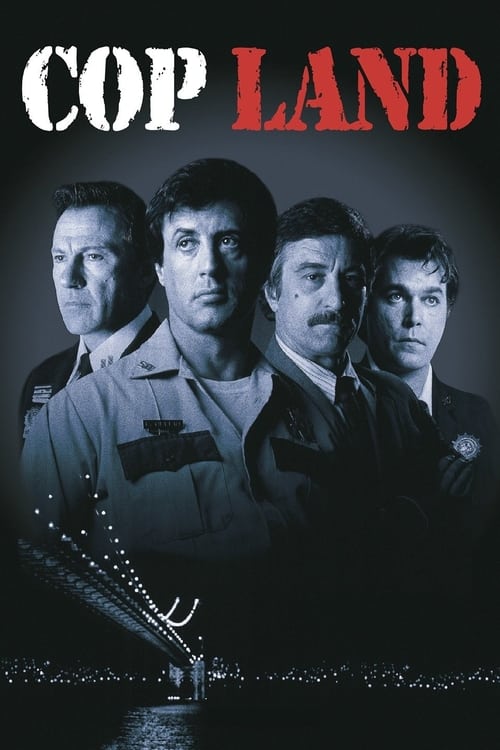
Cop Land
Freddy Heflin is the sheriff of a place everyone calls “Cop Land” — a small and seemingly peaceful town populated by the big city police officers he’s long admired. Yet something ugly is taking place behind the town’s peaceful facade. And when Freddy uncovers a massive, deadly conspiracy among these local residents, he is forced to take action and make a dangerous choice between protecting his idols and upholding the law.
Despite a respectable budget of $15.0M, Cop Land became a solid performer, earning $44.9M worldwide—a 199% return.
1 win & 1 nomination


Plot Structure
Story beats plotted across runtime


Narrative Arc
Emotional journey through the story's key moments
Story Circle
Blueprint 15-beat structure
Arcplot Score Breakdown
Weighted: Precision (70%) + Arc (15%) + Theme (15%)
Cop Land (1997) showcases carefully calibrated dramatic framework, characteristic of James Mangold's storytelling approach. This structural analysis examines how the film's 15-point plot structure maps to proven narrative frameworks across 1 hour and 44 minutes. With an Arcplot score of 7.7, the film showcases strong structural fundamentals.
Characters
Cast & narrative archetypes

Freddy Heflin
Ray Donlan
Moe Tilden
Gary "Figgsy" Figgis
Jack Rucker
Liz Randone
Joey Randone
Frank Lagonda
Cindy Betts
Main Cast & Characters
Freddy Heflin
Played by Sylvester Stallone
Partially deaf small-town sheriff who hero-worships the corrupt NYPD officers in his jurisdiction. Transforms from passive pushover to courageous lawman.
Ray Donlan
Played by Harvey Keitel
Corrupt NYPD lieutenant who created Garrison as a safe haven for dirty cops. Manipulative puppet master of the community's illegal activities.
Moe Tilden
Played by Robert De Niro
Weary Internal Affairs investigator pursuing corruption in Donlan's crew. Sees potential in Freddy and pushes him to do the right thing.
Gary "Figgsy" Figgis
Played by Ray Liotta
Volatile corrupt cop who fakes his death but hides in Freddy's basement. Becomes increasingly paranoid as he realizes he's expendable to Donlan.
Jack Rucker
Played by Michael Rapaport
Hot-headed young NYPD officer and Donlan's nephew. His shooting incident and staged suicide off the George Washington Bridge ignites the main conflict.
Liz Randone
Played by Annabella Sciorra
The woman Freddy saved from drowning years ago, now trapped in an abusive marriage. Represents Freddy's lost dreams and sacrifices.
Joey Randone
Played by Peter Berg
Abusive NYPD officer married to Liz, part of Donlan's corrupt crew. Jealous of Freddy's connection to his wife.
Frank Lagonda
Played by Robert Patrick
Donlan's ruthless right-hand man and enforcer. More openly violent than Ray, serves as primary physical threat.
Cindy Betts
Played by Janeane Garofalo
Freddy's competent deputy, one of the few honest cops in the story. Frustrated by Freddy's passivity but loyal.
Structural Analysis
The Status Quo at 1 minutes (1% through the runtime) establishes Freddy Heflin patrols the quiet streets of Garrison, New Jersey, a bedroom community populated entirely by NYPD cops. He's the local sheriff, deaf in one ear, respected but not truly one of them.. Structural examination shows that this early placement immediately immerses viewers in the story world.
The inciting incident occurs at 12 minutes when Officer Murray "Superboy" Babitch shoots two Black youths on the George Washington Bridge in what appears to be self-defense, but the incident is murky. To avoid investigation, Ray Donlan stages Superboy's fake suicide, plunging him off the bridge.. At 12% through the film, this Disruption aligns precisely with traditional story structure. This beat shifts the emotional landscape, launching the protagonist into the central conflict.
The First Threshold at 26 minutes marks the transition into Act II, occurring at 25% of the runtime. This reveals the protagonist's commitment to Freddy discovers that Superboy is alive and being hidden in Garrison. Rather than immediately reporting this to authorities, he confronts Ray Donlan, choosing to enter the world of conspiracy and corruption., moving from reaction to action.
At 52 minutes, the Midpoint arrives at 50% of the runtime—precisely centered, creating perfect narrative symmetry. Notably, this crucial beat Officer Gary "Figgsy" Figgis, who knows about the conspiracy, is found dead in an apparent suicide. Freddy realizes the stakes are life and death, and the cops he admired are killers. False defeat: the corruption seems insurmountable., fundamentally raising what's at risk. The emotional intensity shifts, dividing the narrative into clear before-and-after phases.
The Collapse moment at 76 minutes (74% through) represents the emotional nadir. Here, Freddy gets drunk and makes a desperate attempt to give Moe evidence, but arrives too late. Moe has been killed by the corrupt cops. Freddy is beaten and humiliated by the very men he idolized. He hits rock bottom, alone and defeated., shows the protagonist at their lowest point. This beat's placement in the final quarter sets up the climactic reversal.
The Second Threshold at 83 minutes initiates the final act resolution at 80% of the runtime. Freddy attempts suicide with his gun but can't go through with it. He realizes he has a choice: die a coward or finally become the hero he was meant to be. He decides to rescue Superboy and bring down the corrupt cops, alone if necessary., demonstrating the transformation achieved throughout the journey.
Emotional Journey
Cop Land's emotional architecture traces a deliberate progression across 15 carefully calibrated beats.
Narrative Framework
This structural analysis employs proven narrative structure principles that track dramatic progression. By mapping Cop Land against these established plot points, we can identify how James Mangold utilizes or subverts traditional narrative conventions. The plot point approach reveals not only adherence to structural principles but also creative choices that distinguish Cop Land within the crime genre.
James Mangold's Structural Approach
Among the 11 James Mangold films analyzed on Arcplot, the average structural score is 6.5, demonstrating varied approaches to story architecture. Cop Land represents one of the director's most structurally precise works. For comparative analysis, explore the complete James Mangold filmography.
Comparative Analysis
Additional crime films include The Bad Guys, Rustom and The Whole Ten Yards. For more James Mangold analyses, see 3:10 to Yuma, Knight and Day and Logan.
Plot Points by Act
Act I
SetupStatus Quo
Freddy Heflin patrols the quiet streets of Garrison, New Jersey, a bedroom community populated entirely by NYPD cops. He's the local sheriff, deaf in one ear, respected but not truly one of them.
Theme
Internal Affairs investigator Moe Tilden tells Freddy: "You can be a cop in a town full of cops, or you can actually BE a cop." The theme of moral courage versus complicity is stated.
Worldbuilding
Establishment of Garrison as "Cop Land" - a sanctuary where NYC cops live, insulated from the city. Freddy's relationship with the cops, particularly Ray Donlan, is shown. His past heroism saving a woman from drowning (which cost him his hearing and NYPD career) is revealed.
Disruption
Officer Murray "Superboy" Babitch shoots two Black youths on the George Washington Bridge in what appears to be self-defense, but the incident is murky. To avoid investigation, Ray Donlan stages Superboy's fake suicide, plunging him off the bridge.
Resistance
Freddy is caught between loyalty to his cop friends and growing doubts about their corruption. Moe Tilden pressures him for information about the staged suicide. Freddy debates whether to get involved or stay in his comfortable, passive role.
Act II
ConfrontationFirst Threshold
Freddy discovers that Superboy is alive and being hidden in Garrison. Rather than immediately reporting this to authorities, he confronts Ray Donlan, choosing to enter the world of conspiracy and corruption.
Mirror World
Freddy's interactions with Liz, the woman he saved years ago and still loves, deepen. She represents the life he could have had - the theme of sacrifice and what it means to be a real hero versus just wearing a badge.
Premise
Freddy investigates deeper into the conspiracy while trying to maintain his relationships with the corrupt cops. The premise plays out: a decent man trapped in a corrupt system, trying to find the courage to do the right thing.
Midpoint
Officer Gary "Figgsy" Figgis, who knows about the conspiracy, is found dead in an apparent suicide. Freddy realizes the stakes are life and death, and the cops he admired are killers. False defeat: the corruption seems insurmountable.
Opposition
Ray Donlan and the corrupt cops close ranks. They pressure Freddy to back off. Moe Tilden's investigation is stonewalled. Freddy's passivity and desire to be accepted by the cops works against him. His moral cowardice catches up with him.
Collapse
Freddy gets drunk and makes a desperate attempt to give Moe evidence, but arrives too late. Moe has been killed by the corrupt cops. Freddy is beaten and humiliated by the very men he idolized. He hits rock bottom, alone and defeated.
Crisis
Freddy wallows in despair and self-loathing. He contemplates suicide. In his dark night, he must process the death of his dream of being accepted by these cops and confront who he really is.
Act III
ResolutionSecond Threshold
Freddy attempts suicide with his gun but can't go through with it. He realizes he has a choice: die a coward or finally become the hero he was meant to be. He decides to rescue Superboy and bring down the corrupt cops, alone if necessary.
Synthesis
Freddy storms Ray Donlan's house in a climactic shootout. He rescues Superboy and confronts the corrupt cops in a violent finale. He becomes the cop he always wanted to be - not by being accepted by them, but by standing against them.
Transformation
Freddy walks away from the carnage, bloodied but victorious. He has finally become a real cop - not by joining the NYPD, but by having the moral courage to stand alone. The final image mirrors the opening: same town, same badge, but a transformed man.