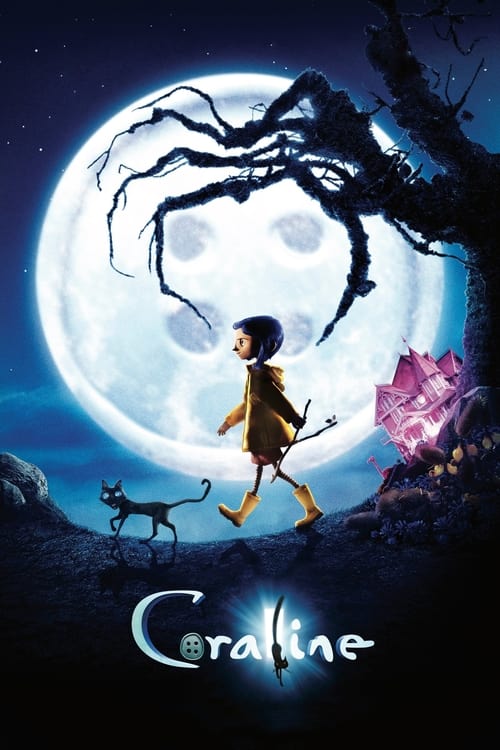
Coraline
Wandering her rambling old house in her boring new town, a young girl discovers a hidden door to a strangely idealized version of her life that seems too good to be true.
Despite a respectable budget of $60.0M, Coraline became a commercial success, earning $185.9M worldwide—a 210% return.
Nominated for 1 Oscar. 8 wins & 46 nominations


Plot Structure
Story beats plotted across runtime


Narrative Arc
Emotional journey through the story's key moments
Story Circle
Blueprint 15-beat structure
Characters
Cast & narrative archetypes

Coraline Jones
The Other Mother / Beldam
Wybie Lovat
The Cat
Mel Jones
Charlie Jones
Main Cast & Characters
Coraline Jones
Played by Dakota Fanning
A curious and adventurous 11-year-old girl who discovers a parallel world through a hidden door. She must use her wit and bravery to escape the Other Mother's trap.
The Other Mother / Beldam
Played by Teri Hatcher
A sinister entity who lures children with an idealized world, then traps them. She poses as Coraline's perfect mother with button eyes.
Wybie Lovat
Played by Robert Bailey Jr.
The landlady's grandson who befriends Coraline. He's talkative and curious, providing comic relief and helping Coraline in her quest.
The Cat
Played by Keith David
A mysterious black cat who can travel between worlds and speak in the Other World. He serves as Coraline's guide and protector.
Mel Jones
Played by Teri Hatcher
Coraline's real mother, a busy writer who is often distracted by work. She loves Coraline but doesn't give her much attention.
Charlie Jones
Played by John Hodgman
Coraline's real father, also a busy writer. He's quirky and well-meaning but equally distracted by work.
Structural Analysis
The Status Quo at 1 minutes (1% through the runtime) establishes Coraline sits bored and neglected in her new home, parents too busy writing to pay attention to her. She's isolated, unsatisfied, and longing for something more exciting.. Notably, this early placement immediately immerses viewers in the story world.
The inciting incident occurs at 13 minutes when Coraline discovers the small door in the drawing room. When her mother opens it, it reveals only a brick wall, but this mysterious doorway plants the seed of the other world.. At 13% through the film, this Disruption is delayed, allowing extended setup of the story world. This beat shifts the emotional landscape, launching the protagonist into the central conflict.
The First Threshold at 25 minutes marks the transition into Act II, occurring at 25% of the runtime. This demonstrates the protagonist's commitment to Coraline actively chooses to follow the jumping mice through the small door and crawls through the tunnel into the Other World, making the deliberate decision to enter this alternate reality., moving from reaction to action.
At 50 minutes, the Midpoint arrives at 50% of the runtime—precisely centered, creating perfect narrative symmetry. Of particular interest, this crucial beat The Other Mother offers Coraline button eyes so she can stay forever. This false victory turns sinister as Coraline realizes the price of this "perfect" world is her eyes, her sight, her true self. She refuses and the stakes are raised dramatically., fundamentally raising what's at risk. The emotional intensity shifts, dividing the narrative into clear before-and-after phases.
The Collapse moment at 75 minutes (75% through) represents the emotional nadir. Here, Coraline is trapped behind the mirror by the Other Mother, locked in darkness with the ghost children. The Beldam has won, Coraline has lost everything, and death seems imminent. The literal and metaphorical whiff of death surrounds her with the ghost children., indicates the protagonist at their lowest point. This beat's placement in the final quarter sets up the climactic reversal.
The Second Threshold at 80 minutes initiates the final act resolution at 80% of the runtime. Coraline has the breakthrough: she challenges the Other Mother to a game to find the eyes and her parents. Using her resourcefulness (the seeing stone) and what she's learned about the Beldam's pride, she creates a path to victory through cleverness rather than force., demonstrating the transformation achieved throughout the journey.
Emotional Journey
Coraline's emotional architecture traces a deliberate progression across 15 carefully calibrated beats.
Narrative Framework
This structural analysis employs proven narrative structure principles that track dramatic progression. By mapping Coraline against these established plot points, we can identify how Henry Selick utilizes or subverts traditional narrative conventions. The plot point approach reveals not only adherence to structural principles but also creative choices that distinguish Coraline within the animation genre.
Henry Selick's Structural Approach
Among the 4 Henry Selick films analyzed on Arcplot, the average structural score is 7.0, reflecting strong command of classical structure. Coraline exemplifies the director's characteristic narrative technique. For comparative analysis, explore the complete Henry Selick filmography.
Comparative Analysis
Additional animation films include The Bad Guys, Puss in Boots and Violet Evergarden: Eternity and the Auto Memory Doll. For more Henry Selick analyses, see James and the Giant Peach, The Nightmare Before Christmas and Monkeybone.
Plot Points by Act
Act I
SetupStatus Quo
Coraline sits bored and neglected in her new home, parents too busy writing to pay attention to her. She's isolated, unsatisfied, and longing for something more exciting.
Theme
Wybie warns Coraline that the well is dangerous: "It's supposed to be so deep, if you fell to the bottom and looked up, you'd see a sky full of stars in the middle of the day." The theme of wanting what seems better while ignoring present dangers is established.
Worldbuilding
Coraline explores the Pink Palace, meets the eccentric neighbors (Bobinsky, Spink and Forcible), receives the seeing stone from Wybie, and experiences continuous disappointment with her distracted parents and dreary surroundings.
Disruption
Coraline discovers the small door in the drawing room. When her mother opens it, it reveals only a brick wall, but this mysterious doorway plants the seed of the other world.
Resistance
Coraline continues to feel neglected and frustrated. The mice appear at night, leading her to investigate. The cat appears as a mysterious guide figure who can travel between worlds but refuses to be controlled.
Act II
ConfrontationFirst Threshold
Coraline actively chooses to follow the jumping mice through the small door and crawls through the tunnel into the Other World, making the deliberate decision to enter this alternate reality.
Mirror World
Coraline meets the Cat in the Other World, who can speak there. The Cat serves as her guide and thematic mirror, teaching her about the true nature of the Other Mother and the importance of authentic love versus controlling possession.
Premise
Coraline enjoys the wonders of the Other World: Other Parents who cook and garden for her, magical performances, the amazing garden, flying to the theater. Everything seems perfect, giving her the attention she craved. She returns multiple times, seduced by this "better" world.
Midpoint
The Other Mother offers Coraline button eyes so she can stay forever. This false victory turns sinister as Coraline realizes the price of this "perfect" world is her eyes, her sight, her true self. She refuses and the stakes are raised dramatically.
Opposition
Coraline discovers her real parents are missing, trapped by the Other Mother. She learns about the ghost children who lost their eyes and lives. The Other Mother becomes increasingly monstrous and controlling. Coraline must return to the Other World to save her parents despite the danger.
Collapse
Coraline is trapped behind the mirror by the Other Mother, locked in darkness with the ghost children. The Beldam has won, Coraline has lost everything, and death seems imminent. The literal and metaphorical whiff of death surrounds her with the ghost children.
Crisis
In the dark, Coraline nearly gives up hope. The ghost children comfort her but seem resigned to their fate. Coraline must process her terror and find the inner strength to continue.
Act III
ResolutionSecond Threshold
Coraline has the breakthrough: she challenges the Other Mother to a game to find the eyes and her parents. Using her resourcefulness (the seeing stone) and what she's learned about the Beldam's pride, she creates a path to victory through cleverness rather than force.
Synthesis
Coraline finds the three ghost eyes through intelligence and bravery, wins the game, rescues her parents, returns home, frees the ghost children's souls, and finally defeats the Other Mother's hand by trapping it in the well with the key, using Wybie's help and the Cat's assistance.
Transformation
Coraline hosts a garden party with all her neighbors and her parents, now appreciating her real world and real relationships. She's grown from a dissatisfied, demanding girl to someone who values authentic love and imperfect reality over false perfection. She tends to her garden with genuine contentment.