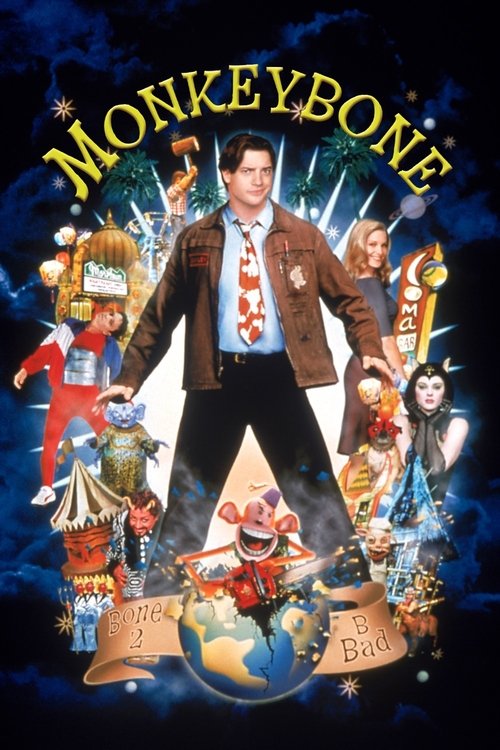
Monkeybone
After a car crash sends repressed cartoonist Stu into a coma, he and the mischievous Monkeybone, his hilarious alter-ego, wake up in a wacked-out waystation for lost souls. When Monkeybone takes over Stu's body and escapes to wreak havoc on the real world, Stu has to find a way to stop him before his sister pulls the plug on reality forever!
The film financial setback against its significant budget of $75.0M, earning $5.4M globally (-93% loss). While initial box office returns were modest, the film has gained appreciation for its compelling narrative within the adventure genre.


Plot Structure
Story beats plotted across runtime


Narrative Arc
Emotional journey through the story's key moments
Story Circle
Blueprint 15-beat structure
Arcplot Score Breakdown
Weighted: Precision (70%) + Arc (15%) + Theme (15%)
Monkeybone (2001) exhibits meticulously timed narrative architecture, characteristic of Henry Selick's storytelling approach. This structural analysis examines how the film's 15-point plot structure maps to proven narrative frameworks across 1 hour and 33 minutes. With an Arcplot score of 7.1, the film balances conventional beats with creative variation.
Characters
Cast & narrative archetypes

Stu Miley
Monkeybone
Julie McElroy
Hypnos
Kitty
Death
Dr. Alice Fleck
Main Cast & Characters
Stu Miley
Played by Brendan Fraser
A cartoonist who falls into a coma and must battle his own creation, Monkeybone, to reclaim his life and body.
Monkeybone
Played by John Turturro
Stu's raunchy, anarchic cartoon creation who comes to life in Downtown and steals Stu's body to wreak havoc in the real world.
Julie McElroy
Played by Bridget Fonda
Stu's devoted girlfriend, a sleep research specialist who refuses to give up on him while he's in a coma.
Hypnos
Played by Giancarlo Esposito
The sinister god of sleep who rules Downtown and makes dark deals with trapped souls.
Kitty
Played by Rose McGowan
A cat-woman performer in Downtown who becomes Stu's ally and love interest in the underworld.
Death
Played by Whoopi Goldberg
The personification of death in Downtown, depicted as a tired bureaucrat overseeing the passage of souls.
Dr. Alice Fleck
Played by Megan Mullally
Stu's older sister, a no-nonsense doctor who must make difficult decisions about his medical care.
Structural Analysis
The Status Quo at 1 minutes (1% through the runtime) establishes Stu Miley is introduced as a successful but neurotic cartoonist, creator of Monkeybone, who struggles with anxiety and fears of intimacy despite his success and loving relationship with sleep researcher Julie.. The analysis reveals that this early placement immediately immerses viewers in the story world.
The inciting incident occurs at 11 minutes when Stu and Julie are in a catastrophic car accident caused by a giant inflatable Monkeybone toy. Stu falls into a deep coma, his consciousness leaving the waking world.. At 12% through the film, this Disruption aligns precisely with traditional story structure. This beat shifts the emotional landscape, launching the protagonist into the central conflict.
The First Threshold at 24 minutes marks the transition into Act II, occurring at 26% of the runtime. This demonstrates the protagonist's commitment to Stu learns that Julie plans to take him off life support. He decides he must actively fight to escape Downtown and return to his body, choosing to enter the nightmare realm rather than accept death., moving from reaction to action.
At 47 minutes, the Midpoint arrives at 50% of the runtime—precisely centered, creating perfect narrative symmetry. The analysis reveals that this crucial beat False defeat: Monkeybone steals the exit pass meant for Stu and takes over Stu's body in the real world. Stu is trapped in Downtown while his id-driven alter ego lives his life, threatening everything he loves., fundamentally raising what's at risk. The emotional intensity shifts, dividing the narrative into clear before-and-after phases.
The Collapse moment at 70 minutes (75% through) represents the emotional nadir. Here, Stu (in the dead athlete's body) is captured and sedated. His borrowed body begins to decay rapidly. Julie doesn't believe him, Monkeybone has won, and Stu faces both literal death of his host body and permanent loss of his true self., shows the protagonist at their lowest point. This beat's placement in the final quarter sets up the climactic reversal.
The Second Threshold at 74 minutes initiates the final act resolution at 80% of the runtime. Julie recognizes the real Stu through his genuine love and vulnerability (something Monkeybone can't fake). Stu realizes he must face his creation directly and accept all parts of himself - his fears and his love - to reclaim his identity., demonstrating the transformation achieved throughout the journey.
Emotional Journey
Monkeybone's emotional architecture traces a deliberate progression across 15 carefully calibrated beats.
Narrative Framework
This structural analysis employs systematic plot point analysis that identifies crucial turning points. By mapping Monkeybone against these established plot points, we can identify how Henry Selick utilizes or subverts traditional narrative conventions. The plot point approach reveals not only adherence to structural principles but also creative choices that distinguish Monkeybone within the adventure genre.
Henry Selick's Structural Approach
Among the 4 Henry Selick films analyzed on Arcplot, the average structural score is 7.0, reflecting strong command of classical structure. Monkeybone represents one of the director's most structurally precise works. For comparative analysis, explore the complete Henry Selick filmography.
Comparative Analysis
Additional adventure films include The Black Stallion, The Bad Guys and Puss in Boots. For more Henry Selick analyses, see James and the Giant Peach, The Nightmare Before Christmas and Coraline.
Plot Points by Act
Act I
SetupStatus Quo
Stu Miley is introduced as a successful but neurotic cartoonist, creator of Monkeybone, who struggles with anxiety and fears of intimacy despite his success and loving relationship with sleep researcher Julie.
Theme
Julie discusses the power of nightmares and the subconscious with Stu, suggesting that facing our fears is the only way to overcome them - the central thematic question of whether Stu can confront his inner demons.
Worldbuilding
Introduction to Stu's world: his cartoon creation Monkeybone gaining fame, his relationship with Julie, his anxiety issues, the merchandising deal offer, and his fear of commitment, culminating in his botched marriage proposal.
Disruption
Stu and Julie are in a catastrophic car accident caused by a giant inflatable Monkeybone toy. Stu falls into a deep coma, his consciousness leaving the waking world.
Resistance
Stu awakens in Downtown, a waystation for souls between life and death. He meets Hypnos, god of sleep, learns the rules of this limbo world, and discovers his cartoon creation Monkeybone is real and autonomous here.
Act II
ConfrontationFirst Threshold
Stu learns that Julie plans to take him off life support. He decides he must actively fight to escape Downtown and return to his body, choosing to enter the nightmare realm rather than accept death.
Mirror World
Stu's relationship with Monkeybone in Downtown serves as a dark mirror - Monkeybone represents all of Stu's repressed id, his fears and desires made manifest, showing him what he's been running from.
Premise
Stu navigates the bizarre world of Downtown, encountering famous dead people, surreal nightmares, and bureaucratic absurdities while trying to find a way back to life, all while Monkeybone schemes behind his back.
Midpoint
False defeat: Monkeybone steals the exit pass meant for Stu and takes over Stu's body in the real world. Stu is trapped in Downtown while his id-driven alter ego lives his life, threatening everything he loves.
Opposition
Monkeybone-in-Stu's-body wreaks havoc in the real world, pursuing the nightmare gas scheme. Stu must get back by possessing a recently deceased body (an athlete), then tries to prove his identity and stop Monkeybone's plans.
Collapse
Stu (in the dead athlete's body) is captured and sedated. His borrowed body begins to decay rapidly. Julie doesn't believe him, Monkeybone has won, and Stu faces both literal death of his host body and permanent loss of his true self.
Crisis
Stu's darkest moment as he processes that he may never reclaim his life or prove his love to Julie. He must confront that he created this monster from his own fears and avoidance of intimacy.
Act III
ResolutionSecond Threshold
Julie recognizes the real Stu through his genuine love and vulnerability (something Monkeybone can't fake). Stu realizes he must face his creation directly and accept all parts of himself - his fears and his love - to reclaim his identity.
Synthesis
Final confrontation with Monkeybone. Stu fights to stop the nightmare gas plot and reclaim his body, using both his creativity and his newfound acceptance of his dark side. With Julie's help, he defeats Monkeybone and returns to his true body.
Transformation
Stu awakens in his own body, fully integrated. He embraces Julie without fear, having confronted his nightmare and emerged whole. The closing image shows Stu at peace with both his light and dark sides.