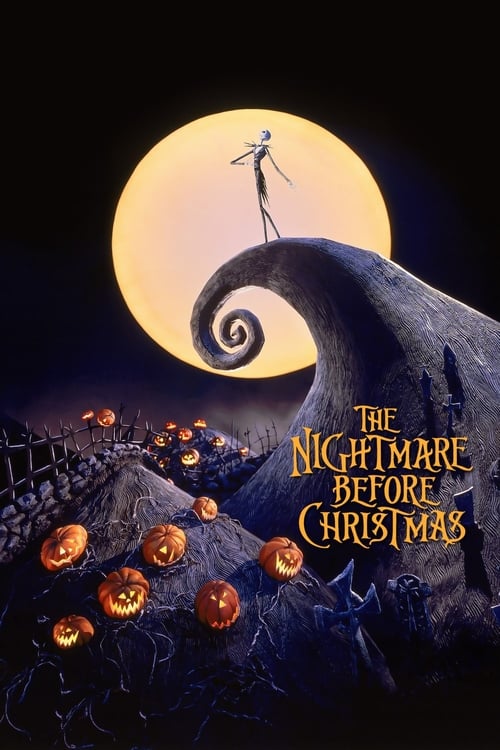
The Nightmare Before Christmas
Tired of scaring humans every October 31 with the same old bag of tricks, Jack Skellington, the spindly king of Halloween Town, kidnaps Santa Claus and plans to deliver shrunken heads and other ghoulish gifts to children on Christmas morning. But as Christmas approaches, Jack's rag-doll girlfriend, Sally, tries to foil his misguided plans.
Despite a mid-range budget of $18.0M, The Nightmare Before Christmas became a box office success, earning $75.6M worldwide—a 320% return.
Nominated for 1 Oscar. 7 wins & 17 nominations


Plot Structure
Story beats plotted across runtime


Narrative Arc
Emotional journey through the story's key moments
Story Circle
Blueprint 15-beat structure
Arcplot Score Breakdown
Weighted: Precision (70%) + Arc (15%) + Theme (15%)
The Nightmare Before Christmas (1993) showcases precise narrative design, characteristic of Henry Selick's storytelling approach. This structural analysis examines how the film's 15-point plot structure maps to proven narrative frameworks across 1 hour and 16 minutes. With an Arcplot score of 7.3, the film balances conventional beats with creative variation.
Structural Analysis
The Status Quo at 1 minutes (1% through the runtime) establishes Jack Skellington stands atop Spiral Hill in Halloween Town, the celebrated Pumpkin King who has just led another successful Halloween, yet his posture suggests emptiness and weariness despite his fame.. Significantly, this early placement immediately immerses viewers in the story world.
The inciting incident occurs at 9 minutes when Jack wanders into the forest and discovers the circle of holiday trees, stumbling through the Christmas Town door into a world of light, warmth, and joy—everything Halloween Town is not.. At 12% through the film, this Disruption aligns precisely with traditional story structure. This beat shifts the emotional landscape, launching the protagonist into the central conflict.
The First Threshold at 19 minutes marks the transition into Act II, occurring at 25% of the runtime. This illustrates the protagonist's commitment to Jack decides "I know what to do!" and announces to the town meeting that Halloween Town will take over Christmas this year. He actively chooses to appropriate Christmas rather than find his own path., moving from reaction to action.
At 37 minutes, the Midpoint arrives at 49% of the runtime—precisely centered, creating perfect narrative symmetry. Structural examination shows that this crucial beat Jack takes off in his coffin sleigh pulled by skeletal reindeer, departing for his Christmas Eve mission. False victory—he believes he's finally found his purpose and everything seems magical, but we (and Sally) know disaster looms., fundamentally raising what's at risk. The emotional intensity shifts, dividing the narrative into clear before-and-after phases.
The Collapse moment at 56 minutes (74% through) represents the emotional nadir. Here, Jack's sleigh is shot down by military artillery and explodes in flames. Jack falls from the sky. Halloween Town watches in horror believing their Pumpkin King is dead. "Whiff of death"—apparent death of the protagonist., shows the protagonist at their lowest point. This beat's placement in the final quarter sets up the climactic reversal.
The Second Threshold at 60 minutes initiates the final act resolution at 79% of the runtime. Jack synthesizes his revelation: he can embrace being the Pumpkin King AND bring new creativity to it. He rushes back to Halloween Town with newfound purpose to fix what he's broken, combining his showmanship with authentic identity., demonstrating the transformation achieved throughout the journey.
Emotional Journey
The Nightmare Before Christmas's emotional architecture traces a deliberate progression across 15 carefully calibrated beats.
Narrative Framework
This structural analysis employs systematic plot point analysis that identifies crucial turning points. By mapping The Nightmare Before Christmas against these established plot points, we can identify how Henry Selick utilizes or subverts traditional narrative conventions. The plot point approach reveals not only adherence to structural principles but also creative choices that distinguish The Nightmare Before Christmas within the fantasy genre.
Henry Selick's Structural Approach
Among the 4 Henry Selick films analyzed on Arcplot, the average structural score is 7.0, reflecting strong command of classical structure. The Nightmare Before Christmas represents one of the director's most structurally precise works. For comparative analysis, explore the complete Henry Selick filmography.
Comparative Analysis
Additional fantasy films include Thinner, Ella Enchanted and Conan the Barbarian. For more Henry Selick analyses, see James and the Giant Peach, Coraline and Monkeybone.
Plot Points by Act
Act I
SetupStatus Quo
Jack Skellington stands atop Spiral Hill in Halloween Town, the celebrated Pumpkin King who has just led another successful Halloween, yet his posture suggests emptiness and weariness despite his fame.
Theme
Sally tells Jack "You're something special, Jack. I know it." This line captures the film's theme about finding and embracing one's true identity rather than conforming to expectations or appropriating others' roles.
Worldbuilding
Establishment of Halloween Town and its characters through "This Is Halloween" song, Jack's triumphant return, the Mayor's reliance on him, Sally's captivity under Dr. Finkelstein, and Jack's existential crisis expressed in "Jack's Lament."
Disruption
Jack wanders into the forest and discovers the circle of holiday trees, stumbling through the Christmas Town door into a world of light, warmth, and joy—everything Halloween Town is not.
Resistance
Jack explores Christmas Town in wonder ("What's This?"), returns to explain Christmas to confused Halloween Town citizens, and obsessively researches Christmas trying to understand it scientifically. Sally expresses concern but Jack doesn't listen.
Act II
ConfrontationFirst Threshold
Jack decides "I know what to do!" and announces to the town meeting that Halloween Town will take over Christmas this year. He actively chooses to appropriate Christmas rather than find his own path.
Mirror World
Sally brings Jack a basket, expressing her feelings and concerns about his Christmas plan. She represents authentic emotion and identity (repeatedly escaping to be herself) in contrast to Jack's appropriation—she is his thematic mirror.
Premise
The "promise of the premise"—Halloween Town preparing for Christmas. Jack assigns tasks, the citizens create horrifying versions of toys and decorations, Lock Shock and Barrel kidnap Santa ("Sandy Claws"), and Jack prepares his Sandy Claws outfit.
Midpoint
Jack takes off in his coffin sleigh pulled by skeletal reindeer, departing for his Christmas Eve mission. False victory—he believes he's finally found his purpose and everything seems magical, but we (and Sally) know disaster looms.
Opposition
Jack delivers presents that terrify children worldwide. News reports show the disaster unfolding. Military mobilizes to shoot down the "impostor." Santa remains imprisoned with Oogie Boogie. Sally's warnings prove prescient as everything collapses.
Collapse
Jack's sleigh is shot down by military artillery and explodes in flames. Jack falls from the sky. Halloween Town watches in horror believing their Pumpkin King is dead. "Whiff of death"—apparent death of the protagonist.
Crisis
Jack emerges from the wreckage alive but devastated. In the graveyard, he processes his failure, initially deflecting blame before having his breakthrough: "I'm the Pumpkin King!" He realizes he was running from his true self.
Act III
ResolutionSecond Threshold
Jack synthesizes his revelation: he can embrace being the Pumpkin King AND bring new creativity to it. He rushes back to Halloween Town with newfound purpose to fix what he's broken, combining his showmanship with authentic identity.
Synthesis
Jack rescues Sally and Santa from Oogie Boogie using his Halloween talents confidently. Santa is freed to save Christmas. Oogie is defeated. Jack and Sally acknowledge their connection as snow falls on Halloween Town—a blending of worlds through authentic self.
Transformation
Jack and Sally stand together on Spiral Hill as snow falls—the same location as the Status Quo but transformed. Jack is no longer alone and empty; he's found identity, purpose, and love by being authentically himself.