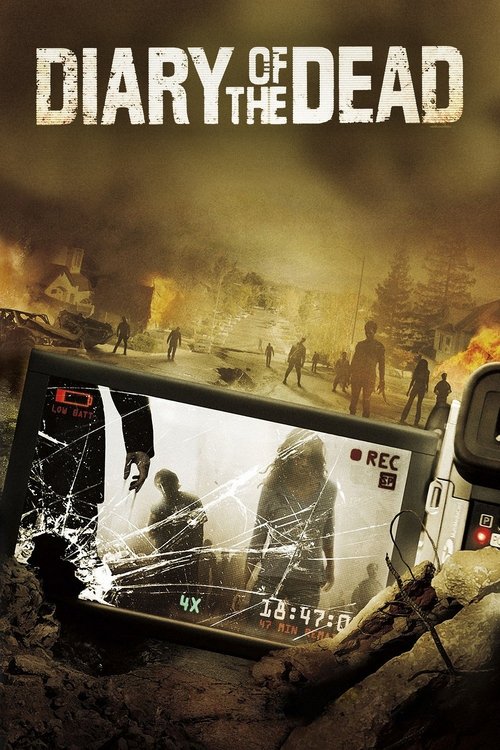
Diary of the Dead
A group of young filmmakers encounter real zombies while filming a horror movie of their own.
Despite its limited budget of $2.0M, Diary of the Dead became a solid performer, earning $5.5M worldwide—a 177% return.
1 win & 1 nomination


Plot Structure
Story beats plotted across runtime


Narrative Arc
Emotional journey through the story's key moments
Story Circle
Blueprint 15-beat structure
Arcplot Score Breakdown
Weighted: Precision (70%) + Arc (15%) + Theme (15%)
Diary of the Dead (2007) exemplifies carefully calibrated story structure, characteristic of George A. Romero's storytelling approach. This structural analysis examines how the film's 15-point plot structure maps to proven narrative frameworks across 1 hour and 36 minutes. With an Arcplot score of 7.1, the film balances conventional beats with creative variation.
Characters
Cast & narrative archetypes

Jason Creed
Debra Moynihan
Tony Ravello
Ridley
Mary Dexter
Eliot Stone
Tracy Thurman
Main Cast & Characters
Jason Creed
Played by Joshua Close
Film student obsessed with documenting the zombie apocalypse, often prioritizing footage over people's safety.
Debra Moynihan
Played by Michelle Morgan
Jason's girlfriend and narrator, increasingly disturbed by his obsession with filming over helping survivors.
Tony Ravello
Played by Shawn Roberts
Film student and group member who becomes increasingly aggressive and unstable during the crisis.
Ridley
Played by Philip Riccio
The group's professor and horror film director, initially dismissive but becomes a voice of reason.
Mary Dexter
Played by Tatiana Maslany
Acting student who struggles with the moral implications of their documentation project.
Eliot Stone
Played by Joe Dinicol
Sound technician and film student who provides technical support and comic relief.
Tracy Thurman
Played by Amy Lalonde
Makeup and effects student in the group, pragmatic and survival-focused.
Structural Analysis
The Status Quo at 1 minutes (1% through the runtime) establishes Film students shoot a horror movie in the woods. Jason films everything obsessively, establishing his identity as documentarian and the group's creative, carefree dynamic before the world collapses.. Significantly, this early placement immediately immerses viewers in the story world.
The inciting incident occurs at 10 minutes when Emergency broadcast announces the dead are returning to life and attacking the living. The horror movie becomes reality; the students' safe, creative world is shattered by incomprehensible terror.. At 10% through the film, this Disruption aligns precisely with traditional story structure. This beat shifts the emotional landscape, launching the protagonist into the central conflict.
The First Threshold at 22 minutes marks the transition into Act II, occurring at 23% of the runtime. This indicates the protagonist's commitment to The group decides to leave campus and head to Debra's family home, actively choosing to enter the zombie-infested world rather than barricading themselves. Jason commits to filming the entire journey as a document of truth., moving from reaction to action.
At 47 minutes, the Midpoint arrives at 49% of the runtime—precisely centered, creating perfect narrative symmetry. Structural examination shows that this crucial beat The group reaches what seems like sanctuary (a wealthy estate with supplies), but discover the owners are dead/undead. False victory of finding shelter immediately collapses. Stakes raise: nowhere is truly safe, and Jason's filming nearly gets someone killed., fundamentally raising what's at risk. The emotional intensity shifts, dividing the narrative into clear before-and-after phases.
The Collapse moment at 69 minutes (72% through) represents the emotional nadir. Here, A beloved character dies because Jason was filming instead of helping. The "whiff of death" is literal and moral—Jason's obsession with truth has killed someone he cared about. His documentary has become complicit in death., reveals the protagonist at their lowest point. This beat's placement in the final quarter sets up the climactic reversal.
The Second Threshold at 76 minutes initiates the final act resolution at 79% of the runtime. Jason decides to continue filming but with new purpose: not just to document, but to bear witness and upload the truth so the world can see what's really happening—a synthesis of his documentary impulse with moral responsibility., demonstrating the transformation achieved throughout the journey.
Emotional Journey
Diary of the Dead's emotional architecture traces a deliberate progression across 15 carefully calibrated beats.
Narrative Framework
This structural analysis employs proven narrative structure principles that track dramatic progression. By mapping Diary of the Dead against these established plot points, we can identify how George A. Romero utilizes or subverts traditional narrative conventions. The plot point approach reveals not only adherence to structural principles but also creative choices that distinguish Diary of the Dead within the horror genre.
George A. Romero's Structural Approach
Among the 8 George A. Romero films analyzed on Arcplot, the average structural score is 6.7, demonstrating varied approaches to story architecture. Diary of the Dead represents one of the director's most structurally precise works. For comparative analysis, explore the complete George A. Romero filmography.
Comparative Analysis
Additional horror films include Thinner, A Nightmare on Elm Street and Mary Reilly. For more George A. Romero analyses, see Dawn of the Dead, Creepshow and Day of the Dead.
Plot Points by Act
Act I
SetupStatus Quo
Film students shoot a horror movie in the woods. Jason films everything obsessively, establishing his identity as documentarian and the group's creative, carefree dynamic before the world collapses.
Theme
Debra (narrator) questions Jason's compulsion to film: "Are you recording this to upload or to remember?" The central question: is documenting reality more important than living it or helping others?
Worldbuilding
Establishing the film students, their relationships, and the movie-within-a-movie setup. News reports on car radios hint at strange events. The group is isolated, creative, and unprepared for crisis.
Disruption
Emergency broadcast announces the dead are returning to life and attacking the living. The horror movie becomes reality; the students' safe, creative world is shattered by incomprehensible terror.
Resistance
The group debates what to do—go home, seek safety, or keep filming. Jason insists on documenting everything. They witness their professor become a zombie. Tension between filming and surviving emerges.
Act II
ConfrontationFirst Threshold
The group decides to leave campus and head to Debra's family home, actively choosing to enter the zombie-infested world rather than barricading themselves. Jason commits to filming the entire journey as a document of truth.
Mirror World
Encounter with other survivors online—people uploading footage of the outbreak. This digital community represents the Mirror World: the thematic counterpoint of collective documentation vs. individual action and human connection.
Premise
The promise of found-footage zombie horror: the group travels through apocalyptic America, filming encounters with the undead, military, and other survivors. Jason's camera obsession grows as reality becomes more horrific.
Midpoint
The group reaches what seems like sanctuary (a wealthy estate with supplies), but discover the owners are dead/undead. False victory of finding shelter immediately collapses. Stakes raise: nowhere is truly safe, and Jason's filming nearly gets someone killed.
Opposition
Internal conflicts intensify as Jason's obsession with filming causes others to suffer. The group fractures over his refusal to help when the camera is rolling. Zombie threats increase; friends question whether documenting horror is worth their lives.
Collapse
A beloved character dies because Jason was filming instead of helping. The "whiff of death" is literal and moral—Jason's obsession with truth has killed someone he cared about. His documentary has become complicit in death.
Crisis
Jason processes the cost of his obsession. Debra confronts him about choosing the camera over humanity. Dark night of questioning whether documenting the truth matters if you lose your soul in the process.
Act III
ResolutionSecond Threshold
Jason decides to continue filming but with new purpose: not just to document, but to bear witness and upload the truth so the world can see what's really happening—a synthesis of his documentary impulse with moral responsibility.
Synthesis
The survivors fortify their position and upload the footage to the internet. Final confrontations with zombies. Jason films the finale, but now balances documenting with protecting others. The documentary becomes their legacy and warning.
Transformation
Debra narrates over the final footage: the film has been uploaded, but they remain trapped, uncertain of survival. The transformation is ambiguous—they documented the truth, but at tremendous cost. Has anything really changed?