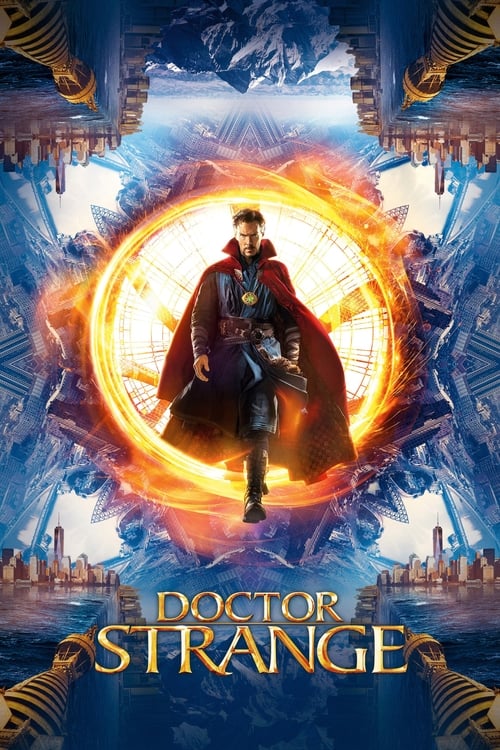
Doctor Strange
While on a journey of physical and spiritual healing, a brilliant neurosurgeon is drawn into the world of the mystic arts.
Despite a blockbuster budget of $180.0M, Doctor Strange became a box office success, earning $676.3M worldwide—a 276% return. This commercial performance validated the ambitious narrative scope, confirming that audiences embrace compelling narrative even at blockbuster scale.
Nominated for 1 Oscar. 21 wins & 68 nominations


Plot Structure
Story beats plotted across runtime


Narrative Arc
Emotional journey through the story's key moments
Story Circle
Blueprint 15-beat structure
Characters
Cast & narrative archetypes

Dr. Stephen Strange
The Ancient One
Karl Mordo
Kaecilius
Christine Palmer
Wong
Main Cast & Characters
Dr. Stephen Strange
Played by Benedict Cumberbatch
A brilliant but arrogant neurosurgeon who loses his hands in an accident and seeks mystical healing, becoming Master of the Mystic Arts.
The Ancient One
Played by Tilda Swinton
The ageless Sorcerer Supreme who teaches Strange the mystic arts while hiding her own use of dark dimension power.
Karl Mordo
Played by Chiwetel Ejiofor
A skilled sorcerer and loyal student of the Ancient One who becomes disillusioned with her deception.
Kaecilius
Played by Mads Mikkelsen
A former student of the Ancient One who turns to Dormammu and dark magic, seeking eternal life.
Christine Palmer
Played by Rachel McAdams
An emergency room surgeon and Strange's former colleague and love interest who grounds him in reality.
Wong
Played by Benedict Wong
The master librarian of Kamar-Taj and protector of ancient texts who becomes Strange's ally and friend.
Structural Analysis
The Status Quo at 1 minutes (1% through the runtime) establishes Dr. Stephen Strange, brilliant neurosurgeon, confidently performs a complex surgery while demonstrating his exceptional skill and arrogance. He lives at the top of his field, surrounded by luxury and accolades.. Significantly, this early placement immediately immerses viewers in the story world.
The inciting incident occurs at 14 minutes when While driving recklessly and reviewing patient files, Strange crashes his car off a cliff. His hands are catastrophically damaged, destroying the source of his identity and cutting him off from his entire world as a surgeon.. At 12% through the film, this Disruption aligns precisely with traditional story structure. This beat shifts the emotional landscape, launching the protagonist into the central conflict.
The First Threshold at 29 minutes marks the transition into Act II, occurring at 25% of the runtime. This reveals the protagonist's commitment to Strange finds Kamar-Taj and pounds on the door, choosing to humble himself and ask for help. When Mordo brings him to the Ancient One, Strange actively chooses to stay and learn despite his skepticism, crossing into the mystical world., moving from reaction to action.
At 58 minutes, the Midpoint arrives at 50% of the runtime—precisely centered, creating perfect narrative symmetry. Significantly, this crucial beat Kaecilius attacks Kamar-Taj. During the battle, Strange uses the Eye of Agamotto (Time Stone) creatively but the Ancient One is mortally wounded. Strange seemingly gains a victory by driving Kaecilius away, but loses his mentor. Stakes are raised—he must now face the threat without her guidance., fundamentally raising what's at risk. The emotional intensity shifts, dividing the narrative into clear before-and-after phases.
The Collapse moment at 86 minutes (75% through) represents the emotional nadir. Here, Hong Kong Sanctum is destroyed and Wong is killed. The Dark Dimension breaks through into Earth. Strange arrives to find the city consumed by Dormammu's power and his allies dead. All seems lost—there is a literal "whiff of death" as reality itself is dying., illustrates the protagonist at their lowest point. This beat's placement in the final quarter sets up the climactic reversal.
The Second Threshold at 92 minutes initiates the final act resolution at 80% of the runtime. Strange uses the Eye of Agamotto to reverse time and restore Wong and the Sanctum. Then he makes a crucial synthesis: combining his medical knowledge (pain tolerance, stubborn persistence) with mystical power (time loop) to confront Dormammu directly—not with violence but with negotiation and sacrifice., demonstrating the transformation achieved throughout the journey.
Emotional Journey
Doctor Strange's emotional architecture traces a deliberate progression across 15 carefully calibrated beats.
Narrative Framework
This structural analysis employs structural analysis methodology used to understand storytelling architecture. By mapping Doctor Strange against these established plot points, we can identify how Scott Derrickson utilizes or subverts traditional narrative conventions. The plot point approach reveals not only adherence to structural principles but also creative choices that distinguish Doctor Strange within the action genre.
Scott Derrickson's Structural Approach
Among the 6 Scott Derrickson films analyzed on Arcplot, the average structural score is 6.9, demonstrating varied approaches to story architecture. Doctor Strange exemplifies the director's characteristic narrative technique. For comparative analysis, explore the complete Scott Derrickson filmography.
Comparative Analysis
Additional action films include The Bad Guys, Puss in Boots and Venom: The Last Dance. For more Scott Derrickson analyses, see Deliver Us from Evil, The Black Phone and Sinister.
Plot Points by Act
Act I
SetupStatus Quo
Dr. Stephen Strange, brilliant neurosurgeon, confidently performs a complex surgery while demonstrating his exceptional skill and arrogance. He lives at the top of his field, surrounded by luxury and accolades.
Theme
The Ancient One tells Kaecilius: "You're a man looking at the world through a keyhole. You've spent your life trying to widen that keyhole... to see more, know more. And now, on hearing that it can be widened in ways you can't imagine, you reject the possibility." Theme: transcending ego and limited perception.
Worldbuilding
Strange's world of medical excellence is established. He lives in his luxurious apartment, drives expensive cars, maintains a complicated relationship with Christine Palmer, and displays supreme confidence bordering on hubris. His hands are his identity and source of power.
Disruption
While driving recklessly and reviewing patient files, Strange crashes his car off a cliff. His hands are catastrophically damaged, destroying the source of his identity and cutting him off from his entire world as a surgeon.
Resistance
Strange undergoes multiple surgeries and extensive rehabilitation, refusing to accept his condition. He burns through his fortune seeking experimental treatments. Christine tries to help him move forward, but he rejects her. Desperate, he hears about Jonathan Pangborn, a paralyzed man who walked again, and decides to seek him out in Kathmandu.
Act II
ConfrontationFirst Threshold
Strange finds Kamar-Taj and pounds on the door, choosing to humble himself and ask for help. When Mordo brings him to the Ancient One, Strange actively chooses to stay and learn despite his skepticism, crossing into the mystical world.
Mirror World
The Ancient One sends Strange on his first journey through the multiverse, forcibly expanding his perception beyond the material world. This psychedelic experience shatters his rational worldview and introduces him to the Mirror Dimension and astral plane.
Premise
Strange trains in the mystic arts, learning to manipulate reality, create portals, and fight. He studies ancient texts, masters the use of relics, struggles with his intellectual approach versus intuitive magic. He discovers Kaecilius's plot and the threat of Dormammu. Fun sequence of magical training montages, studying in libraries, and early battles in mirror dimensions.
Midpoint
Kaecilius attacks Kamar-Taj. During the battle, Strange uses the Eye of Agamotto (Time Stone) creatively but the Ancient One is mortally wounded. Strange seemingly gains a victory by driving Kaecilius away, but loses his mentor. Stakes are raised—he must now face the threat without her guidance.
Opposition
The Ancient One dies, revealing she has been drawing power from the Dark Dimension to extend her life. Strange grapples with this moral complexity. Kaecilius attacks the New York Sanctum. The Hong Kong Sanctum falls. Dormammu begins consuming Earth. Strange faces increasingly impossible odds as the barriers between dimensions collapse.
Collapse
Hong Kong Sanctum is destroyed and Wong is killed. The Dark Dimension breaks through into Earth. Strange arrives to find the city consumed by Dormammu's power and his allies dead. All seems lost—there is a literal "whiff of death" as reality itself is dying.
Crisis
Strange realizes fighting won't work. He processes the Ancient One's final lesson about the purpose not being about him. He understands that sacrifice and surrender, not ego-driven victory, may be the answer.
Act III
ResolutionSecond Threshold
Strange uses the Eye of Agamotto to reverse time and restore Wong and the Sanctum. Then he makes a crucial synthesis: combining his medical knowledge (pain tolerance, stubborn persistence) with mystical power (time loop) to confront Dormammu directly—not with violence but with negotiation and sacrifice.
Synthesis
Strange traps himself and Dormammu in a time loop, dying repeatedly but resetting infinitely. He bargains: leave Earth alone and take Kaecilius instead. Dormammu, frustrated by being trapped in time (anathema to a timeless being), accepts. Strange saves Earth through sacrifice and cleverness rather than power. He returns to the New York Sanctum as its new protector.
Transformation
Strange stands in the New York Sanctum wearing the Eye of Agamotto, no longer the arrogant surgeon seeking glory but a humble protector accepting his role as guardian. When asked about his watch (symbol of his old life), he puts it on—integrating his past with his new self. He is transformed from selfish to selfless.