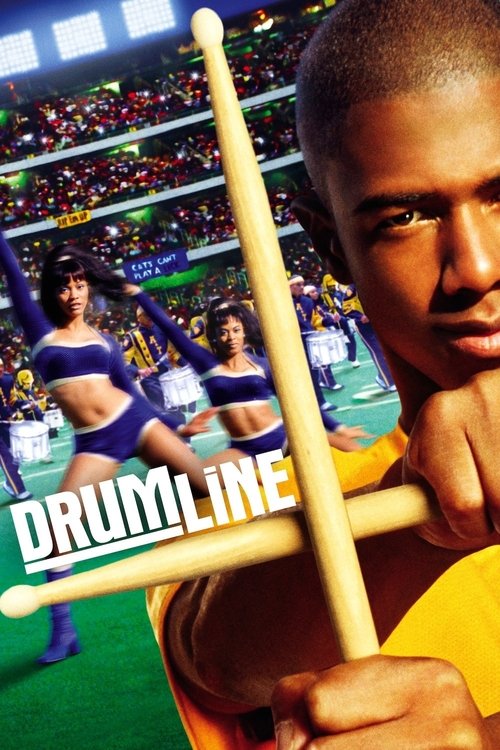
Drumline
A talented street drummer from Harlem enrolls in a Southern university, expecting to lead its marching band's drumline to victory. He initially flounders in his new world, before realizing that it takes more than talent to reach the top.
Despite a mid-range budget of $20.0M, Drumline became a commercial success, earning $57.6M worldwide—a 188% return.


Plot Structure
Story beats plotted across runtime


Narrative Arc
Emotional journey through the story's key moments
Story Circle
Blueprint 15-beat structure
Arcplot Score Breakdown
Weighted: Precision (70%) + Arc (15%) + Theme (15%)
Drumline (2002) reveals precise narrative design, characteristic of Charles Stone III's storytelling approach. This structural analysis examines how the film's 15-point plot structure maps to proven narrative frameworks across 1 hour and 58 minutes. With an Arcplot score of 7.2, the film balances conventional beats with creative variation.
Characters
Cast & narrative archetypes

Devon Miles
Dr. Lee
Sean Taylor
Laila
Mr. Wade
Jayson
Ernest
Main Cast & Characters
Devon Miles
Played by Nick Cannon
A talented street drummer from Harlem who earns a full scholarship to Atlanta A&T University, where his raw talent clashes with traditional marching band discipline.
Dr. Lee
Played by Orlando Jones
The stern but principled band director of the Atlanta A&T marching band who demands discipline, respect, and traditional excellence from his musicians.
Sean Taylor
Played by Leonard Roberts
The senior section leader of the drumline who feels threatened by Devon's natural talent and unconventional style, leading to intense rivalry.
Laila
Played by Zoe Saldana
An attractive upperclassman dancer in the band who becomes Devon's love interest and helps him understand the value of teamwork and humility.
Mr. Wade
Played by J. Anthony Brown
The supportive university president who believes in the band program and mediates between tradition and innovation.
Jayson
Played by GQ
Devon's roommate and fellow bandmate who provides comic relief and loyal friendship throughout Devon's struggles.
Ernest
Played by Jason Weaver
A drumline member and Devon's friend who helps bridge the gap between Devon and the rest of the section.
Structural Analysis
The Status Quo at 1 minutes (1% through the runtime) establishes Devon performs a spectacular drumline solo in Harlem, showcasing his natural talent and street-style swagger. He's the star of his high school band, confident and undisciplined.. Structural examination shows that this early placement immediately immerses viewers in the story world.
The inciting incident occurs at 13 minutes when Band Director Dr. Lee kicks Devon off the field for showboating during practice, telling him he's "not ready" for the line. Devon's natural talent isn't enough - the old way won't work here.. At 11% through the film, this Disruption aligns precisely with traditional story structure. This beat shifts the emotional landscape, launching the protagonist into the central conflict.
The First Threshold at 29 minutes marks the transition into Act II, occurring at 24% of the runtime. This illustrates the protagonist's commitment to Devon earns his spot on the drumline by demonstrating he's learned to read music and follow direction. Dr. Lee promotes him from P3 to the line - Devon actively chooses to submit to the system., moving from reaction to action.
At 58 minutes, the Midpoint arrives at 50% of the runtime—precisely centered, creating perfect narrative symmetry. The analysis reveals that this crucial beat Devon is given a featured solo at the BET Big Southern Classic halftime show. It's a false victory - he's achieving recognition, but his arrogance is growing. The crowd loves him, reinforcing his ego-driven approach., fundamentally raising what's at risk. The emotional intensity shifts, dividing the narrative into clear before-and-after phases.
The Collapse moment at 86 minutes (73% through) represents the emotional nadir. Here, Dr. Lee dismisses Devon from the band for insubordination after he plays an unauthorized solo during the Classic. Devon loses everything - his position, his scholarship, his dream. His ego has destroyed what he valued most., shows the protagonist at their lowest point. This beat's placement in the final quarter sets up the climactic reversal.
The Second Threshold at 92 minutes initiates the final act resolution at 78% of the runtime. Dr. Lee visits Devon in Harlem and tells him about his own past failure and redemption. He offers Devon a chance to return - not as a star, but as a team player. Devon accepts, finally understanding "one band, one sound."., demonstrating the transformation achieved throughout the journey.
Emotional Journey
Drumline's emotional architecture traces a deliberate progression across 15 carefully calibrated beats.
Narrative Framework
This structural analysis employs a 15-point narrative structure framework that maps key story moments. By mapping Drumline against these established plot points, we can identify how Charles Stone III utilizes or subverts traditional narrative conventions. The plot point approach reveals not only adherence to structural principles but also creative choices that distinguish Drumline within the drama genre.
Charles Stone III's Structural Approach
Among the 4 Charles Stone III films analyzed on Arcplot, the average structural score is 7.3, reflecting strong command of classical structure. Drumline takes a more unconventional approach compared to the director's typical style. For comparative analysis, explore the complete Charles Stone III filmography.
Comparative Analysis
Additional drama films include After Thomas, South Pacific and Dirty Dancing: Havana Nights. For more Charles Stone III analyses, see Uncle Drew, Mr. 3000 and The Underdoggs.
Plot Points by Act
Act I
SetupStatus Quo
Devon performs a spectacular drumline solo in Harlem, showcasing his natural talent and street-style swagger. He's the star of his high school band, confident and undisciplined.
Theme
Dr. Lee tells incoming band members: "One band, one sound." The theme of individual talent versus collective unity is established - success requires subordinating ego to the team.
Worldbuilding
Devon arrives at Atlanta A&T on full scholarship, meets his roommate Jayson, encounters the intense world of HBCU marching band culture, and clashes immediately with section leader Sean over reading music vs playing by ear.
Disruption
Band Director Dr. Lee kicks Devon off the field for showboating during practice, telling him he's "not ready" for the line. Devon's natural talent isn't enough - the old way won't work here.
Resistance
Devon struggles in the P3 section (practice players), debates whether to stay or leave, learns music theory from Laila, and gradually begins understanding the discipline required. Dr. Lee mentors him indirectly through tough love.
Act II
ConfrontationFirst Threshold
Devon earns his spot on the drumline by demonstrating he's learned to read music and follow direction. Dr. Lee promotes him from P3 to the line - Devon actively chooses to submit to the system.
Mirror World
Devon and Laila's relationship deepens as they connect over music and vulnerability. She represents the thematic balance - individual artistry within disciplined structure. She challenges him to grow beyond ego.
Premise
Devon thrives on the drumline, performing at games and competitions. The band defeats Morris Brown at the Crispus Attucks invitational. Devon's talent shines, but his ego grows - he starts challenging Sean's leadership and showboating again.
Midpoint
Devon is given a featured solo at the BET Big Southern Classic halftime show. It's a false victory - he's achieving recognition, but his arrogance is growing. The crowd loves him, reinforcing his ego-driven approach.
Opposition
Devon's showboating escalates - he plays unauthorized solos, disrespects Sean's authority, and prioritizes individual glory over team unity. Sean and Devon fight. The band's cohesion fractures. Dr. Lee warns Devon repeatedly.
Collapse
Dr. Lee dismisses Devon from the band for insubordination after he plays an unauthorized solo during the Classic. Devon loses everything - his position, his scholarship, his dream. His ego has destroyed what he valued most.
Crisis
Devon returns home to Harlem, defeated and lost. He processes his failure, works with his old band director Mr. Wade, and confronts the emptiness of individual glory without purpose or team. Dark night of reflection.
Act III
ResolutionSecond Threshold
Dr. Lee visits Devon in Harlem and tells him about his own past failure and redemption. He offers Devon a chance to return - not as a star, but as a team player. Devon accepts, finally understanding "one band, one sound."
Synthesis
Devon returns transformed, apologizes to Sean and the band, and submits fully to the team. At the championship against Morris Brown, he contributes selflessly. The band performs as one unit, with Devon supporting rather than showboating.
Transformation
Atlanta A&T wins the championship. Devon celebrates not as an individual star but as part of the unified band, embraced by his brothers. He's become what Dr. Lee envisioned - talented AND disciplined, individual AND team.