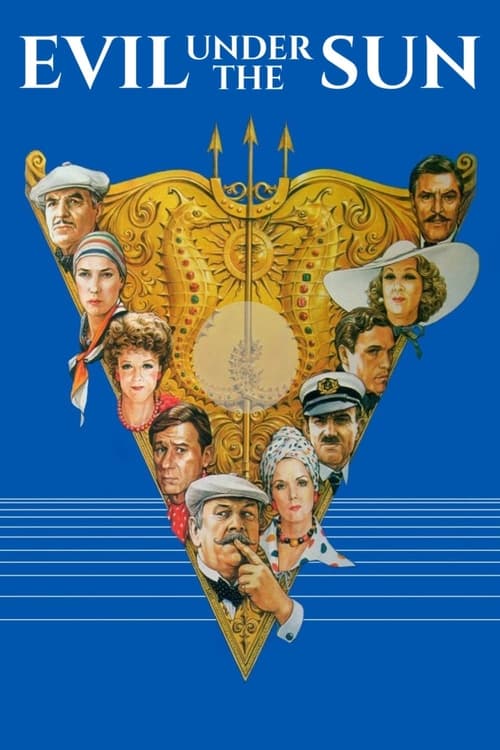
Evil Under the Sun
An opulent beach resort provides a scenic background to this amusing whodunit as Poirot attempts to uncover the nefarious evildoer behind the strangling of a notorious stage star.
The film disappointed at the box office against its small-scale budget of $10.0M, earning $6.1M globally (-39% loss). While initial box office returns were modest, the film has gained appreciation for its compelling narrative within the thriller genre.


Plot Structure
Story beats plotted across runtime


Narrative Arc
Emotional journey through the story's key moments
Story Circle
Blueprint 15-beat structure
Arcplot Score Breakdown
Weighted: Precision (70%) + Arc (15%) + Theme (15%)
Evil Under the Sun (1982) exemplifies meticulously timed plot construction, characteristic of Guy Hamilton's storytelling approach. This structural analysis examines how the film's 15-point plot structure maps to proven narrative frameworks across 1 hour and 57 minutes. With an Arcplot score of 6.9, the film balances conventional beats with creative variation.
Characters
Cast & narrative archetypes

Hercule Poirot
Arlena Marshall
Daphne Castle
Kenneth Marshall
Patrick Redfern
Christine Redfern
Rex Brewster
Odell Gardener
Main Cast & Characters
Hercule Poirot
Played by Peter Ustinov
Belgian detective who investigates a murder at a luxury island resort. Methodical, observant, and dedicated to justice.
Arlena Marshall
Played by Diana Rigg
Glamorous actress and victim of the murder. Beautiful, narcissistic, and manipulative in her relationships.
Daphne Castle
Played by Maggie Smith
Arlena's bitter rival and former friend. Resentful and harboring deep grudges from past betrayals.
Kenneth Marshall
Played by Denis Quilley
Arlena's long-suffering husband. Patient but emotionally detached, trapped in an unhappy marriage.
Patrick Redfern
Played by Nicholas Clay
Young man having an affair with Arlena. Charming but weak-willed and easily manipulated.
Christine Redfern
Played by Jane Birkin
Patrick's wife who appears mousy and devoted. Harbors hidden depths and quiet determination.
Rex Brewster
Played by Roddy McDowall
Theatrical producer and gossip columnist. Flamboyant, theatrical, and keenly observant of social dynamics.
Odell Gardener
Played by Sylvia Miles
American widow and hotel guest. Wealthy, opinionated, and morally judgmental of others.
Structural Analysis
The Status Quo at 1 minutes (1% through the runtime) establishes Hercule Poirot attends a lavish theatrical production in London, observing the glamorous world of stage actress Arlena Marshall. His orderly world is intact, his reputation as a detective established.. The analysis reveals that this early placement immediately immerses viewers in the story world.
The inciting incident occurs at 15 minutes when Poirot receives an urgent summons to the exclusive Adriatic island resort. A mysterious client needs his services, suggesting danger and deception are already in motion before he arrives.. At 13% through the film, this Disruption is delayed, allowing extended setup of the story world. This beat shifts the emotional landscape, launching the protagonist into the central conflict.
The First Threshold at 29 minutes marks the transition into Act II, occurring at 25% of the runtime. This illustrates the protagonist's commitment to Arlena Marshall is found murdered on the beach. Poirot actively commits to investigating the case, accepting his role as detective. The murder transforms the luxury vacation into a locked-room mystery., moving from reaction to action.
At 59 minutes, the Midpoint arrives at 50% of the runtime—precisely centered, creating perfect narrative symmetry. Structural examination shows that this crucial beat Poirot discovers a crucial piece of evidence or realizes the complexity of the conspiracy. What seemed like a crime of passion reveals itself as an elaborately planned murder. The stakes raise as he understands multiple people may be involved., fundamentally raising what's at risk. The emotional intensity shifts, dividing the narrative into clear before-and-after phases.
The Collapse moment at 88 minutes (75% through) represents the emotional nadir. Here, Poirot confronts the seeming impossibility of the case. The alibis appear unbreakable, and he faces his moment of doubt. The truth seems just out of reach, and the murderer may escape justice., indicates the protagonist at their lowest point. This beat's placement in the final quarter sets up the climactic reversal.
The Second Threshold at 94 minutes initiates the final act resolution at 80% of the runtime. The crucial insight strikes: Poirot realizes the murder required collaboration and that the timeline itself was manipulated. He sees how the conspiracy was constructed and who benefited. He now has the complete solution., demonstrating the transformation achieved throughout the journey.
Emotional Journey
Evil Under the Sun's emotional architecture traces a deliberate progression across 15 carefully calibrated beats.
Narrative Framework
This structural analysis employs structural analysis methodology used to understand storytelling architecture. By mapping Evil Under the Sun against these established plot points, we can identify how Guy Hamilton utilizes or subverts traditional narrative conventions. The plot point approach reveals not only adherence to structural principles but also creative choices that distinguish Evil Under the Sun within the thriller genre.
Guy Hamilton's Structural Approach
Among the 7 Guy Hamilton films analyzed on Arcplot, the average structural score is 6.9, demonstrating varied approaches to story architecture. Evil Under the Sun takes a more unconventional approach compared to the director's typical style. For comparative analysis, explore the complete Guy Hamilton filmography.
Comparative Analysis
Additional thriller films include The Warriors, Thunderball and Rustom. For more Guy Hamilton analyses, see Live and Let Die, The Mirror Crack'd and Force 10 from Navarone.
Plot Points by Act
Act I
SetupStatus Quo
Hercule Poirot attends a lavish theatrical production in London, observing the glamorous world of stage actress Arlena Marshall. His orderly world is intact, his reputation as a detective established.
Theme
A character remarks on the nature of jealousy and romantic obsession, noting how "some people will do anything for love or revenge." This establishes the film's thematic exploration of passion, deception, and the masks people wear.
Worldbuilding
Introduction to the ensemble cast of characters who will converge at the island resort: Arlena Marshall and her husband Kenneth, Daphne Castle, Patrick and Christine Redfern, and others. Their relationships, jealousies, and connections to Arlena are established.
Disruption
Poirot receives an urgent summons to the exclusive Adriatic island resort. A mysterious client needs his services, suggesting danger and deception are already in motion before he arrives.
Resistance
Poirot arrives at the island resort and observes the various guests and their tangled relationships. He recognizes many have motives to harm Arlena Marshall. He debates whether to intervene or simply observe, gathering information about each suspect.
Act II
ConfrontationFirst Threshold
Arlena Marshall is found murdered on the beach. Poirot actively commits to investigating the case, accepting his role as detective. The murder transforms the luxury vacation into a locked-room mystery.
Mirror World
Poirot's relationship with the other guests, particularly the young lovers and the wronged spouses, serves as a mirror to explore the theme. Their romantic entanglements contrast with Poirot's objective, rational approach to human nature.
Premise
The "fun and games" of a classic whodunit: Poirot interviews suspects, discovers alibis, uncovers secrets and lies. Each character's motive and opportunity are examined. Red herrings abound as Poirot pieces together the puzzle in the glamorous island setting.
Midpoint
Poirot discovers a crucial piece of evidence or realizes the complexity of the conspiracy. What seemed like a crime of passion reveals itself as an elaborately planned murder. The stakes raise as he understands multiple people may be involved.
Opposition
Suspects become defensive and uncooperative. Poirot faces resistance as people close ranks. The conspirators' plan seems airtight. Each new revelation only deepens the mystery, and Poirot struggles to find the unifying thread that connects all the evidence.
Collapse
Poirot confronts the seeming impossibility of the case. The alibis appear unbreakable, and he faces his moment of doubt. The truth seems just out of reach, and the murderer may escape justice.
Crisis
Poirot retreats into contemplation, reviewing all the evidence in his mind. He processes the emotional and logical dimensions of the crime, wrestling with the psychology of the murderers.
Act III
ResolutionSecond Threshold
The crucial insight strikes: Poirot realizes the murder required collaboration and that the timeline itself was manipulated. He sees how the conspiracy was constructed and who benefited. He now has the complete solution.
Synthesis
Poirot gathers all suspects and dramatically reveals the solution. He exposes the conspirators, explains how the murder was committed, demonstrates the deception, and unveils the motives. Justice is served as the guilty parties are revealed.
Transformation
Poirot departs the island, order restored. The closing image shows him returning to his orderly world, but with the satisfaction of having unmasked deception and delivered justice. Truth has triumphed over elaborate lies.