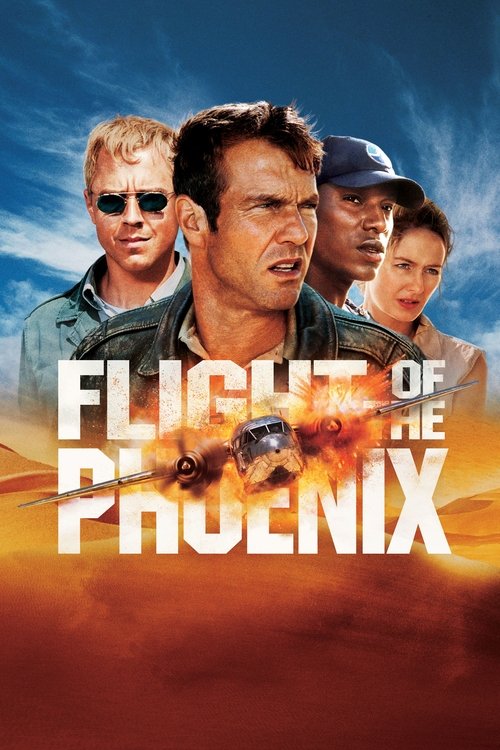
Flight of the Phoenix
When an oil rig in the Gobi Desert of Mongolia proves unproductive, an aircraft crew are sent to shut the operation down and fly them out. On the flight out over the desert on the way to Beijing, Capt. Frank Towns and co-pilot A.J. are unable to keep their cargo plane, a C-119 Flying Boxcar, in the air when a violent sandstorm strikes. Crash-landing in a remote uncharted part of the desert, the two pilots and their passengers -- a crew of oil workers and a drifter -- must work together to survive by rebuilding the aircraft. Soon, low supplies and a band of merciless smugglers add even greater urgency to their task.
The film box office disappointment against its moderate budget of $45.0M, earning $21.0M globally (-53% loss). While initial box office returns were modest, the film has gained appreciation for its unique voice within the action genre.


Plot Structure
Story beats plotted across runtime


Narrative Arc
Emotional journey through the story's key moments
Story Circle
Blueprint 15-beat structure
Arcplot Score Breakdown
Weighted: Precision (70%) + Arc (15%) + Theme (15%)
Flight of the Phoenix (2004) reveals precise dramatic framework, characteristic of John Moore's storytelling approach. This structural analysis examines how the film's 15-point plot structure maps to proven narrative frameworks across 1 hour and 53 minutes. With an Arcplot score of 7.2, the film balances conventional beats with creative variation.
Characters
Cast & narrative archetypes

Frank Towns
Elliott
A.J.
Kelly Johnson
Rady
Liddle
Sammi
Main Cast & Characters
Frank Towns
Played by Dennis Quaid
Pragmatic cargo pilot forced to lead survivors after crash in Gobi Desert
Elliott
Played by Giovanni Ribisi
Mysterious aircraft designer who proposes building new plane from wreckage
A.J.
Played by Tyrese Gibson
Frank's co-pilot and best friend, loyal but increasingly strained by crisis
Kelly Johnson
Played by Miranda Otto
Corporate efficiency expert and pragmatic problem-solver among survivors
Rady
Played by Scott Michael Campbell
Oil worker and skeptical voice who questions Elliott's plan
Liddle
Played by Hugh Laurie
Wounded survivor dealing with cancer diagnosis and seeking redemption
Sammi
Played by Jacob Vargas
African oil worker who becomes crucial to survival efforts
Structural Analysis
The Status Quo at 1 minutes (1% through the runtime) establishes Captain Frank Towns flies cargo planes in Mongolia with co-pilot AJ. He's confident, cocky, and in complete control of his routine world.. Notably, this early placement immediately immerses viewers in the story world.
The inciting incident occurs at 13 minutes when Severe sandstorm strikes. Despite warnings, Towns tries to fly through it. The plane is violently battered and crashes in the Gobi Desert, killing several crew members.. At 11% through the film, this Disruption aligns precisely with traditional story structure. This beat shifts the emotional landscape, launching the protagonist into the central conflict.
The First Threshold at 28 minutes marks the transition into Act II, occurring at 25% of the runtime. This indicates the protagonist's commitment to After one survivor attempts to walk out and dies in the desert, Towns reluctantly agrees to Elliott's seemingly impossible plan: strip the wreckage and build a new single-engine plane called "The Phoenix."., moving from reaction to action.
At 57 minutes, the Midpoint arrives at 50% of the runtime—precisely centered, creating perfect narrative symmetry. Significantly, this crucial beat Nomadic bandits attack the camp seeking resources. In the violent confrontation, Rady is killed. The survivors realize they're completely alone—no rescue is coming, and they face human threats in addition to nature. Stakes raise dramatically., fundamentally raising what's at risk. The emotional intensity shifts, dividing the narrative into clear before-and-after phases.
The Collapse moment at 82 minutes (72% through) represents the emotional nadir. Here, Towns discovers Elliott is not an aircraft designer but a model airplane designer. He erupts in rage—all hope seems lost. The plan they've staked their lives on was created by someone who designs toys. Metaphorical death of hope and trust., indicates the protagonist at their lowest point. This beat's placement in the final quarter sets up the climactic reversal.
The Second Threshold at 90 minutes initiates the final act resolution at 80% of the runtime. Towns swallows his pride and commits fully to Elliott's design. He synthesizes his piloting experience with Elliott's engineering knowledge. "We finish the plane." This decision represents his complete transformation—trusting others over his own ego., demonstrating the transformation achieved throughout the journey.
Emotional Journey
Flight of the Phoenix's emotional architecture traces a deliberate progression across 15 carefully calibrated beats.
Narrative Framework
This structural analysis employs proven narrative structure principles that track dramatic progression. By mapping Flight of the Phoenix against these established plot points, we can identify how John Moore utilizes or subverts traditional narrative conventions. The plot point approach reveals not only adherence to structural principles but also creative choices that distinguish Flight of the Phoenix within the action genre.
John Moore's Structural Approach
Among the 5 John Moore films analyzed on Arcplot, the average structural score is 7.1, reflecting strong command of classical structure. Flight of the Phoenix represents one of the director's most structurally precise works. For comparative analysis, explore the complete John Moore filmography.
Comparative Analysis
Additional action films include The Bad Guys, Puss in Boots and Venom: The Last Dance. For more John Moore analyses, see Max Payne, A Good Day to Die Hard and Behind Enemy Lines.
Plot Points by Act
Act I
SetupStatus Quo
Captain Frank Towns flies cargo planes in Mongolia with co-pilot AJ. He's confident, cocky, and in complete control of his routine world.
Theme
AJ tells Towns, "You can't control everything." This thematic statement about letting go of control and trusting others will define Towns' journey.
Worldbuilding
Introduction of the oil rig workers, crew members, and eccentric passengers. Towns' arrogance is established as he dismisses safety concerns. The plane is loaded with a misfit group including Elliott, Liddle, the oil workers, and smuggler Rady.
Disruption
Severe sandstorm strikes. Despite warnings, Towns tries to fly through it. The plane is violently battered and crashes in the Gobi Desert, killing several crew members.
Resistance
Survivors assess damage and injuries. Towns debates whether to stay with the wreckage or walk out. Resource inventory reveals limited water. Towns resists Elliott's idea to rebuild the plane, clinging to hope of rescue. Tensions rise as Towns' leadership is questioned.
Act II
ConfrontationFirst Threshold
After one survivor attempts to walk out and dies in the desert, Towns reluctantly agrees to Elliott's seemingly impossible plan: strip the wreckage and build a new single-engine plane called "The Phoenix."
Mirror World
Elliott takes charge of the rebuild project, forcing Towns into a subordinate role. Their relationship becomes the thematic core—Towns must learn to trust Elliott's expertise despite his eccentricity.
Premise
The promise of the premise: rebuilding an airplane in the desert. The crew works together cutting metal, salvaging parts, and constructing the Phoenix. Towns struggles with not being in control. Sandstorms threaten progress. Dynamics develop among survivors.
Midpoint
Nomadic bandits attack the camp seeking resources. In the violent confrontation, Rady is killed. The survivors realize they're completely alone—no rescue is coming, and they face human threats in addition to nature. Stakes raise dramatically.
Opposition
Water runs critically low. Tempers flare as exhaustion sets in. The bandits remain a threat. Towns and Elliott clash over design decisions. Construction faces seemingly insurmountable technical challenges. One crew member dies from injuries. Everything gets harder.
Collapse
Towns discovers Elliott is not an aircraft designer but a model airplane designer. He erupts in rage—all hope seems lost. The plan they've staked their lives on was created by someone who designs toys. Metaphorical death of hope and trust.
Crisis
Towns confronts his pride and anger. The crew debates abandoning the project. In the darkness, Towns must decide whether to trust Elliott despite the deception. AJ and others remind him they have no other choice.
Act III
ResolutionSecond Threshold
Towns swallows his pride and commits fully to Elliott's design. He synthesizes his piloting experience with Elliott's engineering knowledge. "We finish the plane." This decision represents his complete transformation—trusting others over his own ego.
Synthesis
Final push to complete the Phoenix. Bandits return for a final confrontation. The crew works as a unified team. Desperate engine start sequence using precious resources. The Phoenix lifts off with Towns piloting and trusting Elliott's design completely. Narrow escape from bandits.
Transformation
The Phoenix soars over the desert toward civilization. Towns, humbled and transformed, shares control with AJ and acknowledges the team. Mirror of opening—he's still a pilot, but now understands leadership means trusting others, not controlling everything.