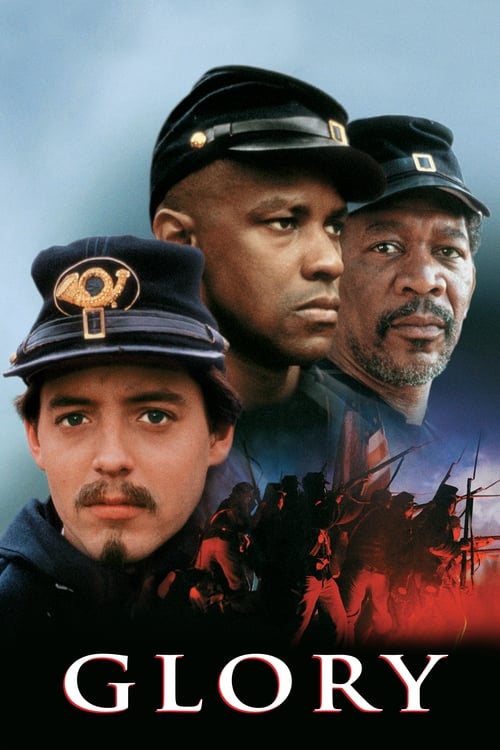
Glory
Robert Gould Shaw leads the US Civil War's first all-black volunteer company, fighting prejudices of both his own Union army and the Confederates.
Working with a respectable budget of $18.0M, the film achieved a steady performer with $26.8M in global revenue (+49% profit margin).
3 Oscars. 15 wins & 18 nominations


Plot Structure
Story beats plotted across runtime


Narrative Arc
Emotional journey through the story's key moments
Story Circle
Blueprint 15-beat structure
Arcplot Score Breakdown
Weighted: Precision (70%) + Arc (15%) + Theme (15%)
Glory (1989) reveals precise narrative architecture, characteristic of Edward Zwick's storytelling approach. This structural analysis examines how the film's 15-point plot structure maps to proven narrative frameworks across 2 hours and 2 minutes. With an Arcplot score of 7.4, the film balances conventional beats with creative variation.
Characters
Cast & narrative archetypes

Colonel Robert Gould Shaw
Private Trip
Sergeant Major John Rawlins
Corporal Thomas Searles
Private Jupiter Sharts
Captain Cabot Forbes
Main Cast & Characters
Colonel Robert Gould Shaw
Played by Matthew Broderick
Young Union officer who commands the first all-Black volunteer regiment, the 54th Massachusetts Infantry. Idealistic yet inexperienced, he grows into a principled leader willing to sacrifice everything for his men's dignity.
Private Trip
Played by Denzel Washington
Escaped slave turned soldier, deeply scarred by slavery's brutality. Angry, defiant, and distrustful of white authority, he represents the raw pain and resistance of the formerly enslaved.
Sergeant Major John Rawlins
Played by Morgan Freeman
Gravedigger and father figure to the regiment, Rawlins is a steady, dignified presence who bridges the gap between the white officers and Black soldiers with wisdom and moral authority.
Corporal Thomas Searles
Played by Andre Braugher
Shaw's educated childhood friend who enlists to prove Black men's equality. Sheltered and idealistic, he must confront the harsh realities of war and prejudice.
Private Jupiter Sharts
Played by Jihmi Kennedy
Simple, good-natured soldier who represents the everyday courage of the regiment. His friendship and loyalty provide warmth and humanity amid the brutality of war.
Captain Cabot Forbes
Played by Cary Elwes
Shaw's second-in-command and close friend from their previous service. A pragmatic, cynical veteran who provides grounded counsel and challenges Shaw's idealism.
Structural Analysis
The Status Quo at 2 minutes (1% through the runtime) establishes Battle of Antietam, September 1862. Young officer Robert Gould Shaw experiences the chaos and carnage of conventional Civil War combat. He is wounded and traumatized, an inexperienced officer in the traditional white Union army uncertain of his place in the war.. Significantly, this early placement immediately immerses viewers in the story world.
The inciting incident occurs at 14 minutes when Shaw is offered command of the 54th Massachusetts, the Union Army's first Black regiment. This unexpected opportunity disrupts his conventional military career path and forces him to confront his own assumptions about race, leadership, and what this war truly means.. At 12% through the film, this Disruption aligns precisely with traditional story structure. This beat shifts the emotional landscape, launching the protagonist into the central conflict.
The First Threshold at 30 minutes marks the transition into Act II, occurring at 25% of the runtime. This illustrates the protagonist's commitment to After initial chaos in training, Shaw makes the active choice to fully commit to making the 54th a disciplined fighting force. He orders strict military discipline, including the controversial flogging of Trip for desertion. Shaw crosses from uncertain observer to committed commander, choosing the hard path of treating them as real soldiers rather than a social experiment., moving from reaction to action.
At 61 minutes, the Midpoint arrives at 50% of the runtime—precisely centered, creating perfect narrative symmetry. Significantly, this crucial beat The 54th experiences their first combat at James Island, South Carolina. They perform well in a skirmish, holding their ground and fighting bravely. This false victory makes Shaw and his men believe they've proven themselves worthy of respect. However, the stakes are raised: Union command still refuses to use them in major combat, relegating them to menial labor. The game changes - respect won't come from one small success., fundamentally raising what's at risk. The emotional intensity shifts, dividing the narrative into clear before-and-after phases.
The Collapse moment at 91 minutes (74% through) represents the emotional nadir. Here, The 54th is offered the "honor" of leading the assault on Fort Wagner, a heavily fortified Confederate position. Shaw and his officers understand this is a suicide mission - the fort is nearly impregnable and casualties will be catastrophic. This is the all-is-lost moment: the only path to dignity and recognition requires accepting near-certain death. The literal "whiff of death" permeates the decision., illustrates the protagonist at their lowest point. This beat's placement in the final quarter sets up the climactic reversal.
The Second Threshold at 97 minutes initiates the final act resolution at 79% of the runtime. Dawn on July 18, 1863. Shaw addresses the regiment before the assault: "If this man should fall, who will lift the flag and carry on?" His men volunteer eagerly. Shaw has synthesized his journey - he now sees these men as complete equals, brothers-in-arms. The realization: dignity is worth dying for, and their sacrifice together will transform the nation. They march toward Fort Wagner as one., demonstrating the transformation achieved throughout the journey.
Emotional Journey
Glory's emotional architecture traces a deliberate progression across 15 carefully calibrated beats.
Narrative Framework
This structural analysis employs structural analysis methodology used to understand storytelling architecture. By mapping Glory against these established plot points, we can identify how Edward Zwick utilizes or subverts traditional narrative conventions. The plot point approach reveals not only adherence to structural principles but also creative choices that distinguish Glory within the drama genre.
Edward Zwick's Structural Approach
Among the 10 Edward Zwick films analyzed on Arcplot, the average structural score is 6.8, demonstrating varied approaches to story architecture. Glory represents one of the director's most structurally precise works. For comparative analysis, explore the complete Edward Zwick filmography.
Comparative Analysis
Additional drama films include After Thomas, South Pacific and Dirty Dancing: Havana Nights. For more Edward Zwick analyses, see Courage Under Fire, Jack Reacher: Never Go Back and The Siege.
Plot Points by Act
Act I
SetupStatus Quo
Battle of Antietam, September 1862. Young officer Robert Gould Shaw experiences the chaos and carnage of conventional Civil War combat. He is wounded and traumatized, an inexperienced officer in the traditional white Union army uncertain of his place in the war.
Theme
At an abolitionist dinner party during Shaw's recovery, Frederick Douglass and others discuss the formation of Black regiments. The theme is stated: "Men of color have fought in every American war... they will again." The question of whether Black men can fight as equals is raised.
Worldbuilding
Shaw recovers from his wounds and returns to his abolitionist family in Boston. His privileged background is established, including his friendship with educated Black scholar Thomas Searles. The political climate of 1863 and the Emancipation Proclamation context is set up. Shaw appears as an idealistic but conventional young officer.
Disruption
Shaw is offered command of the 54th Massachusetts, the Union Army's first Black regiment. This unexpected opportunity disrupts his conventional military career path and forces him to confront his own assumptions about race, leadership, and what this war truly means.
Resistance
Shaw debates whether to accept this unprecedented command. He seeks counsel from family and friends, recruits Thomas Searles as his first volunteer, and travels to begin assembling the regiment. He meets the diverse recruits: the angry runaway slave Trip, the wise gravedigger Rawlins, and the simple farmer Jupiter. Shaw is uncertain how to lead men he has been raised to see as inferior.
Act II
ConfrontationFirst Threshold
After initial chaos in training, Shaw makes the active choice to fully commit to making the 54th a disciplined fighting force. He orders strict military discipline, including the controversial flogging of Trip for desertion. Shaw crosses from uncertain observer to committed commander, choosing the hard path of treating them as real soldiers rather than a social experiment.
Mirror World
During the flogging, Trip's scarred back from slavery is revealed. The medical examination exposes the brutal reality of what these men have endured. Trip becomes the thematic mirror - his anger, pride, and refusal to be patronized challenges Shaw's paternalism and forces him to see his men as fully human with dignity worth fighting for.
Premise
Training montage as the 54th transforms into a cohesive military unit. The promise of the premise: watching an "impossible" regiment of former slaves and free Black men become disciplined soldiers. Shaw fights bureaucracy for proper equipment, shoes, and equal pay. Bonds form across racial lines between Shaw and his men, and among the soldiers themselves. The fun of watching the underdog regiment prove doubters wrong.
Midpoint
The 54th experiences their first combat at James Island, South Carolina. They perform well in a skirmish, holding their ground and fighting bravely. This false victory makes Shaw and his men believe they've proven themselves worthy of respect. However, the stakes are raised: Union command still refuses to use them in major combat, relegating them to menial labor. The game changes - respect won't come from one small success.
Opposition
The 54th is humiliated with manual labor assignments and ordered to burn and loot Southern towns. Frustration mounts among the men. Shaw protests to his commanders but is rebuffed. The regiment nearly mutinies when the Union refuses to pay them equally to white soldiers. Internal tensions rise; external pressures from a racist command structure intensify. Shaw's character flaws - his privilege, his initial paternalism - catch up with him as his men challenge his authority and question his commitment to their equality.
Collapse
The 54th is offered the "honor" of leading the assault on Fort Wagner, a heavily fortified Confederate position. Shaw and his officers understand this is a suicide mission - the fort is nearly impregnable and casualties will be catastrophic. This is the all-is-lost moment: the only path to dignity and recognition requires accepting near-certain death. The literal "whiff of death" permeates the decision.
Crisis
The night before the assault on Fort Wagner. Shaw distributes his personal belongings and letters, expecting to die. Quiet moments of reflection and preparation. The men gather around campfires singing spirituals. Shaw and Trip have a final conversation achieving mutual respect - Trip acknowledges Shaw's commitment, Shaw recognizes Trip's dignity. The dark night of the soul as everyone processes the inevitable sacrifice ahead.
Act III
ResolutionSecond Threshold
Dawn on July 18, 1863. Shaw addresses the regiment before the assault: "If this man should fall, who will lift the flag and carry on?" His men volunteer eagerly. Shaw has synthesized his journey - he now sees these men as complete equals, brothers-in-arms. The realization: dignity is worth dying for, and their sacrifice together will transform the nation. They march toward Fort Wagner as one.
Synthesis
The assault on Fort Wagner. The 54th Massachusetts charges across open beach under devastating artillery and rifle fire. Shaw is killed leading the charge, carrying the regimental flag. Trip picks up the flag and is killed. Rawlins and others continue the assault with extraordinary courage. Though they fail to take the fort and suffer massive casualties, the 54th fights with valor that proves their worth as soldiers and men. All thematic threads resolve through shared sacrifice.
Transformation
Confederate soldiers bury Colonel Shaw in a mass grave with his Black soldiers - intended as an insult, revealed as an honor. Historical text states that the 54th's sacrifice changed Northern perception and led to widespread Black enlistment. Over 180,000 Black soldiers served by war's end. The closing image contrasts perfectly with the Status Quo: Shaw is no longer an uncertain young officer but a martyr whose transformation helped transform a nation.