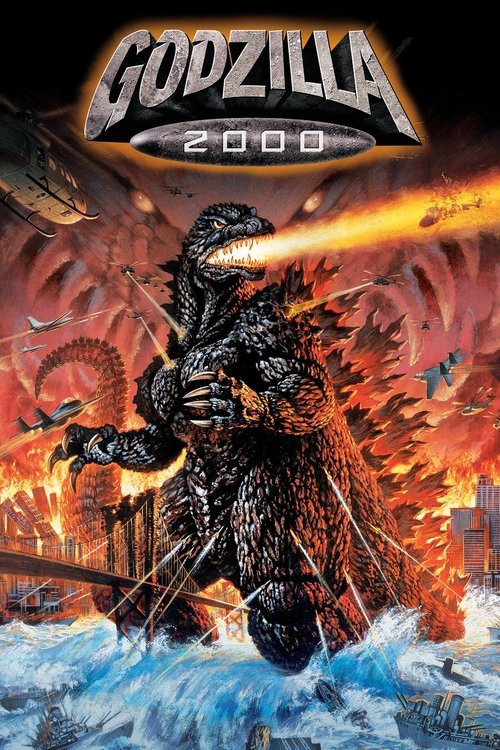
Godzilla 2000: Millennium
An independent group of researchers called the Godzilla Prediction Network (GPN) actively track Godzilla as he makes landfall in Nemuro. Matters are further complicated when a giant meteor is discovered in the Ibaragi Prefecture. The mysterious rock begins to levitate as it's true intentions for the world and Godzilla are revealed.
Despite its modest budget of $8.3M, Godzilla 2000: Millennium became a box office success, earning $25.0M worldwide—a 201% return. The film's innovative storytelling attracted moviegoers, confirming that strong storytelling can transcend budget limitations.


Plot Structure
Story beats plotted across runtime


Narrative Arc
Emotional journey through the story's key moments
Story Circle
Blueprint 15-beat structure
Arcplot Score Breakdown
Weighted: Precision (70%) + Arc (15%) + Theme (15%)
Godzilla 2000: Millennium (1999) exemplifies meticulously timed plot construction, characteristic of Takao Okawara's storytelling approach. This structural analysis examines how the film's 15-point plot structure maps to proven narrative frameworks across 1 hour and 47 minutes. With an Arcplot score of 6.7, the film balances conventional beats with creative variation.
Characters
Cast & narrative archetypes

Yuji Shinoda
Yuki Ichinose
Io Shinoda
Mitsuo Katagiri
Shiro Miyasaka
Godzilla
Orga
Main Cast & Characters
Yuji Shinoda
Played by Takehiro Murata
Independent scientist and founder of the Godzilla Prediction Network who studies Godzilla to predict his movements and protect civilians.
Yuki Ichinose
Played by Naomi Nishida
Photojournalist who joins Shinoda's GPN to document Godzilla and get compelling stories for her publication.
Io Shinoda
Played by Mayu Suzuki
Yuji Shinoda's young daughter who assists her father in his Godzilla research despite the dangers.
Mitsuo Katagiri
Played by Hiroshi Abe
Crisis Control Intelligence director who seeks to destroy Godzilla rather than study him, representing the government's aggressive approach.
Shiro Miyasaka
Played by Shiro Sano
Scientist working for CCI who becomes involved in studying the mysterious alien organism discovered in the Japan Trench.
Godzilla
Played by Tsutomu Kitagawa
The King of the Monsters, a prehistoric creature awakened by nuclear radiation who emerges to confront a new alien threat.
Orga
Played by Makoto Ito
Alien entity that absorbs Godzilla's regenerative DNA to transform into a massive monster seeking to replace Godzilla.
Structural Analysis
The Status Quo at 1 minutes (1% through the runtime) establishes Yuji Shinoda and his daughter Io monitor the coastline at night as part of the Godzilla Prediction Network, establishing their unconventional life dedicated to tracking and understanding Godzilla rather than destroying him.. Of particular interest, this early placement immediately immerses viewers in the story world.
The inciting incident occurs at 13 minutes when CCI's deep-sea exploration discovers an ancient rock formation on the ocean floor that begins to rise when exposed to sunlight - revealing it to be a dormant alien spacecraft, introducing a threat beyond Godzilla.. At 12% through the film, this Disruption aligns precisely with traditional story structure. This beat shifts the emotional landscape, launching the protagonist into the central conflict.
The First Threshold at 27 minutes marks the transition into Act II, occurring at 25% of the runtime. This reveals the protagonist's commitment to The UFO directly confronts Godzilla, engaging him in battle and absorbing energy from his atomic breath. Shinoda commits to investigating the alien craft's origins, choosing to understand this new threat rather than simply react with force., moving from reaction to action.
At 54 minutes, the Midpoint arrives at 50% of the runtime—precisely centered, creating perfect narrative symmetry. Structural examination shows that this crucial beat The UFO lands on City Tower in Tokyo and begins hacking into computer systems to learn about Godzilla's DNA. Shinoda discovers the aliens want to use Regenerator G-1 to create physical bodies - the threat shifts from mysterious to existential., fundamentally raising what's at risk. The emotional intensity shifts, dividing the narrative into clear before-and-after phases.
The Collapse moment at 80 minutes (75% through) represents the emotional nadir. Here, The alien fully transforms into the monstrous Orga using Godzilla's genetic material. Katagiri's hubris leads to his death as he refuses to flee the collapsing building. The creature appears unstoppable, representing the failure of humanity's aggressive approach., illustrates the protagonist at their lowest point. This beat's placement in the final quarter sets up the climactic reversal.
The Second Threshold at 86 minutes initiates the final act resolution at 80% of the runtime. Orga attempts to swallow Godzilla whole to complete its transformation. Instead of retreating, Godzilla deliberately allows himself to be partially consumed - turning the enemy's hunger into a trap. Understanding defeats brute force., demonstrating the transformation achieved throughout the journey.
Emotional Journey
Godzilla 2000: Millennium's emotional architecture traces a deliberate progression across 15 carefully calibrated beats.
Narrative Framework
This structural analysis employs structural analysis methodology used to understand storytelling architecture. By mapping Godzilla 2000: Millennium against these established plot points, we can identify how Takao Okawara utilizes or subverts traditional narrative conventions. The plot point approach reveals not only adherence to structural principles but also creative choices that distinguish Godzilla 2000: Millennium within the action genre.
Takao Okawara's Structural Approach
Among the 4 Takao Okawara films analyzed on Arcplot, the average structural score is 7.1, reflecting strong command of classical structure. Godzilla 2000: Millennium takes a more unconventional approach compared to the director's typical style. For comparative analysis, explore the complete Takao Okawara filmography.
Comparative Analysis
Additional action films include The Bad Guys, Puss in Boots and Venom: The Last Dance. For more Takao Okawara analyses, see Godzilla vs. Mechagodzilla II, Godzilla vs. Mothra and Godzilla vs. Destoroyah.
Plot Points by Act
Act I
SetupStatus Quo
Yuji Shinoda and his daughter Io monitor the coastline at night as part of the Godzilla Prediction Network, establishing their unconventional life dedicated to tracking and understanding Godzilla rather than destroying him.
Theme
Journalist Yuki Ichinose questions why Shinoda studies Godzilla instead of trying to destroy him. Shinoda responds that they must understand Godzilla to coexist with him - stating the film's theme of knowledge over destruction.
Worldbuilding
The world is established: Godzilla exists and periodically attacks Japan. Two factions respond differently - the GPN seeks to predict and study Godzilla while CCI under Katagiri aims to destroy him. Godzilla makes landfall and attacks a power plant.
Disruption
CCI's deep-sea exploration discovers an ancient rock formation on the ocean floor that begins to rise when exposed to sunlight - revealing it to be a dormant alien spacecraft, introducing a threat beyond Godzilla.
Resistance
The mysterious UFO rises from the ocean and begins flying over Japan. Shinoda and his team debate whether to focus on Godzilla or this new threat. Katagiri sees the UFO as a potential weapon against Godzilla. The two factions prepare their different approaches.
Act II
ConfrontationFirst Threshold
The UFO directly confronts Godzilla, engaging him in battle and absorbing energy from his atomic breath. Shinoda commits to investigating the alien craft's origins, choosing to understand this new threat rather than simply react with force.
Mirror World
Yuki and young Io develop their partnership, with Io teaching Yuki about her father's philosophy. Their relationship embodies the theme - Io represents the next generation's hope for coexistence while Yuki learns to see beyond fear.
Premise
Shinoda investigates the UFO's origins and discovers it contains ancient alien life forms that have been dormant for millennia. The team analyzes Godzilla's unique regenerative cells (Regenerator G-1) and realizes the aliens are interested in this genetic material.
Midpoint
The UFO lands on City Tower in Tokyo and begins hacking into computer systems to learn about Godzilla's DNA. Shinoda discovers the aliens want to use Regenerator G-1 to create physical bodies - the threat shifts from mysterious to existential.
Opposition
Katagiri attempts to destroy both Godzilla and the UFO with missiles, but fails. The alien absorbs Godzilla's DNA and begins a monstrous transformation. Shinoda races to understand the alien's biology while Katagiri's destructive approach proves futile.
Collapse
The alien fully transforms into the monstrous Orga using Godzilla's genetic material. Katagiri's hubris leads to his death as he refuses to flee the collapsing building. The creature appears unstoppable, representing the failure of humanity's aggressive approach.
Crisis
Orga rampages through Tokyo, absorbing more of Godzilla's cells with each attack and growing stronger. Humanity watches helplessly as their weapons prove useless. The monster attempts to completely absorb Godzilla to become a perfect clone.
Act III
ResolutionSecond Threshold
Orga attempts to swallow Godzilla whole to complete its transformation. Instead of retreating, Godzilla deliberately allows himself to be partially consumed - turning the enemy's hunger into a trap. Understanding defeats brute force.
Synthesis
From within Orga's maw, Godzilla unleashes a devastating nuclear pulse that destroys the creature from the inside. Godzilla emerges victorious, having used the enemy's strategy against it. Tokyo burns but the alien threat is eliminated.
Transformation
As Godzilla roars amid the flames, Yuki asks why Godzilla keeps fighting for us. Shinoda responds: "Godzilla is inside each one of us." The final image shows humanity acknowledging their connection to this force of nature rather than fearing it.