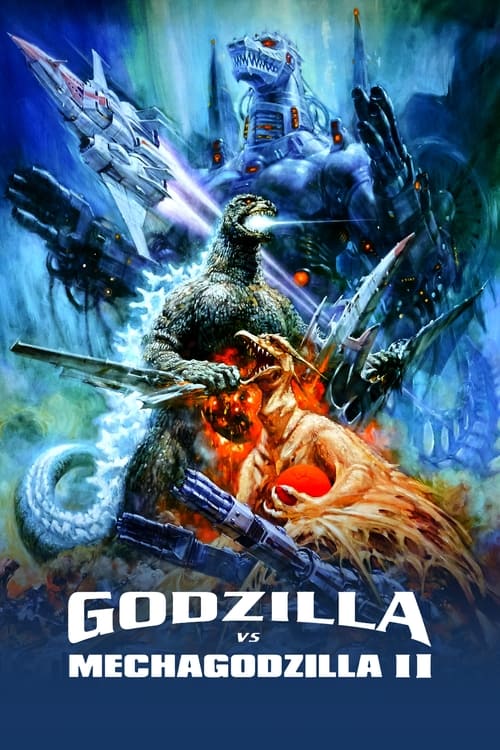
Godzilla vs. Mechagodzilla II
The U.N.G.C.C. (United Nations Godzilla Countermeasure Center) recovers the remains of Mecha-King Ghidorah and construct Mechagodzilla as a countermeasure against Godzilla. Meanwhile, a giant egg is discovered along with a new monster called Rodan. The egg is soon found to be none other than an infant Godzillasaurus.
Working with a limited budget of $9.5M, the film achieved a steady performer with $18.0M in global revenue (+89% profit margin).


Plot Structure
Story beats plotted across runtime


Narrative Arc
Emotional journey through the story's key moments
Story Circle
Blueprint 15-beat structure
Arcplot Score Breakdown
Weighted: Precision (70%) + Arc (15%) + Theme (15%)
Godzilla vs. Mechagodzilla II (1993) exemplifies strategically placed plot construction, characteristic of Takao Okawara's storytelling approach. This structural analysis examines how the film's 15-point plot structure maps to proven narrative frameworks across 1 hour and 48 minutes. With an Arcplot score of 7.4, the film balances conventional beats with creative variation.
Characters
Cast & narrative archetypes

Kazuma Aoki
Azusa Gojo
Miki Saegusa
Professor Omae
Commander Takaki Aso
Leo Asuka
Godzilla
Baby Godzilla
Main Cast & Characters
Kazuma Aoki
Played by Masahiro Takashima
A pteranodon expert who bonds with Baby Godzilla and becomes instrumental in the plan to stop both Godzilla and Mechagodzilla.
Azusa Gojo
Played by Ryoko Sano
A skilled pilot of Mechagodzilla's support craft Garuda who develops a bond with Kazuma and Baby Godzilla.
Miki Saegusa
Played by Megumi Odaka
A psychic with telepathic abilities who can communicate with Godzilla and becomes an advocate for Baby Godzilla.
Professor Omae
Played by Yūsuke Kawazu
A scientist and Kazuma's mentor who studies prehistoric life and helps raise Baby Godzilla.
Commander Takaki Aso
Played by Akira Nakao
The military commander overseeing the G-Force operations and Mechagodzilla deployment.
Leo Asuka
Played by Masahiro Takashima
A hot-headed Mechagodzilla pilot who initially clashes with Kazuma but learns to work as a team.
Godzilla
The king of monsters who emerges to protect Baby Godzilla from Mechagodzilla and Fire Rodan.
Baby Godzilla
A newly hatched godzillasaurus who imprints on Azusa and becomes the emotional center of the conflict.
Structural Analysis
The Status Quo at 1 minutes (1% through the runtime) establishes Kazuma Aoki flies his fighter jet during routine military operations against Godzilla, establishing his world as a skilled but conflicted pilot in the G-Force defense organization.. The analysis reveals that this early placement immediately immerses viewers in the story world.
The inciting incident occurs at 13 minutes when The pteranodon egg hatches Baby Godzilla instead of the expected creature, creating an immediate crisis about what to do with a infant member of humanity's greatest threat.. At 12% through the film, this Disruption aligns precisely with traditional story structure. This beat shifts the emotional landscape, launching the protagonist into the central conflict.
The First Threshold at 26 minutes marks the transition into Act II, occurring at 24% of the runtime. This illustrates the protagonist's commitment to G-Force decides to use Baby Godzilla as bait to lure Godzilla into a trap where Mechagodzilla will destroy him. The plan is set in motion, committing all parties to confrontation., moving from reaction to action.
At 53 minutes, the Midpoint arrives at 49% of the runtime—precisely centered, creating perfect narrative symmetry. Of particular interest, this crucial beat False victory: Godzilla has been defeated and driven off. Mechagodzilla appears triumphant. The military celebrates, believing they've solved the Godzilla problem through superior technology., fundamentally raising what's at risk. The emotional intensity shifts, dividing the narrative into clear before-and-after phases.
The Collapse moment at 80 minutes (74% through) represents the emotional nadir. Here, Mechagodzilla is destroyed by Godzilla, representing the death of humanity's technological solution. Fire Rodan dies sacrificing himself. All seems lost as Godzilla approaches Baby and nothing can stop him., demonstrates the protagonist at their lowest point. This beat's placement in the final quarter sets up the climactic reversal.
The Second Threshold at 85 minutes initiates the final act resolution at 79% of the runtime. Fire Rodan's energy revives Godzilla into a more powerful form, but also transfers life to Baby. Kazuma realizes they must let Baby go to Godzilla - accepting nature rather than controlling it. This synthesis of technology (using Garuda) and natural order gives them a path forward., demonstrating the transformation achieved throughout the journey.
Emotional Journey
Godzilla vs. Mechagodzilla II's emotional architecture traces a deliberate progression across 15 carefully calibrated beats.
Narrative Framework
This structural analysis employs proven narrative structure principles that track dramatic progression. By mapping Godzilla vs. Mechagodzilla II against these established plot points, we can identify how Takao Okawara utilizes or subverts traditional narrative conventions. The plot point approach reveals not only adherence to structural principles but also creative choices that distinguish Godzilla vs. Mechagodzilla II within the action genre.
Takao Okawara's Structural Approach
Among the 4 Takao Okawara films analyzed on Arcplot, the average structural score is 7.1, reflecting strong command of classical structure. Godzilla vs. Mechagodzilla II represents one of the director's most structurally precise works. For comparative analysis, explore the complete Takao Okawara filmography.
Comparative Analysis
Additional action films include The Bad Guys, Puss in Boots and Venom: The Last Dance. For more Takao Okawara analyses, see Godzilla vs. Mothra, Godzilla vs. Destoroyah and Godzilla 2000: Millennium.
Plot Points by Act
Act I
SetupStatus Quo
Kazuma Aoki flies his fighter jet during routine military operations against Godzilla, establishing his world as a skilled but conflicted pilot in the G-Force defense organization.
Theme
A scientist states that life finds a way and must be protected, not destroyed - hinting at the central theme about respecting nature versus controlling it through technology.
Worldbuilding
Introduction of G-Force, Mechagodzilla development, the discovery of a pteranodon egg, and establishment of the scientific team studying the egg. Kazuma is revealed to have transferred from combat to mechanical duties after a traumatic Godzilla encounter.
Disruption
The pteranodon egg hatches Baby Godzilla instead of the expected creature, creating an immediate crisis about what to do with a infant member of humanity's greatest threat.
Resistance
Debate over Baby Godzilla's fate - military wants to use it as bait, scientists want to study and protect it. Azusa bonds with Baby through telepathy. Kazuma struggles with his hatred of Godzilla versus growing sympathy for the infant. Discovery that Rodan may be searching for Baby.
Act II
ConfrontationFirst Threshold
G-Force decides to use Baby Godzilla as bait to lure Godzilla into a trap where Mechagodzilla will destroy him. The plan is set in motion, committing all parties to confrontation.
Mirror World
Azusa's psychic connection with Baby Godzilla deepens, representing the thematic counterpoint of empathy and connection versus technological domination. She understands Baby's loneliness and fear.
Premise
The promise of the premise: giant monster battles. Rodan attacks searching for Baby. First Mechagodzilla vs. Godzilla battle where the mech's superior firepower nearly defeats Godzilla. Baby cries out, affecting both Godzilla and Rodan. Godzilla is wounded and retreats.
Midpoint
False victory: Godzilla has been defeated and driven off. Mechagodzilla appears triumphant. The military celebrates, believing they've solved the Godzilla problem through superior technology.
Opposition
Scientists discover Baby has a second brain in its hips - the key to Godzilla's power. Military plans to use this knowledge against Godzilla. Rodan returns and is critically wounded protecting Baby. Godzilla revives and comes for Baby. Mechagodzilla malfunctions at crucial moment. Stakes escalate as Godzilla proves harder to stop than anticipated.
Collapse
Mechagodzilla is destroyed by Godzilla, representing the death of humanity's technological solution. Fire Rodan dies sacrificing himself. All seems lost as Godzilla approaches Baby and nothing can stop him.
Crisis
Dark moment as the team processes their failure. Kazuma confronts his fear and hatred. They must decide whether to keep fighting or accept that nature cannot be controlled by machines.
Act III
ResolutionSecond Threshold
Fire Rodan's energy revives Godzilla into a more powerful form, but also transfers life to Baby. Kazuma realizes they must let Baby go to Godzilla - accepting nature rather than controlling it. This synthesis of technology (using Garuda) and natural order gives them a path forward.
Synthesis
Final confrontation using Garuda combined with damaged Mechagodzilla as Super Mechagodzilla. Baby reaches Godzilla. Rather than killing Baby, Godzilla recognizes kinship. Humans facilitate Baby's reunion with Godzilla. Godzilla and Baby leave together peacefully, heading back to the sea.
Transformation
Kazuma and Azusa watch Godzilla and Baby disappear into the ocean together. Kazuma has transformed from seeking revenge through technology to accepting coexistence with nature. They've learned that life must be protected, not destroyed.