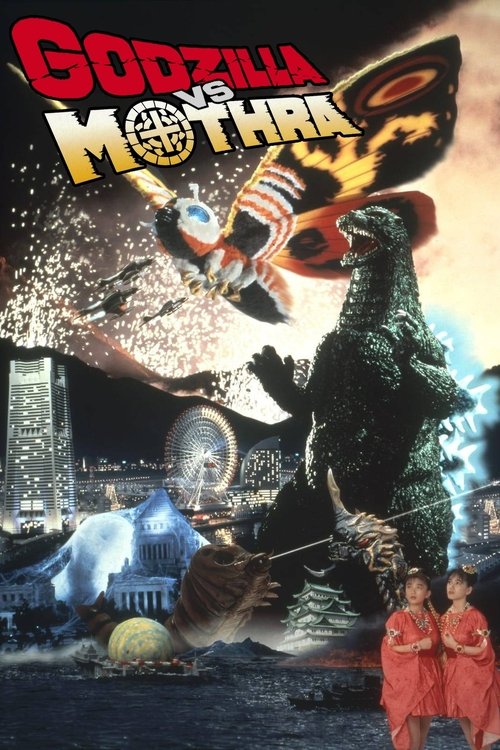
Godzilla vs. Mothra
Mothra's dark counterpart, Battra, emerges to eliminate humanity on behalf of the Earth. Two tiny fairies called the Cosmos offer their help by calling Mothra to battle the creature. Unfortunately a meteorite has awoken a hibernating Godzilla as a three way battle for the Earth begins.
The film earned $20.0M at the global box office.

Plot Structure
Story beats plotted across runtime


Narrative Arc
Emotional journey through the story's key moments
Story Circle
Blueprint 15-beat structure
Arcplot Score Breakdown
Weighted: Precision (70%) + Arc (15%) + Theme (15%)
Godzilla vs. Mothra (1992) exhibits carefully calibrated narrative architecture, characteristic of Takao Okawara's storytelling approach. This structural analysis examines how the film's 15-point plot structure maps to proven narrative frameworks across 1 hour and 42 minutes. With an Arcplot score of 6.8, the film balances conventional beats with creative variation.
Characters
Cast & narrative archetypes

Takuya Fujito
Masako Tezuka
Kenji Ando
Midori Fujito
Moll
Lora
Main Cast & Characters
Takuya Fujito
Played by Tetsuya Bessho
A treasure hunter and former explorer who is recruited to find a mysterious meteorite, serving as the reluctant hero.
Masako Tezuka
Played by Satomi Kobayashi
A reporter and Takuya's ex-wife who joins the expedition, providing moral guidance and emotional depth.
Kenji Ando
Played by Takehiro Murata
A corporate executive from Marutomo Company who orchestrates the expedition for profit, serving as the human antagonist.
Midori Fujito
Played by Sayaka Osawa
Takuya and Masako's young daughter who believes in the goodness of Mothra and represents innocence.
Moll
Played by Keiko Imamura
One of the Cosmos twins who speaks for Mothra and warns humanity of impending danger.
Lora
Played by Sayaka Osawa
The other Cosmos twin who serves alongside Moll as Mothra's mystical messenger.
Structural Analysis
The Status Quo at 1 minutes (1% through the runtime) establishes Takuya Fujita, a roguish treasure hunter, is shown imprisoned in Thailand for stealing ancient artifacts. His selfish, mercenary lifestyle and broken relationship with ex-wife Masako establish his flawed status quo before transformation.. Notably, this early placement immediately immerses viewers in the story world.
The inciting incident occurs at 16 minutes when The giant egg belonging to Mothra is discovered on Infant Island after a typhoon. Despite the Cosmos' warnings about disturbing it and awakening Battra, corporate greed drives the decision to transport the egg to Japan, setting the catastrophic events in motion.. At 15% through the film, this Disruption is delayed, allowing extended setup of the story world. This beat shifts the emotional landscape, launching the protagonist into the central conflict.
The First Threshold at 31 minutes marks the transition into Act II, occurring at 31% of the runtime. This reveals the protagonist's commitment to Battra emerges as a larva and attacks seeking to destroy Mothra's egg. Godzilla simultaneously appears and the three kaiju converge in catastrophic battle. The characters are now committed to a crisis beyond their control—there is no going back to ordinary life., moving from reaction to action.
At 53 minutes, the Midpoint arrives at 52% of the runtime—precisely centered, creating perfect narrative symmetry. Structural examination shows that this crucial beat The Cosmos reveal the ancient backstory: 12,000 years ago an advanced civilization created a climate-controlling device; Battra was created by Earth itself to destroy humanity for this transgression; Mothra was created to protect humanity from Battra. This revelation reframes everything—the stakes are raised from monster battles to Earth's judgment on humanity. False victory (monsters seemingly defeated in volcano) becomes false security., fundamentally raising what's at risk. The emotional intensity shifts, dividing the narrative into clear before-and-after phases.
The Collapse moment at 73 minutes (71% through) represents the emotional nadir. Here, The monsters descend on Yokohama and massive destruction begins. Humanity is powerless against three kaiju in a populated city. All seems lost as buildings crumble and evacuation proves insufficient. This is the "whiff of death" moment—civilization itself appears doomed., shows the protagonist at their lowest point. This beat's placement in the final quarter sets up the climactic reversal.
The Second Threshold at 78 minutes initiates the final act resolution at 77% of the runtime. Mothra and Battra—ancient enemies—choose to ally against their common threat, Godzilla. This unexpected alliance embodies the synthesis: even opposing forces of nature can unite for survival. Takuya witnesses this and fully commits to reconciliation with Masako and responsibility to others., demonstrating the transformation achieved throughout the journey.
Emotional Journey
Godzilla vs. Mothra's emotional architecture traces a deliberate progression across 15 carefully calibrated beats.
Narrative Framework
This structural analysis employs structural analysis methodology used to understand storytelling architecture. By mapping Godzilla vs. Mothra against these established plot points, we can identify how Takao Okawara utilizes or subverts traditional narrative conventions. The plot point approach reveals not only adherence to structural principles but also creative choices that distinguish Godzilla vs. Mothra within the action genre.
Takao Okawara's Structural Approach
Among the 4 Takao Okawara films analyzed on Arcplot, the average structural score is 7.1, reflecting strong command of classical structure. Godzilla vs. Mothra takes a more unconventional approach compared to the director's typical style. For comparative analysis, explore the complete Takao Okawara filmography.
Comparative Analysis
Additional action films include The Bad Guys, Puss in Boots and Venom: The Last Dance. For more Takao Okawara analyses, see Godzilla vs. Mechagodzilla II, Godzilla vs. Destoroyah and Godzilla 2000: Millennium.
Plot Points by Act
Act I
SetupStatus Quo
Takuya Fujita, a roguish treasure hunter, is shown imprisoned in Thailand for stealing ancient artifacts. His selfish, mercenary lifestyle and broken relationship with ex-wife Masako establish his flawed status quo before transformation.
Theme
The Cosmos (twin priestesses) warn the expedition that humanity must respect nature and learn from past civilizations that destroyed themselves through environmental exploitation. This states the film's core theme: balance between humanity and nature.
Worldbuilding
Introduction to Takuya's character and past, his release from prison by Japanese government and ex-wife Masako, the meteor strike awakening Godzilla, and the journey to Infant Island where a giant egg is discovered. Establishes the world of kaiju threats, corporate exploitation (Marutomo Company), and estranged family dynamics.
Disruption
The giant egg belonging to Mothra is discovered on Infant Island after a typhoon. Despite the Cosmos' warnings about disturbing it and awakening Battra, corporate greed drives the decision to transport the egg to Japan, setting the catastrophic events in motion.
Resistance
The Cosmos debate with the expedition about the dangers of taking the egg. Warnings about Battra (Mothra's dark counterpart) are dismissed by corporate interests. Takuya wrestles with conflicting motivations: profit versus responsibility, while reconnecting with Masako. The egg is transported despite supernatural warnings.
Act II
ConfrontationFirst Threshold
Battra emerges as a larva and attacks seeking to destroy Mothra's egg. Godzilla simultaneously appears and the three kaiju converge in catastrophic battle. The characters are now committed to a crisis beyond their control—there is no going back to ordinary life.
Mirror World
Takuya and Masako begin working together on Infant Island, their relationship subplot beginning. Masako represents the environmental responsibility and emotional growth Takuya needs to learn. Their interactions carry the thematic question of reconciliation and redemption.
Premise
The promise of the premise: spectacular three-way monster battles between Mothra (larva), Battra (larva), and Godzilla. Epic destruction from ocean to Mt. Fuji. Mothra hatches to defend itself and humanity. Godzilla and Battra fall into a volcano in apparent defeat. Mothra travels to Infant Island to form a cocoon.
Midpoint
The Cosmos reveal the ancient backstory: 12,000 years ago an advanced civilization created a climate-controlling device; Battra was created by Earth itself to destroy humanity for this transgression; Mothra was created to protect humanity from Battra. This revelation reframes everything—the stakes are raised from monster battles to Earth's judgment on humanity. False victory (monsters seemingly defeated in volcano) becomes false security.
Opposition
Mothra emerges in beautiful adult winged form. The Marutomo Company's greed is fully exposed, intensifying human conflict. Battra also emerges as an adult from the volcano, followed by Godzilla. All forces converge on Yokohama. Pressure intensifies as monsters approach populated areas and humanity appears helpless.
Collapse
The monsters descend on Yokohama and massive destruction begins. Humanity is powerless against three kaiju in a populated city. All seems lost as buildings crumble and evacuation proves insufficient. This is the "whiff of death" moment—civilization itself appears doomed.
Crisis
Dark night as the three-way battle rages. Characters process their helplessness and the potential end of everything. Takuya confronts his growth—he must protect what matters, not just survive. The old selfish Takuya cannot solve this; only his transformed self can contribute.
Act III
ResolutionSecond Threshold
Mothra and Battra—ancient enemies—choose to ally against their common threat, Godzilla. This unexpected alliance embodies the synthesis: even opposing forces of nature can unite for survival. Takuya witnesses this and fully commits to reconciliation with Masako and responsibility to others.
Synthesis
Epic finale battle as Mothra and Battra team up against Godzilla with intense aerial and ground combat. Battra is killed by Godzilla after fierce fighting but the alliance succeeds in defeating Godzilla. Mothra carries unconscious Godzilla and dead Battra out to sea, sealing Godzilla away. Takuya and Masako reconcile romantically, mirroring the larger reconciliation between humanity and nature.
Transformation
Mothra flies into space to take on Battra's original mission—to destroy a meteor that will strike Earth in 1999. The Cosmos sing their farewell song. Takuya and Masako stand together as a reunited couple, with Takuya transformed from selfish thief to responsible protector. Hope is restored; humanity has been given another chance.