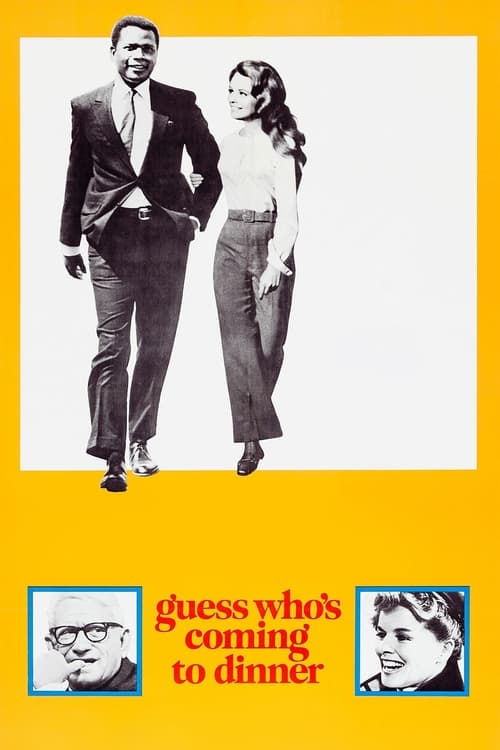
Guess Who's Coming to Dinner
A couple's attitudes are challenged when their daughter brings home a fiancé who is black.
Despite its small-scale budget of $4.0M, Guess Who's Coming to Dinner became a box office phenomenon, earning $56.7M worldwide—a remarkable 1317% return. The film's fresh perspective found its audience, proving that strong storytelling can transcend budget limitations.
2 Oscars. 11 wins & 25 nominations


Plot Structure
Story beats plotted across runtime


Narrative Arc
Emotional journey through the story's key moments
Story Circle
Blueprint 15-beat structure
Arcplot Score Breakdown
Weighted: Precision (70%) + Arc (15%) + Theme (15%)
Guess Who's Coming to Dinner (1967) showcases meticulously timed story structure, characteristic of Stanley Kramer's storytelling approach. This structural analysis examines how the film's 15-point plot structure maps to proven narrative frameworks across 1 hour and 48 minutes. With an Arcplot score of 7.4, the film balances conventional beats with creative variation.
Characters
Cast & narrative archetypes

Joanna Drayton
Dr. John Prentice
Matt Drayton
Christina Drayton
Mrs. Mary Prentice
Mr. John Prentice Sr.
Monsignor Ryan
Main Cast & Characters
Joanna Drayton
Played by Katharine Houghton
Young white woman who brings her Black fiancé home to meet her liberal parents, catalyzing the central conflict.
Dr. John Prentice
Played by Sidney Poitier
Distinguished Black physician engaged to Joanna, facing scrutiny from both families despite his accomplishments.
Matt Drayton
Played by Spencer Tracy
Liberal newspaper publisher and Joanna's father who must reconcile his progressive ideals with personal prejudice.
Christina Drayton
Played by Katharine Hepburn
Joanna's mother and art gallery owner who quickly embraces John and challenges her husband's hesitation.
Mrs. Mary Prentice
Played by Beah Richards
John's mother, a working-class woman who wants her son's happiness but fears the challenges of interracial marriage.
Mr. John Prentice Sr.
Played by Roy Glenn
John's father, a postal worker who disapproves of the marriage and clashes with his son over duty and sacrifice.
Monsignor Ryan
Played by Cecil Kellaway
The Draytons' close friend and family priest who provides moral support and wisdom.
Structural Analysis
The Status Quo at 2 minutes (2% through the runtime) establishes Joey Drayton arrives at San Francisco airport with John Prentice, clearly in love and excited to introduce him to her liberal parents. The Draytons are established as progressive, affluent, and open-minded publishers.. Significantly, this early placement immediately immerses viewers in the story world.
The inciting incident occurs at 13 minutes when Joey announces to her mother Christina that she and John Prentice are engaged and plan to marry. The revelation that their daughter intends to marry a Black man—despite the parents' liberal values—creates immediate tension and uncertainty.. At 12% through the film, this Disruption aligns precisely with traditional story structure. This beat shifts the emotional landscape, launching the protagonist into the central conflict.
The First Threshold at 26 minutes marks the transition into Act II, occurring at 24% of the runtime. This shows the protagonist's commitment to Matt Drayton comes home and learns about the engagement. Despite his shock, he agrees to host dinner that evening with John's parents flying in from Los Angeles. The decision to proceed with this gathering commits everyone to confronting the issue directly., moving from reaction to action.
At 52 minutes, the Midpoint arrives at 49% of the runtime—precisely centered, creating perfect narrative symmetry. Notably, this crucial beat John's father, Mr. Prentice, confronts his son and reveals he also opposes the marriage, not wanting his son to face the hardships of an interracial marriage. This false defeat raises stakes—even the Black father opposes it, making Matt's potential objection seem more justified., fundamentally raising what's at risk. The emotional intensity shifts, dividing the narrative into clear before-and-after phases.
The Collapse moment at 80 minutes (74% through) represents the emotional nadir. Here, John gives Matt an ultimatum: he will only marry Joey with Matt's whole-hearted approval, not reluctant consent. He prepares to leave that night if Matt cannot give his blessing. The dream of the marriage appears to be dying as Matt has not yet committed., demonstrates the protagonist at their lowest point. This beat's placement in the final quarter sets up the climactic reversal.
The Second Threshold at 90 minutes initiates the final act resolution at 84% of the runtime. Matt recognizes that his love for his daughter and his belief in love itself must outweigh his fears about society's racism. He synthesizes his liberal principles with personal courage, realizing that opposing this marriage would betray everything he stands for., demonstrating the transformation achieved throughout the journey.
Emotional Journey
Guess Who's Coming to Dinner's emotional architecture traces a deliberate progression across 15 carefully calibrated beats.
Narrative Framework
This structural analysis employs systematic plot point analysis that identifies crucial turning points. By mapping Guess Who's Coming to Dinner against these established plot points, we can identify how Stanley Kramer utilizes or subverts traditional narrative conventions. The plot point approach reveals not only adherence to structural principles but also creative choices that distinguish Guess Who's Coming to Dinner within the drama genre.
Stanley Kramer's Structural Approach
Among the 3 Stanley Kramer films analyzed on Arcplot, the average structural score is 5.9, showcasing experimental approaches to narrative form. Guess Who's Coming to Dinner represents one of the director's most structurally precise works. For comparative analysis, explore the complete Stanley Kramer filmography.
Comparative Analysis
Additional drama films include After Thomas, South Pacific and Dirty Dancing: Havana Nights. For more Stanley Kramer analyses, see It's a Mad, Mad, Mad, Mad World, Judgment at Nuremberg.
Plot Points by Act
Act I
SetupStatus Quo
Joey Drayton arrives at San Francisco airport with John Prentice, clearly in love and excited to introduce him to her liberal parents. The Draytons are established as progressive, affluent, and open-minded publishers.
Theme
Monsignor Ryan casually mentions to Christina that people's true values are tested when principles meet personal stakes. This foreshadows the central question: are the Draytons' liberal values genuine when tested in their own family?
Worldbuilding
Introduction to the Drayton household, their affluent San Francisco life, and their progressive values. Meet Tillie the housekeeper, Christina's art gallery business, and Matt's newspaper publishing work. Joey and John arrive at the house together.
Disruption
Joey announces to her mother Christina that she and John Prentice are engaged and plan to marry. The revelation that their daughter intends to marry a Black man—despite the parents' liberal values—creates immediate tension and uncertainty.
Resistance
Christina processes the news and tries to stay composed while Matt remains at work unaware. John insists they must have both parents' complete approval or he won't marry Joey. The stakes are established: dinner tonight will determine everything. John's credentials as an accomplished physician are revealed.
Act II
ConfrontationFirst Threshold
Matt Drayton comes home and learns about the engagement. Despite his shock, he agrees to host dinner that evening with John's parents flying in from Los Angeles. The decision to proceed with this gathering commits everyone to confronting the issue directly.
Mirror World
Christina and Matt's relationship is highlighted as a model of partnership and love. Their marriage becomes the thematic mirror: if they truly believe in love transcending social boundaries, they must support their daughter. Christina begins to fully support the marriage.
Premise
The "promise of the premise"—watching liberal values clash with personal prejudice. Various characters react: Tillie opposes the marriage, Christina supports it, Matt struggles with his principles versus his fears. John's parents arrive and add another layer of complexity as his father also opposes the union.
Midpoint
John's father, Mr. Prentice, confronts his son and reveals he also opposes the marriage, not wanting his son to face the hardships of an interracial marriage. This false defeat raises stakes—even the Black father opposes it, making Matt's potential objection seem more justified.
Opposition
Pressure mounts from all sides. Matt remains non-committal and struggles with his decision. The generational divide deepens as both fathers resist while the young couple remains committed. Monsignor Ryan and Christina challenge Matt to examine his true values versus his fears.
Collapse
John gives Matt an ultimatum: he will only marry Joey with Matt's whole-hearted approval, not reluctant consent. He prepares to leave that night if Matt cannot give his blessing. The dream of the marriage appears to be dying as Matt has not yet committed.
Crisis
Matt sits alone with his thoughts during the dinner gathering, processing his fears, his values, and what truly matters. The family waits for his decision. This is his dark night—will he let fear override the principles he's championed his entire life?
Act III
ResolutionSecond Threshold
Matt recognizes that his love for his daughter and his belief in love itself must outweigh his fears about society's racism. He synthesizes his liberal principles with personal courage, realizing that opposing this marriage would betray everything he stands for.
Synthesis
Matt delivers his climactic speech at dinner, giving his full blessing to the marriage. He addresses both fathers, acknowledging the challenges ahead but affirming that love is worth fighting for. He tells Mr. Prentice that he pities anyone who forgets what it's like to be young and in love. Everyone is moved.
Transformation
The family gathers together for dinner in harmony, all opposition dissolved. The Draytons have proven their values are genuine—they've transformed from theoretical liberals into people who live their principles when tested. Love has triumphed over fear.