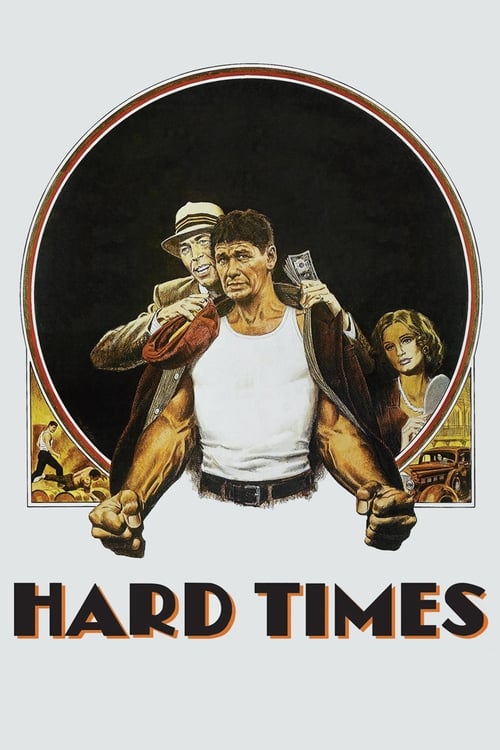
Hard Times
In the depression, Chaney, a strong silent streetfighter, joins with Speed, a promoter of no-holds-barred street boxing bouts. They go to New Orleans where Speed borrows money to set up fights for Chaney, but Speed gambles away any winnings.
Working with a limited budget of $2.7M, the film achieved a steady performer with $5.0M in global revenue (+85% profit margin).


Plot Structure
Story beats plotted across runtime


Narrative Arc
Emotional journey through the story's key moments
Story Circle
Blueprint 15-beat structure
Arcplot Score Breakdown
Weighted: Precision (70%) + Arc (15%) + Theme (15%)
Hard Times (1975) exhibits meticulously timed plot construction, characteristic of Walter Hill's storytelling approach. This structural analysis examines how the film's 15-point plot structure maps to proven narrative frameworks across 1 hour and 33 minutes. With an Arcplot score of 6.8, the film balances conventional beats with creative variation.
Characters
Cast & narrative archetypes

Chaney
Speed
Lucy Simpson
Chick Gandil
Poe
Street
Main Cast & Characters
Chaney
Played by Charles Bronson
A stoic, aging street fighter who makes his living through brutal bare-knuckle boxing matches during the Great Depression.
Speed
Played by James Coburn
A fast-talking gambler and promoter who becomes Chaney's manager, arranging fights and handling the betting.
Lucy Simpson
Played by Jill Ireland
A young streetwise woman working in a Depression-era dance hall who becomes romantically involved with Speed.
Chick Gandil
Played by Strother Martin
A ruthless local crime boss and fight promoter who becomes Speed and Chaney's primary antagonist.
Poe
Played by Michael McGuire
A wealthy, corrupt doctor who works with Gandil and arranges high-stakes fights.
Street
Played by Robert Tessier
A massive, intimidating bare-knuckle fighter who serves as Chaney's ultimate opponent.
Structural Analysis
The Status Quo at 1 minutes (1% through the runtime) establishes Chaney arrives in New Orleans by freight train during the Depression, a lone drifter with a single bag. He observes the desperate poverty around the railyard, establishing his isolated existence in a harsh world.. Notably, this early placement immediately immerses viewers in the story world.
The inciting incident occurs at 12 minutes when Speed convinces Chaney to enter the underground bare-knuckle fighting circuit for serious money, offering to manage him. This introduces the opportunity that will pull Chaney into a world of organized violence and higher stakes.. At 13% through the film, this Disruption is delayed, allowing extended setup of the story world. This beat shifts the emotional landscape, launching the protagonist into the central conflict.
The First Threshold at 24 minutes marks the transition into Act II, occurring at 25% of the runtime. This indicates the protagonist's commitment to Chaney steps into the warehouse for his first organized fight, making the active choice to commit to this brutal profession. He enters the fight circle and brutally defeats his opponent, crossing into the world of professional street fighting., moving from reaction to action.
At 47 minutes, the Midpoint arrives at 51% of the runtime—precisely centered, creating perfect narrative symmetry. The analysis reveals that this crucial beat A wealthy promoter, Gandil, challenges Chaney to fight his champion, Street, for $3,000. The stakes escalate dramatically, but this also marks when their small-time operation attracts dangerous attention from powerful men with resources. False victory becomes potential trap., fundamentally raising what's at risk. The emotional intensity shifts, dividing the narrative into clear before-and-after phases.
The Collapse moment at 70 minutes (75% through) represents the emotional nadir. Here, Speed betrays Chaney by betting against him in the big fight with Street, succumbing to his addiction and fear. When Chaney discovers this betrayal, their partnership dies. The trust that sustained them collapses, leaving Chaney truly alone., demonstrates the protagonist at their lowest point. This beat's placement in the final quarter sets up the climactic reversal.
The Second Threshold at 74 minutes initiates the final act resolution at 80% of the runtime. Chaney chooses to fight Street anyway, not for Speed or money, but for himself—for pride and self-respect. He accepts that survival means standing alone. This realization synthesizes his isolation with his integrity., demonstrating the transformation achieved throughout the journey.
Emotional Journey
Hard Times's emotional architecture traces a deliberate progression across 15 carefully calibrated beats.
Narrative Framework
This structural analysis employs proven narrative structure principles that track dramatic progression. By mapping Hard Times against these established plot points, we can identify how Walter Hill utilizes or subverts traditional narrative conventions. The plot point approach reveals not only adherence to structural principles but also creative choices that distinguish Hard Times within the drama genre.
Walter Hill's Structural Approach
Among the 14 Walter Hill films analyzed on Arcplot, the average structural score is 7.1, reflecting strong command of classical structure. Hard Times takes a more unconventional approach compared to the director's typical style. For comparative analysis, explore the complete Walter Hill filmography.
Comparative Analysis
Additional drama films include After Thomas, South Pacific and Dirty Dancing: Havana Nights. For more Walter Hill analyses, see The Warriors, Johnny Handsome and The Driver.
Plot Points by Act
Act I
SetupStatus Quo
Chaney arrives in New Orleans by freight train during the Depression, a lone drifter with a single bag. He observes the desperate poverty around the railyard, establishing his isolated existence in a harsh world.
Theme
Speed tells Chaney, "You got to have an edge in this world," introducing the film's theme about survival, trust, and what a man must do to endure in hard times.
Worldbuilding
Chaney wanders Depression-era New Orleans, observes a street fight, and demonstrates his bare-knuckle fighting ability by challenging and defeating a local fighter. Speed recognizes Chaney's potential and proposes a partnership.
Disruption
Speed convinces Chaney to enter the underground bare-knuckle fighting circuit for serious money, offering to manage him. This introduces the opportunity that will pull Chaney into a world of organized violence and higher stakes.
Resistance
Speed prepares Chaney for his first official fight, setting up the match and establishing their working relationship. Chaney remains taciturn and wary, uncertain about trusting Speed, while Speed needs money and sees Chaney as his ticket.
Act II
ConfrontationFirst Threshold
Chaney steps into the warehouse for his first organized fight, making the active choice to commit to this brutal profession. He enters the fight circle and brutally defeats his opponent, crossing into the world of professional street fighting.
Mirror World
Chaney meets Lucy, a streetwise woman and sometime companion to Speed. She represents connection, vulnerability, and the possibility of something beyond survival—a thematic counterpoint to Chaney's emotional isolation.
Premise
Chaney fights his way through opponents, earning money and reputation. Speed manages the bets and arrangements. Their partnership develops as they navigate the underground fight world, with Poe joining as cutman. The promise of the premise: watching a stoic warrior dominate bare-knuckle combat.
Midpoint
A wealthy promoter, Gandil, challenges Chaney to fight his champion, Street, for $3,000. The stakes escalate dramatically, but this also marks when their small-time operation attracts dangerous attention from powerful men with resources. False victory becomes potential trap.
Opposition
Speed's gambling addiction intensifies, and he makes increasingly risky bets. Tensions grow between Chaney and Speed as Speed's weakness threatens everything. Gandil manipulates Speed and applies pressure. Chaney's relationships with Lucy and Poe deepen, but Speed's betrayal looms.
Collapse
Speed betrays Chaney by betting against him in the big fight with Street, succumbing to his addiction and fear. When Chaney discovers this betrayal, their partnership dies. The trust that sustained them collapses, leaving Chaney truly alone.
Crisis
Chaney must decide whether to walk away or fight despite Speed's betrayal. He confronts his isolation and what he's willing to endure. Speed faces his own reckoning with his weakness. The dark night before the final test.
Act III
ResolutionSecond Threshold
Chaney chooses to fight Street anyway, not for Speed or money, but for himself—for pride and self-respect. He accepts that survival means standing alone. This realization synthesizes his isolation with his integrity.
Synthesis
The brutal final fight between Chaney and Street. Chaney endures tremendous punishment but refuses to quit, ultimately defeating Street through sheer will and toughness. He wins on his own terms, proving he doesn't need anyone. Speed watches, ashamed.
Transformation
Chaney walks away alone, leaving Speed behind. He boards another freight train, returning to his solitary drifter life—but now with hard-won self-knowledge. He remains isolated but has proven his integrity. The closing mirrors the opening, but he's been tested and validated.