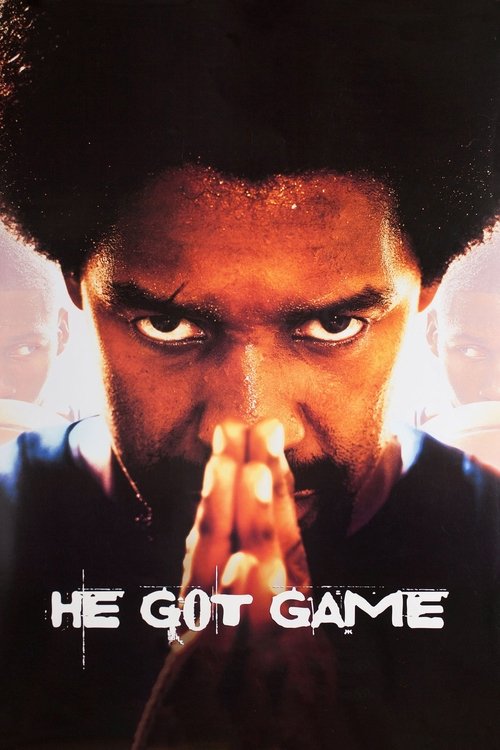
He Got Game
A basketball player's father must try to convince him to go to a college so he can get a shorter prison sentence.
The film struggled financially against its respectable budget of $25.0M, earning $21.6M globally (-14% loss).


Plot Structure
Story beats plotted across runtime


Narrative Arc
Emotional journey through the story's key moments
Story Circle
Blueprint 15-beat structure
Arcplot Score Breakdown
Weighted: Precision (70%) + Arc (15%) + Theme (15%)
He Got Game (1998) exemplifies precise dramatic framework, characteristic of Spike Lee's storytelling approach. This structural analysis examines how the film's 15-point plot structure maps to proven narrative frameworks across 2 hours and 16 minutes. With an Arcplot score of 7.4, the film balances conventional beats with creative variation.
Characters
Cast & narrative archetypes

Jesus Shuttlesworth
Jake Shuttlesworth
Dakota Burns
Lala Bonilla
Coach Cincotta
Uncle Bubba
Main Cast & Characters
Jesus Shuttlesworth
Played by Ray Allen
Top-ranked high school basketball player facing intense pressure from colleges, family, and his imprisoned father during his recruitment week.
Jake Shuttlesworth
Played by Denzel Washington
Jesus's father, a convicted murderer temporarily released from prison to convince his son to attend the governor's alma mater in exchange for a reduced sentence.
Dakota Burns
Played by Milla Jovovich
A prostitute living in Jake's halfway house who develops an unexpected connection with him during his brief time of freedom.
Lala Bonilla
Played by Rosario Dawson
Jesus's girlfriend who pushes him toward agents and opportunities that could benefit both their futures.
Coach Cincotta
Played by Arthur J. Nascarella
Jesus's high school basketball coach who tries to steer him toward his own preferred college choice.
Uncle Bubba
Played by Bill Nunn
Jesus's uncle and guardian who has his own agenda regarding Jesus's college decision and potential financial windfall.
Structural Analysis
The Status Quo at 1 minutes (1% through the runtime) establishes Jake Shuttlesworth confined in Attica prison, establishing his incarcerated world. Intercut with montage of young basketball players across America, showing the sport's cultural significance.. Significantly, this early placement immediately immerses viewers in the story world.
The inciting incident occurs at 16 minutes when Jake released on one-week furlough to convince Jesus to sign with Big State. This disrupts both their worlds—Jake suddenly free, Jesus about to be confronted by the father he resents.. At 12% through the film, this Disruption aligns precisely with traditional story structure. This beat shifts the emotional landscape, launching the protagonist into the central conflict.
The First Threshold at 34 minutes marks the transition into Act II, occurring at 25% of the runtime. This demonstrates the protagonist's commitment to Jake confronts Jesus at the basketball court. Jesus reluctantly agrees to spend time with his father, though hostility is palpable. Jake actively chooses to pursue relationship despite Jesus' hatred, entering the new world of trying to be a father again., moving from reaction to action.
At 68 minutes, the Midpoint arrives at 50% of the runtime—precisely centered, creating perfect narrative symmetry. The analysis reveals that this crucial beat Jesus discovers Jake's real mission—that he's only out of prison to manipulate him into signing with Big State. False defeat: the fragile connection shatters. Jesus feels betrayed again, confirming his father only cares about himself., fundamentally raising what's at risk. The emotional intensity shifts, dividing the narrative into clear before-and-after phases.
The Collapse moment at 102 minutes (75% through) represents the emotional nadir. Here, Jake's final desperate confrontation with Jesus turns violent. Jesus completely rejects him. Jake must return to prison empty-handed, having failed both the warden and his son. The dream of redemption dies. Dakota also faces her own collapse with her abusive pimp., reveals the protagonist at their lowest point. This beat's placement in the final quarter sets up the climactic reversal.
The Second Threshold at 109 minutes initiates the final act resolution at 80% of the runtime. Jesus makes his college decision at press conference, choosing Big State—not for Jake, but for his own reasons. He sends the signed letter to his father in prison. Jake realizes his son made an independent choice, a gift not of obligation but of possibility for future connection., demonstrating the transformation achieved throughout the journey.
Emotional Journey
He Got Game's emotional architecture traces a deliberate progression across 15 carefully calibrated beats.
Narrative Framework
This structural analysis employs systematic plot point analysis that identifies crucial turning points. By mapping He Got Game against these established plot points, we can identify how Spike Lee utilizes or subverts traditional narrative conventions. The plot point approach reveals not only adherence to structural principles but also creative choices that distinguish He Got Game within the drama genre.
Spike Lee's Structural Approach
Among the 13 Spike Lee films analyzed on Arcplot, the average structural score is 7.0, demonstrating varied approaches to story architecture. He Got Game represents one of the director's most structurally precise works. For comparative analysis, explore the complete Spike Lee filmography.
Comparative Analysis
Additional drama films include After Thomas, South Pacific and Dirty Dancing: Havana Nights. For more Spike Lee analyses, see Summer of Sam, Inside Man and Clockers.
Plot Points by Act
Act I
SetupStatus Quo
Jake Shuttlesworth confined in Attica prison, establishing his incarcerated world. Intercut with montage of young basketball players across America, showing the sport's cultural significance.
Theme
Warden meets with Jake, stating the deal: "Your son is the number one pick in the country. You convince him to sign with Big State, the governor's alma mater, you get time off." Theme of manipulation vs. genuine connection established.
Worldbuilding
Dual setup: Jake's prison life and Jesus' world as Coney Island's basketball prodigy. Jesus surrounded by opportunists—coaches, agents, family members—all wanting something. Flashbacks reveal Jake killed Jesus' mother in domestic violence incident.
Disruption
Jake released on one-week furlough to convince Jesus to sign with Big State. This disrupts both their worlds—Jake suddenly free, Jesus about to be confronted by the father he resents.
Resistance
Jake travels to Coney Island, checks into hotel. He debates how to approach Jesus, who wants nothing to do with him. Jesus navigates pressure from everyone: Uncle Bubba, girlfriend Lala, high school coach. Jake watches from distance, uncertain how to reconnect.
Act II
ConfrontationFirst Threshold
Jake confronts Jesus at the basketball court. Jesus reluctantly agrees to spend time with his father, though hostility is palpable. Jake actively chooses to pursue relationship despite Jesus' hatred, entering the new world of trying to be a father again.
Mirror World
Jake meets Dakota, a prostitute in his hotel. She represents an alternate storyline about genuine human connection vs. transactional relationships, mirroring the film's central theme of authentic care versus exploitation.
Premise
Jake and Jesus spend awkward time together—one-on-one basketball game, visits to Jesus' potential colleges. Everyone trying to exploit Jesus: Tech U offers money, Uncle Bubba schemes for payoff. Jake bonds with Dakota. The premise explores whether genuine fatherhood can exist alongside Jake's ulterior motive.
Midpoint
Jesus discovers Jake's real mission—that he's only out of prison to manipulate him into signing with Big State. False defeat: the fragile connection shatters. Jesus feels betrayed again, confirming his father only cares about himself.
Opposition
Pressure intensifies from all sides. Jesus increasingly cynical about everyone's motives. Lala pressures him to go pro so she can benefit. Uncle Bubba's scheme deepens. Jake's time runs out as prison guards monitor him. Dakota's pimp threatens her. Everything closes in.
Collapse
Jake's final desperate confrontation with Jesus turns violent. Jesus completely rejects him. Jake must return to prison empty-handed, having failed both the warden and his son. The dream of redemption dies. Dakota also faces her own collapse with her abusive pimp.
Crisis
Jake returns to prison, facing his failure alone. He processes that he may never reconcile with his son. Jesus sits with his decision, surrounded by vultures but completely isolated. Both father and son in their darkest emotional moments.
Act III
ResolutionSecond Threshold
Jesus makes his college decision at press conference, choosing Big State—not for Jake, but for his own reasons. He sends the signed letter to his father in prison. Jake realizes his son made an independent choice, a gift not of obligation but of possibility for future connection.
Synthesis
Jake receives reduced sentence. Jesus prepares for college. Both have learned the difference between exploitation and authentic relationship. The finale resolves not with reconciliation but with understanding and separate growth, acknowledging their complex history.
Transformation
Final image mirrors opening: Jake alone in prison yard playing basketball, but now with hope and self-awareness rather than pure confinement. Jesus also shoots hoops, both connected through the game but separately whole. Transformation from exploitation to autonomy.