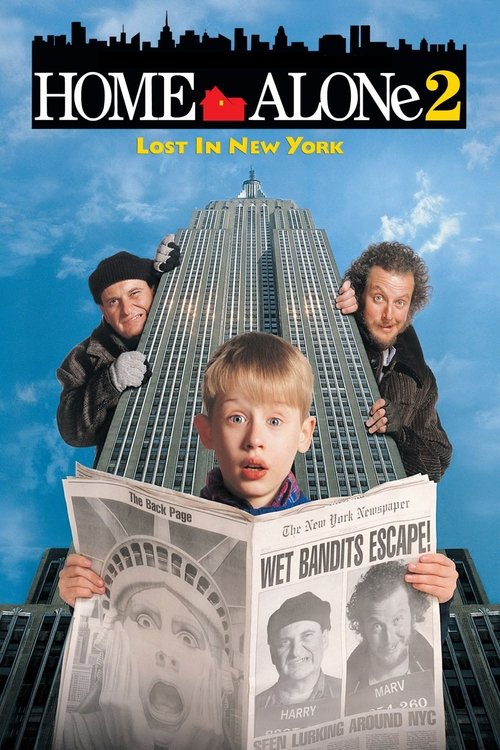
Home Alone 2: Lost in New York
Kevin is separated from his family again when he accidentally boards a flight to New York City during a Christmas trip to Miami. However he crosses paths with the same burglars, who now plan to rob a toy store on Christmas eve.
Despite a mid-range budget of $18.0M, Home Alone 2: Lost in New York became a commercial juggernaut, earning $359.0M worldwide—a remarkable 1894% return.
3 wins & 3 nominations


Plot Structure
Story beats plotted across runtime


Narrative Arc
Emotional journey through the story's key moments
Story Circle
Blueprint 15-beat structure
Characters
Cast & narrative archetypes

Kevin McCallister
Harry Lime
Marv Merchants
Pigeon Lady
Kate McCallister
Peter McCallister
Mr. Hector
Main Cast & Characters
Kevin McCallister
Played by Macaulay Culkin
A resourceful 10-year-old who gets separated from his family and must survive alone in New York City while defending himself from burglars.
Harry Lime
Played by Joe Pesci
One half of the bumbling "Wet Bandits" duo, now escaped from prison and seeking revenge on Kevin in New York.
Marv Merchants
Played by Daniel Stern
Harry's dimwitted partner in crime, equally incompetent and prone to slapstick injuries.
Pigeon Lady
Played by Brenda Fricker
A mysterious homeless woman living in Central Park who befriends Kevin and helps him understand loneliness and forgiveness.
Kate McCallister
Played by Catherine O'Hara
Kevin's frantic mother who desperately tries to reunite with her son after he boards the wrong plane.
Peter McCallister
Played by John Heard
Kevin's father, practical and increasingly exasperated by the family's repeated mishaps.
Mr. Hector
Played by Tim Curry
The suspicious and condescending concierge at the Plaza Hotel who doubts Kevin's legitimacy.
Structural Analysis
The Status Quo at 1 minutes (1% through the runtime) establishes Kevin's family prepares for Christmas trip to Florida. The McCallister household is chaotic again with relatives everywhere, establishing Kevin as still feeling like an outsider in his own family.. Structural examination shows that this early placement immediately immerses viewers in the story world.
The inciting incident occurs at 14 minutes when At the airport, Kevin follows a man in a similar coat thinking it's his father, boarding the wrong plane to New York instead of Florida. He becomes separated from his family.. At 12% through the film, this Disruption aligns precisely with traditional story structure. This beat shifts the emotional landscape, launching the protagonist into the central conflict.
The First Threshold at 28 minutes marks the transition into Act II, occurring at 23% of the runtime. This indicates the protagonist's commitment to Kevin actively chooses to embrace being alone in New York, touring the city and enjoying his freedom. He commits to making this adventure work on his own terms., moving from reaction to action.
At 61 minutes, the Midpoint arrives at 51% of the runtime—precisely centered, creating perfect narrative symmetry. Significantly, this crucial beat The concierge discovers Kevin is using a stolen credit card. Kevin flees the Plaza Hotel and becomes truly homeless and vulnerable in New York. The fun and games are over; stakes become real., fundamentally raising what's at risk. The emotional intensity shifts, dividing the narrative into clear before-and-after phases.
The Collapse moment at 88 minutes (74% through) represents the emotional nadir. Here, Harry and Marv capture Kevin in Central Park, planning to kill him. Kevin appears completely defeated and at their mercy. This is his darkest moment with a literal "whiff of death."., indicates the protagonist at their lowest point. This beat's placement in the final quarter sets up the climactic reversal.
The Second Threshold at 95 minutes initiates the final act resolution at 79% of the runtime. Kevin realizes he can protect Duncan's Toy Chest from the burglars and synthesizes his lessons about trust. He sets up the townhouse trap, combining his ingenuity with newfound purpose to help others., demonstrating the transformation achieved throughout the journey.
Emotional Journey
Home Alone 2: Lost in New York's emotional architecture traces a deliberate progression across 15 carefully calibrated beats.
Narrative Framework
This structural analysis employs a 15-point narrative structure framework that maps key story moments. By mapping Home Alone 2: Lost in New York against these established plot points, we can identify how Chris Columbus utilizes or subverts traditional narrative conventions. The plot point approach reveals not only adherence to structural principles but also creative choices that distinguish Home Alone 2: Lost in New York within the adventure genre.
Chris Columbus's Structural Approach
Among the 15 Chris Columbus films analyzed on Arcplot, the average structural score is 6.3, demonstrating varied approaches to story architecture. Home Alone 2: Lost in New York exemplifies the director's characteristic narrative technique. For comparative analysis, explore the complete Chris Columbus filmography.
Comparative Analysis
Additional adventure films include The Black Stallion, The Bad Guys and Puss in Boots. For more Chris Columbus analyses, see Harry Potter and the Philosopher's Stone, Nine Months and Harry Potter and the Prisoner of Azkaban.
Plot Points by Act
Act I
SetupStatus Quo
Kevin's family prepares for Christmas trip to Florida. The McCallister household is chaotic again with relatives everywhere, establishing Kevin as still feeling like an outsider in his own family.
Theme
Kevin's mother Kate says "This Christmas, I want you to have a good time. I don't want you to worry about anything." The theme of family connection and trust is established.
Worldbuilding
Kevin deals with family chaos, Buzz humiliates him at the Christmas pageant, and he expresses his wish to be alone again. The family dynamic and Kevin's insecurities are established.
Disruption
At the airport, Kevin follows a man in a similar coat thinking it's his father, boarding the wrong plane to New York instead of Florida. He becomes separated from his family.
Resistance
Kevin lands in New York, realizes his mistake but decides to make the best of it. He uses his father's credit card to check into the Plaza Hotel, initially excited about his independence.
Act II
ConfrontationFirst Threshold
Kevin actively chooses to embrace being alone in New York, touring the city and enjoying his freedom. He commits to making this adventure work on his own terms.
Mirror World
Kevin encounters the Pigeon Lady in Central Park and is initially frightened. She represents the story's thematic exploration of loneliness, trust, and human connection.
Premise
Kevin enjoys the promise of New York: fancy hotel suite, room service, limousines, Duncan's Toy Chest, Christmas sights. Meanwhile, Harry and Marv plot to rob the toy store on Christmas Eve.
Midpoint
The concierge discovers Kevin is using a stolen credit card. Kevin flees the Plaza Hotel and becomes truly homeless and vulnerable in New York. The fun and games are over; stakes become real.
Opposition
Kevin takes refuge in his uncle's townhouse. Harry and Marv discover Kevin is in New York and hunt him. Kevin reconnects with the Pigeon Lady, learning about her loneliness. Pressure intensifies from multiple directions.
Collapse
Harry and Marv capture Kevin in Central Park, planning to kill him. Kevin appears completely defeated and at their mercy. This is his darkest moment with a literal "whiff of death."
Crisis
The Pigeon Lady rescues Kevin, showing him the power of trust and human connection. Kevin processes what he's learned about loneliness and the importance of family.
Act III
ResolutionSecond Threshold
Kevin realizes he can protect Duncan's Toy Chest from the burglars and synthesizes his lessons about trust. He sets up the townhouse trap, combining his ingenuity with newfound purpose to help others.
Synthesis
Kevin executes his elaborate trap to stop Harry and Marv. The Pigeon Lady calls police. Kevin defeats the burglars and is reunited with his mother. All story threads resolve.
Transformation
Christmas morning in the Plaza Hotel. Kevin is surrounded by his grateful family. The Pigeon Lady reconnects with her granddaughter. Kevin has transformed from wanting to be alone to understanding the value of family and human connection.