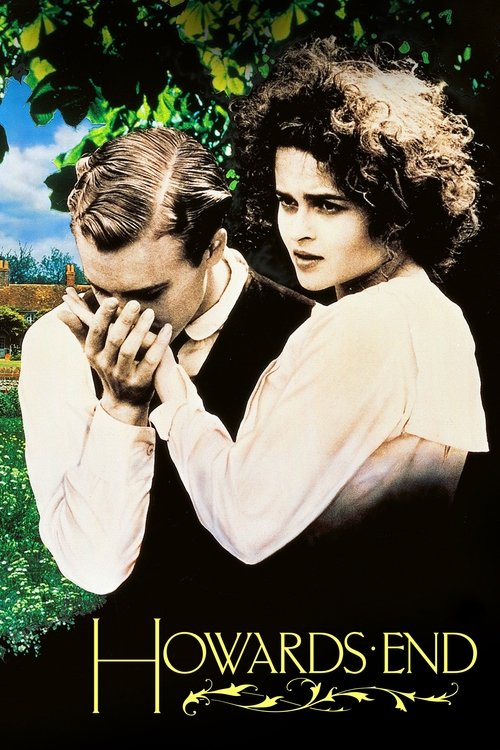
Howards End
A saga of class relations and changing times in an Edwardian England on the brink of modernity, the film centers on liberal Margaret Schlegel, who, along with her sister Helen, becomes involved with two couples: wealthy, conservative industrialist Henry Wilcox and his wife Ruth, and the downwardly mobile working-class Leonard Bast and his mistress Jackie.
Despite its modest budget of $8.0M, Howards End became a financial success, earning $26.1M worldwide—a 227% return. The film's compelling narrative engaged audiences, illustrating how strong storytelling can transcend budget limitations.
3 Oscars. 32 wins & 49 nominations


Plot Structure
Story beats plotted across runtime


Narrative Arc
Emotional journey through the story's key moments
Story Circle
Blueprint 15-beat structure
Arcplot Score Breakdown
Weighted: Precision (70%) + Arc (15%) + Theme (15%)
Howards End (1992) demonstrates deliberately positioned story structure, characteristic of James Ivory's storytelling approach. This structural analysis examines how the film's 15-point plot structure maps to proven narrative frameworks across 2 hours and 22 minutes. With an Arcplot score of 7.7, the film showcases strong structural fundamentals.
Characters
Cast & narrative archetypes

Margaret Schlegel
Helen Schlegel
Henry Wilcox
Ruth Wilcox
Leonard Bast
Charles Wilcox
Jacky Bast
Main Cast & Characters
Margaret Schlegel
Played by Emma Thompson
An idealistic, intellectual woman who seeks connection between the prose and the passion, ultimately inheriting Howards End.
Helen Schlegel
Played by Helena Bonham Carter
Margaret's passionate, impulsive younger sister who becomes romantically involved with Leonard Bast.
Henry Wilcox
Played by Anthony Hopkins
A wealthy businessman who marries Margaret but embodies the capitalist pragmatism that conflicts with her ideals.
Ruth Wilcox
Played by Vanessa Redgrave
Henry's first wife, a spiritual woman deeply connected to Howards End who wishes Margaret to inherit it.
Leonard Bast
Played by Samuel West
A struggling lower-class clerk seeking self-improvement who becomes entangled with the Schlegels.
Charles Wilcox
Played by James Wilby
Henry's aggressive, conventional eldest son who protects family interests at all costs.
Jacky Bast
Played by Nicola Duffett
Leonard's older wife, a former mistress of Henry Wilcox, whose past becomes a catalyst for tragedy.
Structural Analysis
The Status Quo at 2 minutes (1% through the runtime) establishes The Schlegel sisters (Margaret and Helen) attend a concert at the Wigmore Hall, establishing their cultured, progressive world of ideas and art in Edwardian London. They embody intellectual independence and connection.. The analysis reveals that this early placement immediately immerses viewers in the story world.
The inciting incident occurs at 16 minutes when Ruth Wilcox dies unexpectedly. Her dying wish was to leave Howards End to Margaret, but the Wilcox family suppresses the bequest, choosing not to honor it. This disrupts the natural order and sets consequences in motion.. At 11% through the film, this Disruption aligns precisely with traditional story structure. This beat shifts the emotional landscape, launching the protagonist into the central conflict.
The First Threshold at 37 minutes marks the transition into Act II, occurring at 26% of the runtime. This reveals the protagonist's commitment to Margaret accepts Henry Wilcox's proposal of marriage, choosing to bridge the divide between their two worlds. This is her active decision to connect the prose and the passion, the practical and the ideal., moving from reaction to action.
At 71 minutes, the Midpoint arrives at 50% of the runtime—precisely centered, creating perfect narrative symmetry. Notably, this crucial beat Helen discovers that Henry Wilcox had an affair with Jacky Bast years ago and ruined her life. This revelation exposes Henry's hypocrisy and casts a shadow over Margaret's idealistic attempt to connect their worlds. False victory becomes false defeat., fundamentally raising what's at risk. The emotional intensity shifts, dividing the narrative into clear before-and-after phases.
The Collapse moment at 107 minutes (75% through) represents the emotional nadir. Here, Leonard Bast dies of a heart attack after being beaten by Charles Wilcox at Howards End. This is the "whiff of death" - the working-class man caught between two worlds is literally destroyed by the collision of classes and moral systems., illustrates the protagonist at their lowest point. This beat's placement in the final quarter sets up the climactic reversal.
The Second Threshold at 114 minutes initiates the final act resolution at 80% of the runtime. Henry finally honors his late wife Ruth's wish and gives Howards End to Margaret. This act of surrender and connection allows reconciliation. Margaret invites Helen and her child to live there, synthesizing family, past, and future., demonstrating the transformation achieved throughout the journey.
Emotional Journey
Howards End's emotional architecture traces a deliberate progression across 15 carefully calibrated beats.
Narrative Framework
This structural analysis employs proven narrative structure principles that track dramatic progression. By mapping Howards End against these established plot points, we can identify how James Ivory utilizes or subverts traditional narrative conventions. The plot point approach reveals not only adherence to structural principles but also creative choices that distinguish Howards End within the drama genre.
James Ivory's Structural Approach
Among the 4 James Ivory films analyzed on Arcplot, the average structural score is 7.1, reflecting strong command of classical structure. Howards End represents one of the director's most structurally precise works. For comparative analysis, explore the complete James Ivory filmography.
Comparative Analysis
Additional drama films include After Thomas, South Pacific and Dirty Dancing: Havana Nights. For more James Ivory analyses, see A Room with a View, The Remains of the Day and Le Divorce.
Plot Points by Act
Act I
SetupStatus Quo
The Schlegel sisters (Margaret and Helen) attend a concert at the Wigmore Hall, establishing their cultured, progressive world of ideas and art in Edwardian London. They embody intellectual independence and connection.
Theme
Ruth Wilcox says "Only connect" - the film's central theme about bridging the gap between the practical world of business (the Wilcoxes) and the world of personal relations and ideas (the Schlegels).
Worldbuilding
Introduction of the three families: the intellectual Schlegels, the pragmatic wealthy Wilcoxes, and the struggling Basts. Helen's brief engagement to Paul Wilcox dissolves, establishing class tensions. Margaret befriends Ruth Wilcox.
Disruption
Ruth Wilcox dies unexpectedly. Her dying wish was to leave Howards End to Margaret, but the Wilcox family suppresses the bequest, choosing not to honor it. This disrupts the natural order and sets consequences in motion.
Resistance
The Schlegels face eviction from their London home. Margaret encounters Henry Wilcox again and they begin a cautious friendship. Helen tries to help Leonard Bast after his chance meeting at the concert, offering charity and advice about his employment.
Act II
ConfrontationFirst Threshold
Margaret accepts Henry Wilcox's proposal of marriage, choosing to bridge the divide between their two worlds. This is her active decision to connect the prose and the passion, the practical and the ideal.
Mirror World
Margaret's engagement to Henry represents the mirror world subplot - her relationship will teach her about compromise, connection, and the price of trying to unite opposing worldviews. Henry becomes the thematic counterpoint to her idealism.
Premise
Margaret navigates her engagement to Henry, learning about his world of business and property. She tries to maintain her principles while adapting to his practical mindset. The Basts' situation worsens; Leonard loses his job partly due to Henry's earlier advice relayed through Helen.
Midpoint
Helen discovers that Henry Wilcox had an affair with Jacky Bast years ago and ruined her life. This revelation exposes Henry's hypocrisy and casts a shadow over Margaret's idealistic attempt to connect their worlds. False victory becomes false defeat.
Opposition
Margaret confronts Henry about his past but chooses to forgive and proceed with marriage, applying her principle of connection. Helen becomes pregnant by Leonard Bast and goes into exile. The sisters become estranged over Margaret's choice to marry Henry despite his moral failings.
Collapse
Leonard Bast dies of a heart attack after being beaten by Charles Wilcox at Howards End. This is the "whiff of death" - the working-class man caught between two worlds is literally destroyed by the collision of classes and moral systems.
Crisis
Margaret processes the tragedy. Charles is arrested for manslaughter. Henry, broken by his son's imprisonment, becomes dependent on Margaret. Helen returns with her baby. The crisis forces confrontation with the consequences of disconnection and hypocrisy.
Act III
ResolutionSecond Threshold
Henry finally honors his late wife Ruth's wish and gives Howards End to Margaret. This act of surrender and connection allows reconciliation. Margaret invites Helen and her child to live there, synthesizing family, past, and future.
Synthesis
The finale shows the combined household at Howards End. The Schlegel sisters are reunited. Helen's son (Leonard's child) will inherit the house, uniting all three families. Margaret has achieved connection through sacrifice, forgiveness, and persistence.
Transformation
Final image of the hay harvest at Howards End with the combined family watching together. Margaret has transformed from an idealistic observer into a woman who has actively connected the disparate worlds, honoring Ruth Wilcox's legacy and the principle "Only connect."