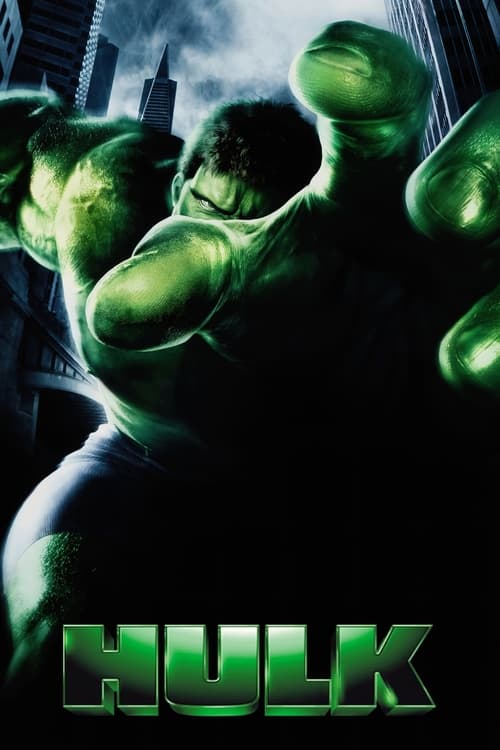
Hulk
Bruce Banner, a genetics researcher with a tragic past, suffers massive radiation exposure in his laboratory that causes him to transform into a raging green monster when he gets angry.
Working with a considerable budget of $137.0M, the film achieved a modest success with $245.4M in global revenue (+79% profit margin).
3 wins & 15 nominations


Plot Structure
Story beats plotted across runtime


Narrative Arc
Emotional journey through the story's key moments
Story Circle
Blueprint 15-beat structure
Arcplot Score Breakdown
Weighted: Precision (70%) + Arc (15%) + Theme (15%)
Hulk (2003) exemplifies precise dramatic framework, characteristic of Ang Lee's storytelling approach. This structural analysis examines how the film's 15-point plot structure maps to proven narrative frameworks across 2 hours and 18 minutes. With an Arcplot score of 6.9, the film balances conventional beats with creative variation.
Characters
Cast & narrative archetypes

Bruce Banner
Betty Ross
David Banner
General Thaddeus Ross
Glen Talbot
Main Cast & Characters
Bruce Banner
Played by Eric Bana
A repressed scientist whose childhood trauma and gamma radiation experiment transform him into the Hulk when angered.
Betty Ross
Played by Jennifer Connelly
Bruce's former girlfriend and fellow scientist who tries to help him control the Hulk while torn between love and duty.
David Banner
Played by Nick Nolte
Bruce's obsessed scientist father who experimented on himself and his son, becoming a dangerous adversary.
General Thaddeus Ross
Played by Sam Elliott
Betty's military father who views the Hulk as a threat and seeks to weaponize or destroy him.
Glen Talbot
Played by Josh Lucas
An ambitious military officer who wants to exploit Bruce's abilities for profit and personal gain.
Structural Analysis
The Status Quo at 1 minutes (1% through the runtime) establishes Young Bruce Banner as a child, living on a military base with his scientist father David Banner who is conducting illegal genetic experiments. The fragmented memories and repressed trauma establish Bruce's ordinary world built on buried secrets.. Notably, this early placement immediately immerses viewers in the story world.
The inciting incident occurs at 17 minutes when Bruce is exposed to a massive dose of gamma radiation while saving a colleague during a lab accident. Combined with his father's genetic tampering, this triggers the dormant mutations in his DNA, setting his transformation into the Hulk in motion.. At 12% through the film, this Disruption aligns precisely with traditional story structure. This beat shifts the emotional landscape, launching the protagonist into the central conflict.
The First Threshold at 35 minutes marks the transition into Act II, occurring at 25% of the runtime. This shows the protagonist's commitment to Bruce transforms into the Hulk for the first time after David Banner's gamma-irradiated dogs attack Betty at her cabin. The rage-triggered metamorphosis is complete and irreversible. Bruce crosses into a new existence where he can no longer deny or control the monster within., moving from reaction to action.
At 69 minutes, the Midpoint arrives at 50% of the runtime—precisely centered, creating perfect narrative symmetry. Notably, this crucial beat The Hulk escapes the underground military base in a spectacular display of power, leaping across the desert. This false victory shows the Hulk cannot be contained by conventional means, but it also marks the point where the stakes escalate—now Bruce is a fugitive and the military will use any means necessary., fundamentally raising what's at risk. The emotional intensity shifts, dividing the narrative into clear before-and-after phases.
The Collapse moment at 104 minutes (75% through) represents the emotional nadir. Here, David Banner confronts Bruce, revealing the full horror of his childhood—that David killed Bruce's mother and tried to kill young Bruce. Glenn Talbot is killed trying to exploit the Hulk. Bruce faces the truth that his father is a monster who sees Bruce only as a means to power., demonstrates the protagonist at their lowest point. This beat's placement in the final quarter sets up the climactic reversal.
The Second Threshold at 110 minutes initiates the final act resolution at 80% of the runtime. Bruce chooses to confront his father directly, accepting that he must face his demons rather than suppress them. He allows himself to transform into the Hulk to battle his father, using his rage purposefully rather than being controlled by it., demonstrating the transformation achieved throughout the journey.
Emotional Journey
Hulk's emotional architecture traces a deliberate progression across 15 carefully calibrated beats.
Narrative Framework
This structural analysis employs structural analysis methodology used to understand storytelling architecture. By mapping Hulk against these established plot points, we can identify how Ang Lee utilizes or subverts traditional narrative conventions. The plot point approach reveals not only adherence to structural principles but also creative choices that distinguish Hulk within the science fiction genre.
Ang Lee's Structural Approach
Among the 12 Ang Lee films analyzed on Arcplot, the average structural score is 6.8, demonstrating varied approaches to story architecture. Hulk represents one of the director's most structurally precise works. For comparative analysis, explore the complete Ang Lee filmography.
Comparative Analysis
Additional science fiction films include The Postman, Mad Max 2 and AVP: Alien vs. Predator. For more Ang Lee analyses, see Taking Woodstock, Life of Pi and The Wedding Banquet.
Plot Points by Act
Act I
SetupStatus Quo
Young Bruce Banner as a child, living on a military base with his scientist father David Banner who is conducting illegal genetic experiments. The fragmented memories and repressed trauma establish Bruce's ordinary world built on buried secrets.
Theme
Betty Ross tells Bruce that he keeps everything bottled up inside, that his emotional repression is unhealthy. This states the theme: the danger of suppressing one's true nature and the necessity of confronting inner demons.
Worldbuilding
Bruce Banner works as a genetics researcher at Berkeley alongside his ex-girlfriend Betty Ross. His emotionally distant nature and lack of memory of his childhood are established. David Banner reappears as a janitor at the lab, and General Ross's military presence looms. The nanomeds and gamma research are introduced.
Disruption
Bruce is exposed to a massive dose of gamma radiation while saving a colleague during a lab accident. Combined with his father's genetic tampering, this triggers the dormant mutations in his DNA, setting his transformation into the Hulk in motion.
Resistance
Bruce begins experiencing strange physical changes and enhanced healing. David Banner reveals himself as Bruce's father and hints at genetic experimentation. Betty notices Bruce's instability. Glenn Talbot circles as a corporate threat. Bruce resists accepting what's happening to him, trying to maintain his normal life.
Act II
ConfrontationFirst Threshold
Bruce transforms into the Hulk for the first time after David Banner's gamma-irradiated dogs attack Betty at her cabin. The rage-triggered metamorphosis is complete and irreversible. Bruce crosses into a new existence where he can no longer deny or control the monster within.
Mirror World
Betty reaches out to Bruce after his first transformation, refusing to abandon him despite witnessing the monster. Her compassion and acceptance represent what Bruce lacks—the ability to embrace all parts of himself. Their connection becomes the emotional anchor of his journey.
Premise
Bruce experiences repeated Hulk transformations as the military closes in. General Ross captures Bruce and subjects him to experiments. The Hulk escapes containment, demonstrating his incredible power. Bruce struggles between his scientific mind and primal rage while Betty advocates for his humanity.
Midpoint
The Hulk escapes the underground military base in a spectacular display of power, leaping across the desert. This false victory shows the Hulk cannot be contained by conventional means, but it also marks the point where the stakes escalate—now Bruce is a fugitive and the military will use any means necessary.
Opposition
The military pursues the Hulk across the Southwest in an epic battle involving tanks, helicopters, and jets. David Banner absorbs the power from various sources, becoming increasingly unstable and dangerous. Glenn Talbot attempts to exploit Bruce. General Ross intensifies his campaign. Bruce is recaptured and his relationship with Betty is strained.
Collapse
David Banner confronts Bruce, revealing the full horror of his childhood—that David killed Bruce's mother and tried to kill young Bruce. Glenn Talbot is killed trying to exploit the Hulk. Bruce faces the truth that his father is a monster who sees Bruce only as a means to power.
Crisis
Bruce processes the trauma of his recovered memories and his father's betrayal. He must reconcile the monster within himself with his father's monstrous legacy. Betty pleads with her father to give Bruce a chance, while David Banner fully embraces his transformation into a power-absorbing creature.
Act III
ResolutionSecond Threshold
Bruce chooses to confront his father directly, accepting that he must face his demons rather than suppress them. He allows himself to transform into the Hulk to battle his father, using his rage purposefully rather than being controlled by it.
Synthesis
The Hulk battles the Absorbing Man (David Banner) in a surreal, elemental confrontation that moves from physical to psychological. David attempts to absorb the Hulk's power but cannot contain Bruce's rage. General Ross orders a gamma bomb strike that destroys David. Bruce survives, presumed dead, but actually alive.
Transformation
One year later, Bruce lives in South American exile, having found purpose helping the sick. When confronted by soldiers, his eyes flash green—he has accepted the Hulk as part of himself. Unlike the repressed, emotionally distant scientist of the opening, Bruce now embraces his duality and uses his power with intention.