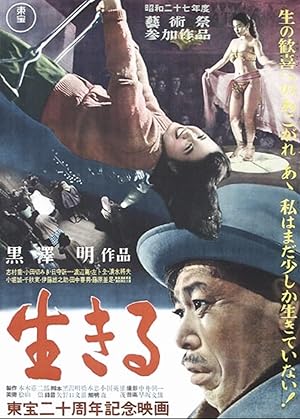
Ikiru
Kanji Watanabe is a civil servant. He has worked in the same department for 30 years. His life is pretty boring and monotonous, though he once used to have passion and drive. Then one day he discovers that he has stomach cancer and has less than a year to live. After the initial depression he sets about living for the first time in over 20 years. Then he realises that his limited time left is not just for living life to the full but to leave something meaningful behind...
The film earned $55K at the global box office.
Nominated for 1 BAFTA Award6 wins & 2 nominations


Plot Structure
Story beats plotted across runtime


Narrative Arc
Emotional journey through the story's key moments
Story Circle
Blueprint 15-beat structure
Arcplot Score Breakdown
Weighted: Precision (70%) + Arc (15%) + Theme (15%)
Ikiru (1952) reveals precise narrative design, characteristic of Akira Kurosawa's storytelling approach. This structural analysis examines how the film's 15-point plot structure maps to proven narrative frameworks across 2 hours and 23 minutes. With an Arcplot score of 3.1, the film takes an unconventional approach to traditional narrative frameworks.
Characters
Cast & narrative archetypes

Kanji Watanabe
Toyo Odagiri
Mitsuo Watanabe
Kazue Watanabe
Kiichi Watanabe
Ohara
Kimura
Saito
Main Cast & Characters
Kanji Watanabe
Played by Takashi Shimura
A dying bureaucrat who has spent 30 years in meaningless routine seeks to find meaning in his final months by creating a children's park.
Toyo Odagiri
Played by Miki Odagiri
A young, vibrant office worker whose joy for life inspires Watanabe to seek meaning and purpose in his remaining time.
Mitsuo Watanabe
Played by Nobuo Kaneko
Kanji's self-absorbed son who is more concerned with his inheritance than his father's terminal illness.
Kazue Watanabe
Played by Kyōko Seki
Mitsuo's wife and Kanji's daughter-in-law, who is greedy and resentful of Kanji's potential spending.
Kiichi Watanabe
Played by Makoto Kobori
Kanji's older brother who encourages him to enjoy his remaining days but doesn't understand his deeper quest for meaning.
Ohara
Played by Shinichi Himori
A subordinate in Watanabe's office who becomes a key witness to his transformation and effort to build the park.
Kimura
Played by Minoru Chiaki
Another subordinate who works with Watanabe and later reflects on his boss's final months during the wake.
Saito
Played by Kamatari Fujiwara
A subordinate official who observes Watanabe's transformation and participates in discussions about his legacy.
Structural Analysis
The Status Quo at 1 minutes (1% through the runtime) establishes X-ray of Watanabe's stomach reveals gastric cancer as narrator describes his hollow bureaucratic existence. Watanabe sits at his desk stamping papers mechanically, having done nothing meaningful for thirty years.. Significantly, this early placement immediately immerses viewers in the story world.
The inciting incident occurs at 15 minutes when Doctor gives Watanabe diagnosis of gastric cancer without naming it directly. Another patient explains the doctor's euphemisms mean terminal cancer with 6-12 months to live. Watanabe staggers into the street, his world shattered.. At 10% through the film, this Disruption aligns precisely with traditional story structure. This beat shifts the emotional landscape, launching the protagonist into the central conflict.
The First Threshold at 31 minutes marks the transition into Act II, occurring at 22% of the runtime. This shows the protagonist's commitment to Watanabe actively chooses to pursue connection with Toyo, a young female subordinate who quit the office. He asks to see her again, seeking the vitality and joy she represents. This is his choice to leave his dead life behind., moving from reaction to action.
At 60 minutes, the Midpoint arrives at 42% of the runtime—significantly early, compressing the first half. Structural examination shows that this crucial beat In a crowded restaurant, Toyo explains she finds meaning in making toys for children—creating something that brings joy. Watanabe suddenly understands: meaning comes from action that helps others. He can do something meaningful with his remaining time. Birthday celebrants sing "Happy Birthday to You" in the background—a symbolic rebirth., fundamentally raising what's at risk. The emotional intensity shifts, dividing the narrative into clear before-and-after phases.
The Collapse moment at 97 minutes (68% through) represents the emotional nadir. Here, Deputy Mayor tried to block the playground project completely, calling Watanabe foolish and threatening his legacy. Watanabe realized even in death, the system would erase his accomplishment and deny him credit. Metaphorical death: his work might be meaningless after all., reveals the protagonist at their lowest point. This beat's placement in the final quarter sets up the climactic reversal.
The Second Threshold at 104 minutes initiates the final act resolution at 73% of the runtime. A policeman testifies he found Watanabe alone on the finished playground at night, swinging on a swing in the snow, singing "Gondola no Uta" (Life is Brief) as he died. The synthesis: Watanabe combined his bureaucratic knowledge with his newfound purpose, and found peace in meaningful action., demonstrating the transformation achieved throughout the journey.
Emotional Journey
Ikiru's emotional architecture traces a deliberate progression across 15 carefully calibrated beats.
Narrative Framework
This structural analysis employs proven narrative structure principles that track dramatic progression. By mapping Ikiru against these established plot points, we can identify how Akira Kurosawa utilizes or subverts traditional narrative conventions. The plot point approach reveals not only adherence to structural principles but also creative choices that distinguish Ikiru within the drama genre.
Akira Kurosawa's Structural Approach
Among the 5 Akira Kurosawa films analyzed on Arcplot, the average structural score is 5.5, showcasing experimental approaches to narrative form. Ikiru takes a more unconventional approach compared to the director's typical style. For comparative analysis, explore the complete Akira Kurosawa filmography.
Comparative Analysis
Additional drama films include After Thomas, South Pacific and Dirty Dancing: Havana Nights. For more Akira Kurosawa analyses, see High and Low, Ran and Red Beard.
Plot Points by Act
Act I
SetupStatus Quo
X-ray of Watanabe's stomach reveals gastric cancer as narrator describes his hollow bureaucratic existence. Watanabe sits at his desk stamping papers mechanically, having done nothing meaningful for thirty years.
Theme
Citizens seeking help for a sewage-filled playground are passed between departments in endless bureaucratic circles. A young clerk observes: "It would take half a lifetime to get anything done here." Theme: How does one find meaning when confronting mortality?
Worldbuilding
Establishes Watanabe's empty life: joyless work stamping documents, distant relationship with son and daughter-in-law who live with him but plan to take his retirement money, his complete dedication to meaningless routine over three decades.
Disruption
Doctor gives Watanabe diagnosis of gastric cancer without naming it directly. Another patient explains the doctor's euphemisms mean terminal cancer with 6-12 months to live. Watanabe staggers into the street, his world shattered.
Resistance
Watanabe attempts to tell his son about his illness but cannot. He withdraws savings and meets a novelist who guides him through Tokyo's nightlife—bars, strip clubs, pachinko—seeking pleasure. But hedonism rings hollow; Watanabe realizes distraction is not meaning.
Act II
ConfrontationFirst Threshold
Watanabe actively chooses to pursue connection with Toyo, a young female subordinate who quit the office. He asks to see her again, seeking the vitality and joy she represents. This is his choice to leave his dead life behind.
Mirror World
Toyo meets Watanabe at a café. Her youthful energy and genuine engagement with life contrasts sharply with his deadness. She will become his mirror, showing him what it means to truly live before dying.
Premise
Watanabe spends time with Toyo—restaurants, arcades, bowling. She is confused by his attention but tolerates it. He desperately tries to absorb her vitality. She makes toy rabbits at a factory, simple work but she finds meaning in it.
Midpoint
In a crowded restaurant, Toyo explains she finds meaning in making toys for children—creating something that brings joy. Watanabe suddenly understands: meaning comes from action that helps others. He can do something meaningful with his remaining time. Birthday celebrants sing "Happy Birthday to You" in the background—a symbolic rebirth.
Opposition
The film jumps forward to Watanabe's funeral (five months later). In flashback through testimony, colleagues reveal Watanabe spent his final months fighting bureaucracy to build the playground. He faced opposition from every department, political corruption, and yakuza threats but persisted relentlessly.
Collapse
Deputy Mayor tried to block the playground project completely, calling Watanabe foolish and threatening his legacy. Watanabe realized even in death, the system would erase his accomplishment and deny him credit. Metaphorical death: his work might be meaningless after all.
Crisis
Through funeral testimonies, we see Watanabe in his final days, physically deteriorating but spiritually stronger. Despite his body failing and bureaucratic opposition, he continues pushing. His colleagues at the wake reflect on their own meaningless lives.
Act III
ResolutionSecond Threshold
A policeman testifies he found Watanabe alone on the finished playground at night, swinging on a swing in the snow, singing "Gondola no Uta" (Life is Brief) as he died. The synthesis: Watanabe combined his bureaucratic knowledge with his newfound purpose, and found peace in meaningful action.
Synthesis
At the wake, Watanabe's colleagues are deeply moved, vowing to change and follow his example. But as they return to work, they fall back into old patterns. Watanabe's son remains blind to his father's transformation, concerned only with inheritance.
Transformation
One young clerk begins to stand up to the bureaucracy, starting to process a new citizen complaint about a dangerous road. He mirrors Watanabe's transformation. The cycle may continue—one meaningful life inspiring another. A glimmer of hope that change is possible.