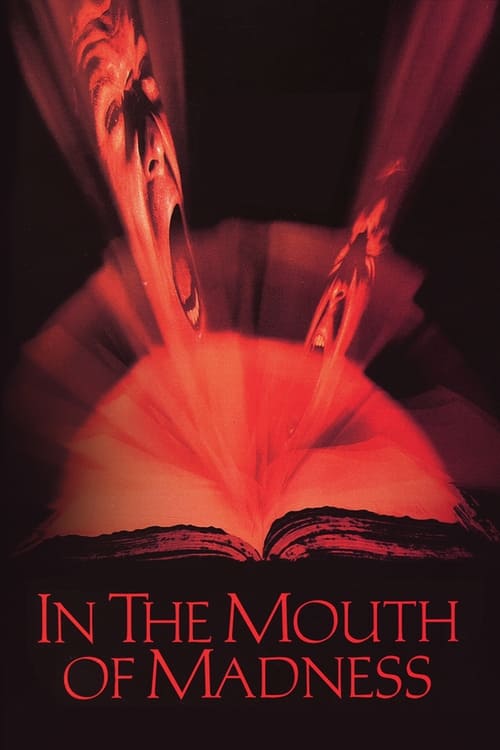
In the Mouth of Madness
An insurance investigator visits a small town while looking into the strange disappearance of a popular horror novelist. He soon finds that the impact of the author’s books is far more than inspirational.
Working with a small-scale budget of $8.0M, the film achieved a respectable showing with $8.9M in global revenue (+12% profit margin).
1 win & 4 nominations


Plot Structure
Story beats plotted across runtime


Narrative Arc
Emotional journey through the story's key moments
Story Circle
Blueprint 15-beat structure
Arcplot Score Breakdown
Weighted: Precision (70%) + Arc (15%) + Theme (15%)
In the Mouth of Madness (1995) exemplifies deliberately positioned narrative architecture, characteristic of John Carpenter's storytelling approach. This structural analysis examines how the film's 15-point plot structure maps to proven narrative frameworks across 1 hour and 35 minutes. With an Arcplot score of 7.0, the film balances conventional beats with creative variation.
Characters
Cast & narrative archetypes

John Trent
Sutter Cane
Linda Styles
Jackson Harglow
Dr. Wrenn
Main Cast & Characters
John Trent
Played by Sam Neill
A cynical insurance investigator who specializes in exposing fraud, sent to find missing horror novelist Sutter Cane.
Sutter Cane
Played by Jürgen Prochnow
A bestselling horror author whose fiction begins to manifest in reality, blurring the line between creator and creation.
Linda Styles
Played by Julie Carmen
Sutter Cane's editor who accompanies Trent on the search, revealing connections to Cane's work.
Jackson Harglow
Played by Charlton Heston
Publishing director who hires Trent to locate the missing Sutter Cane and recover his final manuscript.
Dr. Wrenn
Played by David Warner
The psychiatrist treating Trent in the asylum, attempting to understand his seemingly impossible story.
Structural Analysis
The Status Quo at 1 minutes (1% through the runtime) establishes John Trent, a rational insurance investigator, is confined in a psychiatric hospital, drawing crosses on the walls and floor of his padded cell, representing his shattered grip on reality.. The analysis reveals that this early placement immediately immerses viewers in the story world.
The inciting incident occurs at 11 minutes when Trent is attacked by Cane's axe-wielding former agent who screams "He sees you!" before being shot by police. This violent encounter introduces the supernatural threat and proves Cane's work has dangerous real-world effects.. At 12% through the film, this Disruption aligns precisely with traditional story structure. This beat shifts the emotional landscape, launching the protagonist into the central conflict.
The First Threshold at 23 minutes marks the transition into Act II, occurring at 25% of the runtime. This reveals the protagonist's commitment to Trent and Linda drive through the night searching for Hobb's End. After passing the same road repeatedly, they suddenly crash and wake up to find themselves in the fictional town—a place that shouldn't exist. Trent has crossed from reality into fiction., moving from reaction to action.
At 47 minutes, the Midpoint arrives at 49% of the runtime—precisely centered, creating perfect narrative symmetry. Notably, this crucial beat Sutter Cane reveals the horrifying truth: he's not just a writer—his readers' belief in his work is bringing the Old Ones into reality. Cane tells Trent, "I write, you read, reality changes." Trent realizes he may be a character in Cane's story, not a free agent., fundamentally raising what's at risk. The emotional intensity shifts, dividing the narrative into clear before-and-after phases.
The Collapse moment at 69 minutes (73% through) represents the emotional nadir. Here, Trent discovers his entire investigation was part of Cane's novel. Harglow shows him the book containing everything Trent experienced. His free will was an illusion—he was a fictional character all along. His identity and reality completely collapse., illustrates the protagonist at their lowest point. This beat's placement in the final quarter sets up the climactic reversal.
The Second Threshold at 76 minutes initiates the final act resolution at 80% of the runtime. Trent attacks Harglow in rage and despair, getting himself committed to the asylum. He fully accepts that reality is subjective and he has no control—surrendering to madness rather than fighting it., demonstrating the transformation achieved throughout the journey.
Emotional Journey
In the Mouth of Madness's emotional architecture traces a deliberate progression across 15 carefully calibrated beats.
Narrative Framework
This structural analysis employs a 15-point narrative structure framework that maps key story moments. By mapping In the Mouth of Madness against these established plot points, we can identify how John Carpenter utilizes or subverts traditional narrative conventions. The plot point approach reveals not only adherence to structural principles but also creative choices that distinguish In the Mouth of Madness within the horror genre.
John Carpenter's Structural Approach
Among the 16 John Carpenter films analyzed on Arcplot, the average structural score is 6.9, demonstrating varied approaches to story architecture. In the Mouth of Madness represents one of the director's most structurally precise works. For comparative analysis, explore the complete John Carpenter filmography.
Comparative Analysis
Additional horror films include Thinner, A Nightmare on Elm Street and Mary Reilly. For more John Carpenter analyses, see Halloween, Escape from L.A. and They Live.
Plot Points by Act
Act I
SetupStatus Quo
John Trent, a rational insurance investigator, is confined in a psychiatric hospital, drawing crosses on the walls and floor of his padded cell, representing his shattered grip on reality.
Theme
Dr. Wrenn asks Trent, "Do you think you're sane?" establishing the central thematic question about the nature of reality, sanity, and whether belief can reshape the world.
Worldbuilding
Flashback to Trent's life as a successful insurance fraud investigator. He's introduced as a cynical, rational skeptic who doesn't believe in anything he can't prove. Publisher Jackson Harglow hires him to find missing horror novelist Sutter Cane, whose books allegedly cause psychological effects in readers.
Disruption
Trent is attacked by Cane's axe-wielding former agent who screams "He sees you!" before being shot by police. This violent encounter introduces the supernatural threat and proves Cane's work has dangerous real-world effects.
Resistance
Trent debates taking the case but his curiosity is piqued. He studies Cane's novels and book covers, discovering a hidden map that points to the fictional town of Hobb's End. He teams up with Cane's editor Linda Styles to find the author.
Act II
ConfrontationFirst Threshold
Trent and Linda drive through the night searching for Hobb's End. After passing the same road repeatedly, they suddenly crash and wake up to find themselves in the fictional town—a place that shouldn't exist. Trent has crossed from reality into fiction.
Mirror World
Trent and Linda check into the Pickman Hotel, meeting the elderly proprietor Mrs. Pickman. She and the town represent the thematic mirror: they exist because Cane wrote them, challenging Trent's rational worldview with living proof that fiction can become real.
Premise
Trent explores Hobb's End, experiencing escalating supernatural horror. He encounters the Black Church, witnesses townspeople transforming into monsters, and finally meets Sutter Cane, who reveals he's writing a new book that will reshape reality itself. Trent struggles to maintain his skepticism.
Midpoint
Sutter Cane reveals the horrifying truth: he's not just a writer—his readers' belief in his work is bringing the Old Ones into reality. Cane tells Trent, "I write, you read, reality changes." Trent realizes he may be a character in Cane's story, not a free agent.
Opposition
Trent attempts to escape Hobb's End with Cane's manuscript. Linda transforms into a monster and attacks him. The town fully descends into nightmare as reality breaks down. Trent escapes back to New York, but discovers time has passed differently and Cane's book has already been published.
Collapse
Trent discovers his entire investigation was part of Cane's novel. Harglow shows him the book containing everything Trent experienced. His free will was an illusion—he was a fictional character all along. His identity and reality completely collapse.
Crisis
Trent mentally breaks down, unable to cope with being fictional. The world around him deteriorates as Cane's book spreads and readers go insane. He witnesses society collapsing into violence and mutation as the Old Ones emerge.
Act III
ResolutionSecond Threshold
Trent attacks Harglow in rage and despair, getting himself committed to the asylum. He fully accepts that reality is subjective and he has no control—surrendering to madness rather than fighting it.
Synthesis
In the asylum, Trent confesses everything to Dr. Wrenn. Eventually he escapes into an apocalyptic world where humanity has been transformed. He wanders through the ruins of civilization until he finds a movie theater.
Transformation
Trent enters an empty theater showing "In the Mouth of Madness"—a film adaptation of his own story. He watches himself on screen and begins laughing hysterically, fully embracing the absurdity. The rational skeptic has become the madman, trapped in an infinite loop of fiction within fiction.