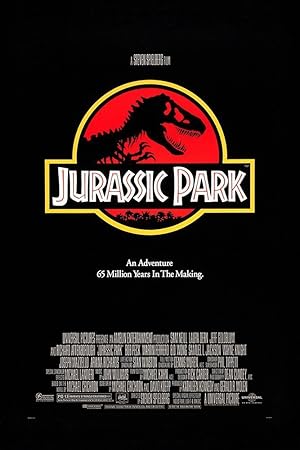
Jurassic Park
Huge advancements in scientific technology have enabled a mogul to create an island full of living dinosaurs. John Hammond has invited four individuals, along with his two grandchildren, to join him at Jurassic Park. But will everything go according to plan? A park employee attempts to steal dinosaur embryos, critical security systems are shut down and it now becomes a race for survival with dinosaurs roaming freely over the island.
Despite a moderate budget of $63.0M, Jurassic Park became a massive hit, earning $920.1M worldwide—a remarkable 1360% return.
3 Oscars. 44 wins & 27 nominations
Roger Ebert
"Spielberg uses computer-generated special effects not as an end in themselves, but as a means to tell a story of wonder and terror."Read Full Review


Plot Structure
Story beats plotted across runtime


Narrative Arc
Emotional journey through the story's key moments
Story Circle
Blueprint 15-beat structure
Arcplot Score Breakdown
Weighted: Precision (70%) + Arc (15%) + Theme (15%)
Jurassic Park (1993) showcases meticulously timed narrative architecture, characteristic of Steven Spielberg's storytelling approach. This structural analysis examines how the film's 15-point plot structure maps to proven narrative frameworks across 2 hours and 7 minutes. With an Arcplot score of 5.4, the film takes an unconventional approach to traditional narrative frameworks.
Characters
Cast & narrative archetypes

Dr. Alan Grant
Dr. Ellie Sattler
Dr. Ian Malcolm
John Hammond
Lex Murphy
Tim Murphy
Dennis Nedry
Robert Muldoon
Main Cast & Characters
Dr. Alan Grant
Played by Sam Neill
A paleontologist who reluctantly visits Jurassic Park and must protect two children when dinosaurs escape.
Dr. Ellie Sattler
Played by Laura Dern
A paleobotanist and Grant's partner who brings ethical perspective to the park's creation.
Dr. Ian Malcolm
Played by Jeff Goldblum
A chaotician who predicts the park's inevitable failure and provides philosophical commentary on playing God.
John Hammond
Played by Richard Attenborough
The wealthy entrepreneur and creator of Jurassic Park who believes his dream can be controlled.
Lex Murphy
Played by Ariana Richards
Hammond's teenage granddaughter who uses her computer skills to help restore park systems.
Tim Murphy
Played by Joseph Mazzello
Hammond's young grandson who idolizes Dr. Grant and knows extensive dinosaur facts.
Dennis Nedry
Played by Wayne Knight
The park's disgruntled computer programmer who sabotages security systems for profit.
Robert Muldoon
Played by Bob Peck
The park's game warden who understands the true danger of the dinosaurs, especially the raptors.
Structural Analysis
The Status Quo at 1 minutes (1% through the runtime) establishes Opening image: A velociraptor handler is killed during a transfer at Isla Nublar, establishing the deadly stakes of Hammond's dinosaur park before we meet our protagonist.. Significantly, this early placement immediately immerses viewers in the story world.
The inciting incident occurs at 14 minutes when Grant and Ellie see their first living dinosaur - a Brachiosaurus. The impossible is real. Grant's entire worldview as a scientist studying fossils is shattered by the existence of living dinosaurs.. At 11% through the film, this Disruption aligns precisely with traditional story structure. This beat shifts the emotional landscape, launching the protagonist into the central conflict.
The First Threshold at 28 minutes marks the transition into Act II, occurring at 22% of the runtime. This indicates the protagonist's commitment to The group boards the park tour vehicles to evaluate the attractions. Grant makes the active choice to see the dinosaurs in their habitats, committing to the journey through the park despite Malcolm's warnings., moving from reaction to action.
At 56 minutes, the Midpoint arrives at 44% of the runtime—arriving early, accelerating into Act IIb complications. The analysis reveals that this crucial beat Nedry shuts down park security systems to steal embryos. Power fails. Tour cars stop at the T-Rex paddock just as the electrified fences go down. False defeat - what seemed like a controlled tour becomes a deadly survival situation., fundamentally raising what's at risk. The emotional intensity shifts, dividing the narrative into clear before-and-after phases.
The Collapse moment at 83 minutes (66% through) represents the emotional nadir. Here, Muldoon goes to rescue survivors but is ambushed and killed by velociraptors: "Clever girl." Death of the game warden - the park's protector. All hope of professional rescue dies with him. Grant and kids still lost in park., illustrates the protagonist at their lowest point. This beat's placement in the final quarter sets up the climactic reversal.
The Second Threshold at 93 minutes initiates the final act resolution at 73% of the runtime. Grant and the kids reach the Visitor Center. Sattler and Hammond's team plan to restore main power from the maintenance shed. Grant synthesizes his paleontologist knowledge with his new protective instincts - he's become the guardian these children need., demonstrating the transformation achieved throughout the journey.
Emotional Journey
Jurassic Park's emotional architecture traces a deliberate progression across 15 carefully calibrated beats.
Narrative Framework
This structural analysis employs a 15-point narrative structure framework that maps key story moments. By mapping Jurassic Park against these established plot points, we can identify how Steven Spielberg utilizes or subverts traditional narrative conventions. The plot point approach reveals not only adherence to structural principles but also creative choices that distinguish Jurassic Park within the action genre.
Steven Spielberg's Structural Approach
Among the 33 Steven Spielberg films analyzed on Arcplot, the average structural score is 5.8, showcasing experimental approaches to narrative form. Jurassic Park takes a more unconventional approach compared to the director's typical style. For comparative analysis, explore the complete Steven Spielberg filmography.
Comparative Analysis
Additional action films include The Bad Guys, Puss in Boots and Venom: The Last Dance. For more Steven Spielberg analyses, see The Adventures of Tintin, Close Encounters of the Third Kind and War Horse.
Plot Points by Act
Act I
SetupStatus Quo
Opening image: A velociraptor handler is killed during a transfer at Isla Nublar, establishing the deadly stakes of Hammond's dinosaur park before we meet our protagonist.
Theme
Ian Malcolm states the theme: "Your scientists were so preoccupied with whether or not they could, they didn't stop to think if they should." The danger of playing God without understanding the consequences.
Worldbuilding
Dr. Alan Grant introduced as paleontologist who loves dinosaurs but dislikes children. Hammond arrives to recruit him and Ellie Sattler. They fly to Isla Nublar where Hammond reveals living, breathing dinosaurs created from DNA.
Disruption
Grant and Ellie see their first living dinosaur - a Brachiosaurus. The impossible is real. Grant's entire worldview as a scientist studying fossils is shattered by the existence of living dinosaurs.
Resistance
Tour of park facilities and explanation of cloning process. Malcolm voices concerns about chaos theory and lack of control. Grant debates whether to endorse the park. Lawyers pressure for safety approval. Hammond's grandchildren Lex and Tim arrive.
Act II
ConfrontationFirst Threshold
The group boards the park tour vehicles to evaluate the attractions. Grant makes the active choice to see the dinosaurs in their habitats, committing to the journey through the park despite Malcolm's warnings.
Mirror World
Grant bonds with Tim over dinosaur knowledge in the tour car. The relationship with Hammond's grandchildren (especially Tim) becomes the B-story that will teach Grant about protecting and nurturing life, not just studying death.
Premise
The park tour showing dinosaurs in their habitats. The promise of the premise - seeing dinosaurs alive. Sick Triceratops scene. Growing tension as animals don't perform. Storm approaches. Nedry's sabotage begins.
Midpoint
Nedry shuts down park security systems to steal embryos. Power fails. Tour cars stop at the T-Rex paddock just as the electrified fences go down. False defeat - what seemed like a controlled tour becomes a deadly survival situation.
Opposition
T-Rex attack kills lawyer, injures Malcolm. Grant rescues Tim and Lex, fleeing into the park. Control room struggles to restore power. Raptors test fences. Grant, Tim, and Lex climb trees, see herd of Gallimimus. Discover dinosaur breeding despite "all female" design - nature finds a way. Bad guys (dinosaurs) close in.
Collapse
Muldoon goes to rescue survivors but is ambushed and killed by velociraptors: "Clever girl." Death of the game warden - the park's protector. All hope of professional rescue dies with him. Grant and kids still lost in park.
Crisis
Sattler and wounded Malcolm hide as raptors hunt. Grant, Lex, and Tim navigate the perimeter fence with high voltage about to be restored. Tim nearly electrocuted but Grant saves him. Dark night as they process that no help is coming.
Act III
ResolutionSecond Threshold
Grant and the kids reach the Visitor Center. Sattler and Hammond's team plan to restore main power from the maintenance shed. Grant synthesizes his paleontologist knowledge with his new protective instincts - he's become the guardian these children need.
Synthesis
Sattler restores power while evading raptors. Kitchen raptor hunt - Lex and Tim use intelligence to escape. Grant, Lex, Tim reunite with Sattler. Trapped in main hall by two raptors. T-Rex appears and attacks raptors (enemy of my enemy), allowing escape. Hammond accepts failure. Helicopter evacuation.
Transformation
Final image on helicopter: Grant smiles warmly as Lex and Tim sleep against him, his arms protectively around them. The man who hated children now embraces them. Transformation from death-obsessed scientist to life-protecting father figure.