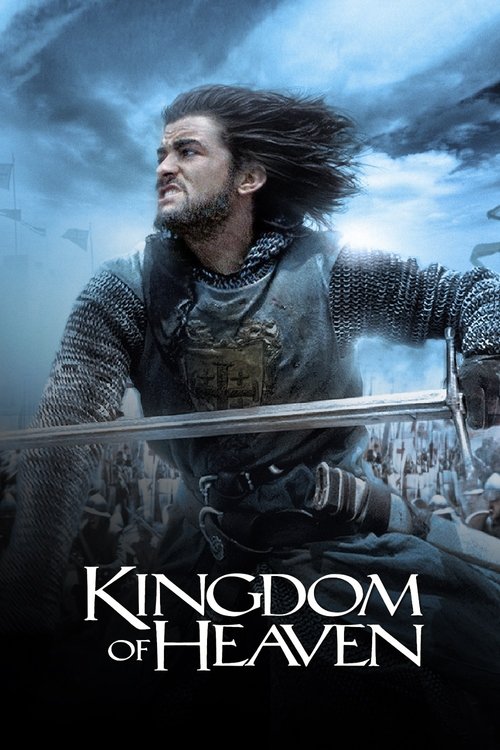
Kingdom of Heaven
After his wife dies, a blacksmith named Balian is thrust into royalty, political intrigue and bloody holy wars during the Crusades.
Working with a considerable budget of $130.0M, the film achieved a steady performer with $218.4M in global revenue (+68% profit margin).
5 wins & 15 nominations


Plot Structure
Story beats plotted across runtime


Narrative Arc
Emotional journey through the story's key moments
Story Circle
Blueprint 15-beat structure
Arcplot Score Breakdown
Weighted: Precision (70%) + Arc (15%) + Theme (15%)
Kingdom of Heaven (2005) exhibits precise dramatic framework, characteristic of Ridley Scott's storytelling approach. This structural analysis examines how the film's 15-point plot structure maps to proven narrative frameworks across 2 hours and 24 minutes. With an Arcplot score of 6.8, the film balances conventional beats with creative variation.
Characters
Cast & narrative archetypes

Balian of Ibelin
Godfrey of Ibelin
Sibylla
Saladin
King Baldwin IV
Guy de Lusignan
Tiberias
Reynald de Châtillon
Hospitaller
Main Cast & Characters
Balian of Ibelin
Played by Orlando Bloom
A blacksmith who becomes a knight and defender of Jerusalem, seeking redemption after his wife's suicide.
Godfrey of Ibelin
Played by Liam Neeson
Balian's father, a noble crusader knight who recruits his son and teaches him the ways of knighthood.
Sibylla
Played by Eva Green
Princess of Jerusalem and sister to the king, trapped in a political marriage but drawn to Balian.
Saladin
Played by Ghassan Massoud
The Sultan of Egypt and Syria, a wise and honorable Muslim leader who seeks to reclaim Jerusalem.
King Baldwin IV
Played by Edward Norton
The young leper king of Jerusalem who maintains peace through wisdom and strength despite his illness.
Guy de Lusignan
Played by Marton Csokas
Sibylla's ambitious husband and future king whose pride and aggression lead Jerusalem to disaster.
Tiberias
Played by Jeremy Irons
The Marshal of Jerusalem and the king's most trusted advisor, a pragmatic military leader.
Reynald de Châtillon
Played by Brendan Gleeson
A brutal crusader lord who breaks truces and provokes war through acts of cruelty and greed.
Hospitaller
Played by David Thewlis
A knight of the Hospital who serves as Balian's spiritual guide and companion throughout his journey.
Structural Analysis
The Status Quo at 2 minutes (1% through the runtime) establishes Balian works as a blacksmith in a desolate French village, grieving his wife and child who died recently. He is broken, faithless, and without purpose.. Significantly, this early placement immediately immerses viewers in the story world.
The inciting incident occurs at 18 minutes when Balian kills the priest who taunted him about his wife's damnation and took her cross. This act of violence makes him a wanted murderer and destroys any remaining ties to his old life.. At 12% through the film, this Disruption aligns precisely with traditional story structure. This beat shifts the emotional landscape, launching the protagonist into the central conflict.
The First Threshold at 37 minutes marks the transition into Act II, occurring at 25% of the runtime. This reveals the protagonist's commitment to Godfrey dies and Balian inherits his title and lands. Balian chooses to continue to Jerusalem to honor his father and seek redemption, fully committing to the new world of the Crusades., moving from reaction to action.
At 72 minutes, the Midpoint arrives at 50% of the runtime—precisely centered, creating perfect narrative symmetry. Of particular interest, this crucial beat King Baldwin dies and the warmonger Guy de Lusignan takes the throne through Sibylla. The fragile peace shatters, and Raynald's massacre of a Muslim caravan triggers Saladin's invasion. Everything shifts from hope to inevitable war., fundamentally raising what's at risk. The emotional intensity shifts, dividing the narrative into clear before-and-after phases.
The Collapse moment at 108 minutes (75% through) represents the emotional nadir. Here, The Crusader army is annihilated at Hattin. Guy and Raynald are captured, Raynald is executed, and the Kingdom's military power is destroyed. Jerusalem stands alone against overwhelming forces., shows the protagonist at their lowest point. This beat's placement in the final quarter sets up the climactic reversal.
The Second Threshold at 115 minutes initiates the final act resolution at 80% of the runtime. Balian realizes his purpose: not to win, but to defend the innocent and secure their safe passage. He synthesizes his father's teachings with his own conscience, choosing righteous action over hollow victory., demonstrating the transformation achieved throughout the journey.
Emotional Journey
Kingdom of Heaven's emotional architecture traces a deliberate progression across 15 carefully calibrated beats.
Narrative Framework
This structural analysis employs systematic plot point analysis that identifies crucial turning points. By mapping Kingdom of Heaven against these established plot points, we can identify how Ridley Scott utilizes or subverts traditional narrative conventions. The plot point approach reveals not only adherence to structural principles but also creative choices that distinguish Kingdom of Heaven within the drama genre.
Ridley Scott's Structural Approach
Among the 24 Ridley Scott films analyzed on Arcplot, the average structural score is 6.5, demonstrating varied approaches to story architecture. Kingdom of Heaven represents one of the director's most structurally precise works. For comparative analysis, explore the complete Ridley Scott filmography.
Comparative Analysis
Additional drama films include After Thomas, South Pacific and Dirty Dancing: Havana Nights. For more Ridley Scott analyses, see Alien, White Squall and American Gangster.
Plot Points by Act
Act I
SetupStatus Quo
Balian works as a blacksmith in a desolate French village, grieving his wife and child who died recently. He is broken, faithless, and without purpose.
Theme
Godfrey tells Balian, "What man is a man who does not make the world better?" This question of noble purpose and righteousness will echo through the entire story.
Worldbuilding
Balian's world in France: his grief, his illegitimate birth, the cruelty of the priest (his half-brother), and the arrival of Godfrey of Ibelin revealing himself as Balian's father and a Crusader baron.
Disruption
Balian kills the priest who taunted him about his wife's damnation and took her cross. This act of violence makes him a wanted murderer and destroys any remaining ties to his old life.
Resistance
Balian flees and joins his father's company heading to Jerusalem. Godfrey teaches him knighthood, honor, and the ideals of protecting the helpless. This journey includes Godfrey's mortal wounding and Balian's knighting.
Act II
ConfrontationFirst Threshold
Godfrey dies and Balian inherits his title and lands. Balian chooses to continue to Jerusalem to honor his father and seek redemption, fully committing to the new world of the Crusades.
Mirror World
Balian meets Sibylla, the Princess of Jerusalem, and they begin a relationship. She represents the thematic counterpoint: nobility, grace, and the possibility of redemption through love and service.
Premise
Balian thrives in Jerusalem: he irrigates his lands, serves the leper King Baldwin IV, navigates court politics, and experiences the promise of a kingdom at peace where Christians and Muslims coexist under wise leadership.
Midpoint
King Baldwin dies and the warmonger Guy de Lusignan takes the throne through Sibylla. The fragile peace shatters, and Raynald's massacre of a Muslim caravan triggers Saladin's invasion. Everything shifts from hope to inevitable war.
Opposition
Guy's disastrous leadership leads to the slaughter of the Crusader army at Hattin. Jerusalem is defenseless, and Saladin's massive army approaches. Balian must defend the city with few soldiers and no hope of victory.
Collapse
The Crusader army is annihilated at Hattin. Guy and Raynald are captured, Raynald is executed, and the Kingdom's military power is destroyed. Jerusalem stands alone against overwhelming forces.
Crisis
Balian faces despair as he prepares Jerusalem's defense. He questions whether resistance is futile, whether anyone can be saved, and what honor means in the face of certain defeat.
Act III
ResolutionSecond Threshold
Balian realizes his purpose: not to win, but to defend the innocent and secure their safe passage. He synthesizes his father's teachings with his own conscience, choosing righteous action over hollow victory.
Synthesis
Balian leads Jerusalem's defense with courage and ingenuity, earning Saladin's respect. He negotiates terms for the safe evacuation of all inhabitants, choosing compassion over pride. The city surrenders, but the people are saved.
Transformation
Balian returns to France as a simple blacksmith, having refused a new title. When King Richard asks if he is the defender of Jerusalem, he says he is merely "the blacksmith." He has found peace, having made the world better.