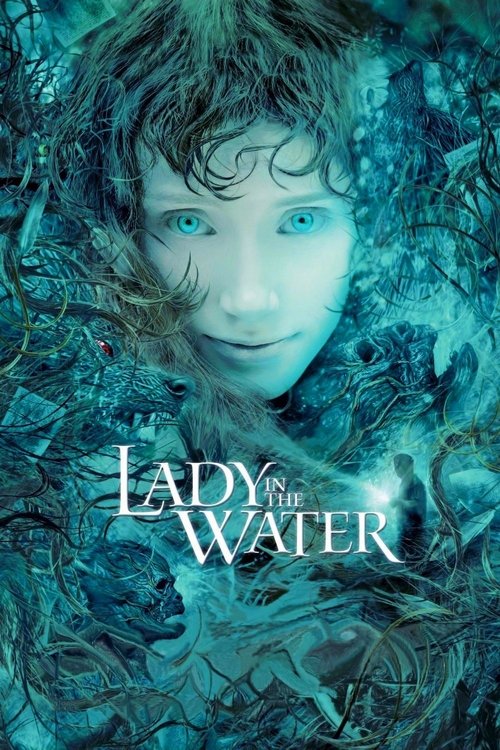
Lady in the Water
Apartment building superintendent Cleveland Heep rescues what he thinks is a young woman from the pool he maintains. When he discovers that she is actually a character from a bedtime story who is trying to make the journey back to her home, he works with his tenants to protect his new friend from the creatures that are determined to keep her in our world.
Working with a mid-range budget of $70.0M, the film achieved a modest success with $72.8M in global revenue (+4% profit margin).
10 wins & 11 nominations


Plot Structure
Story beats plotted across runtime


Narrative Arc
Emotional journey through the story's key moments
Story Circle
Blueprint 15-beat structure
Arcplot Score Breakdown
Weighted: Precision (70%) + Arc (15%) + Theme (15%)
Lady in the Water (2006) exemplifies precise dramatic framework, characteristic of M. Night Shyamalan's storytelling approach. This structural analysis examines how the film's 15-point plot structure maps to proven narrative frameworks across 1 hour and 50 minutes. With an Arcplot score of 6.7, the film balances conventional beats with creative variation.
Characters
Cast & narrative archetypes

Cleveland Heep
Story
Vick Ran
Young-Soon Choi
Harry Farber
Mr. Leeds
Joey Dury
Mr. Dury
Main Cast & Characters
Cleveland Heep
Played by Paul Giamatti
An introverted apartment superintendent who stutters and is haunted by a tragic past, tasked with helping a sea nymph return home.
Story
Played by Bryce Dallas Howard
A narf (sea nymph) from the Blue World who emerges from the apartment pool seeking her purpose and the writer she must inspire.
Vick Ran
Played by M. Night Shyamalan
A struggling writer and crossword puzzle creator who is revealed to be the author whose work will change the world.
Young-Soon Choi
Played by Cindy Cheung
A Korean tenant who knows ancient bedtime stories about narfs and their world, serving as the group's source of mythological knowledge.
Harry Farber
Played by Bob Balaban
A film critic who arrogantly believes he can predict Story's narrative based on conventional story structure, only to be proven fatally wrong.
Mr. Leeds
Played by Bill Irwin
A tenant who works out obsessively on one side of his body, eventually revealed to be the Guardian who must protect Story.
Joey Dury
Played by Noah Gray-Cabey
A young man who struggles with stuttering and joins Cleveland in the quest to help Story return home.
Mr. Dury
Played by Jeffrey Wright
Joey's father and a tenant who becomes part of the group helping Story.
Structural Analysis
The Status Quo at 1 minutes (1% through the runtime) establishes Cleveland Heep works as superintendent of the Cove apartment complex, living a solitary, mundane existence maintaining the pool and grounds, isolated from meaningful human connection.. Of particular interest, this early placement immediately immerses viewers in the story world.
The inciting incident occurs at 13 minutes when Cleveland discovers Story, a Narf (sea nymph) from the Blue World, injured and hiding in the pool. Her presence transforms his mundane world into something mystical and dangerous.. At 12% through the film, this Disruption aligns precisely with traditional story structure. This beat shifts the emotional landscape, launching the protagonist into the central conflict.
The First Threshold at 28 minutes marks the transition into Act II, occurring at 25% of the runtime. This demonstrates the protagonist's commitment to Cleveland commits to helping Story return home safely. He rallies the apartment tenants, choosing to believe in the mythic story and his role as the Healer despite his painful past., moving from reaction to action.
At 55 minutes, the Midpoint arrives at 50% of the runtime—precisely centered, creating perfect narrative symmetry. Notably, this crucial beat The Scrunt attacks Story. Cleveland realizes they've misidentified everyone's roles - he is not the Guardian. Their plan was wrong, and Story is now in greater danger with time running out., fundamentally raising what's at risk. The emotional intensity shifts, dividing the narrative into clear before-and-after phases.
The Collapse moment at 83 minutes (75% through) represents the emotional nadir. Here, The Scrunt viciously attacks, killing the film critic and severely wounding Cleveland. Story cannot return home, and Cleveland appears to have failed in his role as protector. Hope seems lost., illustrates the protagonist at their lowest point. This beat's placement in the final quarter sets up the climactic reversal.
The Second Threshold at 88 minutes initiates the final act resolution at 80% of the runtime. Cleveland realizes the truth: he is the Healer, meant to help Story find Vick Ran, the writer whose book will inspire a future leader. The real Guardian is revealed. Everyone's true purpose becomes clear., demonstrating the transformation achieved throughout the journey.
Emotional Journey
Lady in the Water's emotional architecture traces a deliberate progression across 15 carefully calibrated beats.
Narrative Framework
This structural analysis employs a 15-point narrative structure framework that maps key story moments. By mapping Lady in the Water against these established plot points, we can identify how M. Night Shyamalan utilizes or subverts traditional narrative conventions. The plot point approach reveals not only adherence to structural principles but also creative choices that distinguish Lady in the Water within the drama genre.
M. Night Shyamalan's Structural Approach
Among the 14 M. Night Shyamalan films analyzed on Arcplot, the average structural score is 7.0, reflecting strong command of classical structure. Lady in the Water takes a more unconventional approach compared to the director's typical style. For comparative analysis, explore the complete M. Night Shyamalan filmography.
Comparative Analysis
Additional drama films include After Thomas, South Pacific and Dirty Dancing: Havana Nights. For more M. Night Shyamalan analyses, see Signs, Unbreakable and The Sixth Sense.
Plot Points by Act
Act I
SetupStatus Quo
Cleveland Heep works as superintendent of the Cove apartment complex, living a solitary, mundane existence maintaining the pool and grounds, isolated from meaningful human connection.
Theme
A tenant tells Cleveland about the bedtime story of the Narf and the Blue World, suggesting that sometimes the most important stories are the ones we've forgotten or stopped believing in.
Worldbuilding
Introduction to the eccentric tenants of the Cove apartments - a crossword puzzle writer, fitness enthusiasts, a film critic, and others. Cleveland investigates mysterious activity in the pool at night.
Disruption
Cleveland discovers Story, a Narf (sea nymph) from the Blue World, injured and hiding in the pool. Her presence transforms his mundane world into something mystical and dangerous.
Resistance
Cleveland learns from Young-Soon Choi about the ancient bedtime story: Story must find her purpose, inspire a future leader, and return home. The Scrunt (wolf-like creature) hunts Narfs who stay too long.
Act II
ConfrontationFirst Threshold
Cleveland commits to helping Story return home safely. He rallies the apartment tenants, choosing to believe in the mythic story and his role as the Healer despite his painful past.
Mirror World
Cleveland's relationship with Story deepens; she represents hope and purpose he lost when his family was murdered. The community begins working together, each discovering their unique role in the story.
Premise
The tenants attempt to identify their roles (Guardian, Guild, Interpreter, Symbolist, Healer). Comedic and touching moments as ordinary people discover they're part of an ancient myth. Story shares wisdom about purpose and destiny.
Midpoint
The Scrunt attacks Story. Cleveland realizes they've misidentified everyone's roles - he is not the Guardian. Their plan was wrong, and Story is now in greater danger with time running out.
Opposition
Desperate attempts to correctly identify roles as the Scrunt closes in. Internal doubts surface. The film critic dismisses the story as clichéd nonsense. Cleveland must overcome his trauma and self-doubt to see clearly.
Collapse
The Scrunt viciously attacks, killing the film critic and severely wounding Cleveland. Story cannot return home, and Cleveland appears to have failed in his role as protector. Hope seems lost.
Crisis
Cleveland lies wounded, confronting his deepest failure - his inability to save his family. The community rallies around Story in her darkest hour, but without the right configuration of roles, she cannot be saved.
Act III
ResolutionSecond Threshold
Cleveland realizes the truth: he is the Healer, meant to help Story find Vick Ran, the writer whose book will inspire a future leader. The real Guardian is revealed. Everyone's true purpose becomes clear.
Synthesis
The community executes the plan with correct roles: Story inspires Vick to continue his world-changing book, the Guardian protects her, the Great Eatlon (eagle) arrives. The Scrunt is defeated by ancient law. Story returns to the Blue World.
Transformation
Cleveland watches Story ascend to the Blue World, healed from his trauma. He stands surrounded by community - no longer isolated. The mundane apartment pool is now a place of wonder and connection.