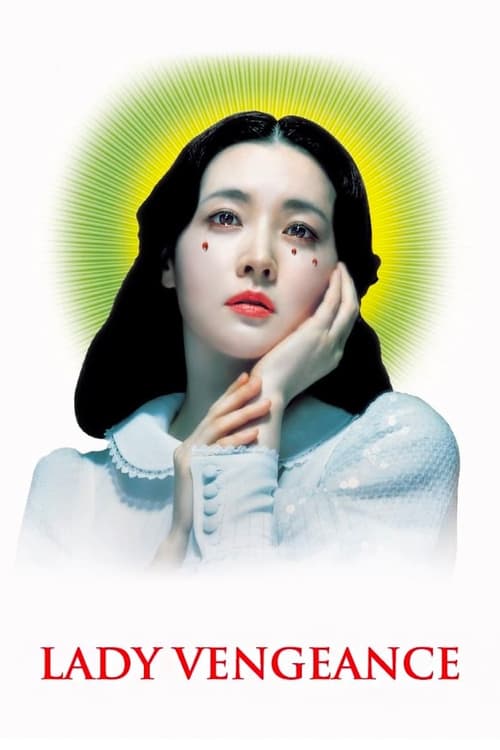
Lady Vengeance
Released after being wrongfully convicted and imprisoned for 13 years, a woman begins executing her elaborate plan of retribution.
The film earned $23.8M at the global box office.
13 wins & 14 nominations


Plot Structure
Story beats plotted across runtime


Narrative Arc
Emotional journey through the story's key moments
Story Circle
Blueprint 15-beat structure
Arcplot Score Breakdown
Weighted: Precision (70%) + Arc (15%) + Theme (15%)
Lady Vengeance (2005) exhibits precise plot construction, characteristic of Park Chan-wook's storytelling approach. This structural analysis examines how the film's 15-point plot structure maps to proven narrative frameworks across 1 hour and 55 minutes. With an Arcplot score of 6.6, the film balances conventional beats with creative variation.
Characters
Cast & narrative archetypes

Lee Geum-ja
Mr. Baek
Jenny Jin
Preacher
The Witch
Woo So-young
Detective Choi
Main Cast & Characters
Lee Geum-ja
Played by Lee Young-ae
A woman released from prison after 13 years who meticulously executes a revenge plan against the man who framed her for child murder.
Mr. Baek
Played by Choi Min-sik
The manipulative schoolteacher who kidnapped children and framed Geum-ja for murder, the primary target of her vengeance.
Jenny Jin
Played by Kwon Yea-young
Geum-ja's daughter who was adopted in Australia, unaware of her mother's past until they reunite.
Preacher
Played by Kim Si-hoo
A reformed criminal who befriends Geum-ja in prison and helps her maintain contact with her daughter.
The Witch
Played by Ra Mi-ran
A tough inmate who initially bullies Geum-ja but becomes one of her devoted followers after being saved by her.
Woo So-young
Played by Kim Bu-seon
A fellow inmate and one of Geum-ja's prison allies who assists in the revenge plan after release.
Detective Choi
Played by Nam Il-woo
The investigator who originally arrested Geum-ja and later becomes entangled in her revenge scheme.
Structural Analysis
The Status Quo at 1 minutes (1% through the runtime) establishes Geum-ja is released from prison after 13 years, greeted by Christian missionaries offering her tofu (symbol of purity). She dramatically rejects it, revealing her angelic prison persona was a facade.. The analysis reveals that this early placement immediately immerses viewers in the story world.
The inciting incident occurs at 14 minutes when Geum-ja begins executing her revenge plan, visiting former inmates who owe her debts. We learn Mr. Baek, a schoolteacher, was the true killer who coerced Geum-ja into taking the blame by threatening her infant daughter.. At 12% through the film, this Disruption aligns precisely with traditional story structure. This beat shifts the emotional landscape, launching the protagonist into the central conflict.
The First Threshold at 29 minutes marks the transition into Act II, occurring at 25% of the runtime. This reveals the protagonist's commitment to Geum-ja retrieves her custom-designed ornate pistol and begins actively stalking Mr. Baek, committing fully to her path of vengeance. She transforms her appearance with dramatic red eyeshadow, symbolizing her embrace of violence., moving from reaction to action.
At 58 minutes, the Midpoint arrives at 50% of the runtime—precisely centered, creating perfect narrative symmetry. Significantly, this crucial beat Geum-ja discovers Mr. Baek's videotapes showing he murdered multiple children over the years, not just one. The scope of his evil is far greater than she knew. This false defeat transforms her personal revenge into something larger., fundamentally raising what's at risk. The emotional intensity shifts, dividing the narrative into clear before-and-after phases.
The Collapse moment at 86 minutes (75% through) represents the emotional nadir. Here, The bereaved parents watch the videotapes of their children's murders. Their grief is unbearable. Geum-ja realizes that sharing this burden hasn't lightened it—she has only spread the trauma and desire for vengeance to others., indicates the protagonist at their lowest point. This beat's placement in the final quarter sets up the climactic reversal.
The Second Threshold at 92 minutes initiates the final act resolution at 80% of the runtime. The parents collectively choose to execute Mr. Baek themselves. They agree to share responsibility for the killing. Geum-ja provides them with weapons, and they enter the abandoned school where Baek is held captive., demonstrating the transformation achieved throughout the journey.
Emotional Journey
Lady Vengeance's emotional architecture traces a deliberate progression across 15 carefully calibrated beats.
Narrative Framework
This structural analysis employs structural analysis methodology used to understand storytelling architecture. By mapping Lady Vengeance against these established plot points, we can identify how Park Chan-wook utilizes or subverts traditional narrative conventions. The plot point approach reveals not only adherence to structural principles but also creative choices that distinguish Lady Vengeance within the drama genre.
Park Chan-wook's Structural Approach
Among the 5 Park Chan-wook films analyzed on Arcplot, the average structural score is 6.9, demonstrating varied approaches to story architecture. Lady Vengeance takes a more unconventional approach compared to the director's typical style. For comparative analysis, explore the complete Park Chan-wook filmography.
Comparative Analysis
Additional drama films include After Thomas, South Pacific and Dirty Dancing: Havana Nights. For more Park Chan-wook analyses, see Oldboy, Decision to Leave and The Handmaiden.
Plot Points by Act
Act I
SetupStatus Quo
Geum-ja is released from prison after 13 years, greeted by Christian missionaries offering her tofu (symbol of purity). She dramatically rejects it, revealing her angelic prison persona was a facade.
Theme
A fellow inmate tells Geum-ja: "You can't undo what's been done. You can only move forward." This speaks to the film's exploration of whether revenge can truly provide closure or redemption.
Worldbuilding
Through flashbacks, we learn Geum-ja was convicted of kidnapping and murdering a young boy at age 19. In prison, she cultivated a saintly image while secretly helping fellow inmates, building loyalty for her future revenge plan.
Disruption
Geum-ja begins executing her revenge plan, visiting former inmates who owe her debts. We learn Mr. Baek, a schoolteacher, was the true killer who coerced Geum-ja into taking the blame by threatening her infant daughter.
Resistance
Geum-ja systematically collects on debts from former inmates: one provides a place to stay, another helps her get a job at a bakery, another assists in acquiring a custom-made pistol. Each woman's story reveals Geum-ja's calculated kindness in prison.
Act II
ConfrontationFirst Threshold
Geum-ja retrieves her custom-designed ornate pistol and begins actively stalking Mr. Baek, committing fully to her path of vengeance. She transforms her appearance with dramatic red eyeshadow, symbolizing her embrace of violence.
Mirror World
Geum-ja reunites with her daughter Jenny, now 13 and adopted by an Australian couple. Jenny represents innocence and the life Geum-ja sacrificed. Their awkward, emotional meeting offers a glimpse of possible redemption beyond revenge.
Premise
Geum-ja works at the bakery while tracking Mr. Baek's movements. She seduces a young coworker, maintains her cover, and builds her case. Flashbacks reveal how Mr. Baek manipulated her as a teenage accomplice, showing the depths of his evil.
Midpoint
Geum-ja discovers Mr. Baek's videotapes showing he murdered multiple children over the years, not just one. The scope of his evil is far greater than she knew. This false defeat transforms her personal revenge into something larger.
Opposition
Geum-ja kidnaps Mr. Baek but faces a moral crisis. Detective Choi investigates. She contacts the families of all the murdered children, showing them the evidence. The parents must decide whether to participate in vigilante justice.
Collapse
The bereaved parents watch the videotapes of their children's murders. Their grief is unbearable. Geum-ja realizes that sharing this burden hasn't lightened it—she has only spread the trauma and desire for vengeance to others.
Crisis
The parents debate what to do with Mr. Baek. Some want to call the police; others demand blood. Geum-ja offers them a choice: legal justice or personal vengeance. The weight of the decision threatens to tear the group apart.
Act III
ResolutionSecond Threshold
The parents collectively choose to execute Mr. Baek themselves. They agree to share responsibility for the killing. Geum-ja provides them with weapons, and they enter the abandoned school where Baek is held captive.
Synthesis
One by one, the parents take turns attacking Mr. Baek with various weapons. The execution is brutal, ugly, and provides no catharsis—only exhaustion and moral contamination. Geum-ja finishes him off. They bury the body together in silence.
Transformation
Geum-ja embraces Jenny in the snow, pressing her face into a white tofu cake—finally accepting the symbol of purity she rejected at the start. She begs to "live white" but her tears suggest she knows innocence cannot be reclaimed.