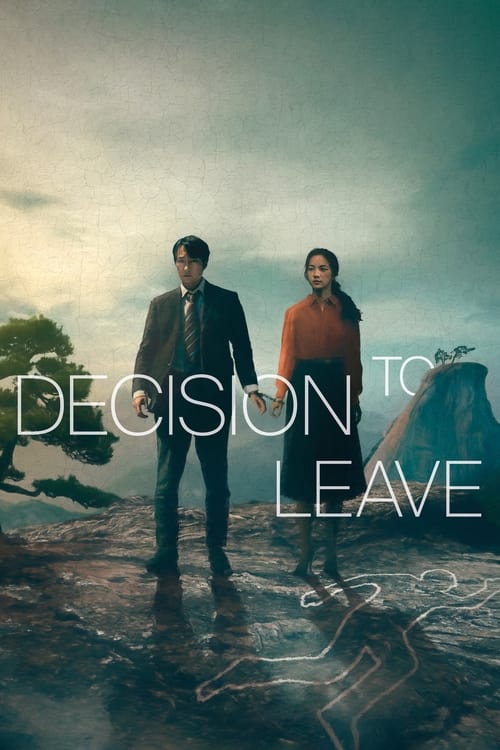
Decision to Leave
From a mountain peak in South Korea, a man plummets to his death. Did he jump, or was he pushed? When detective Hae-joon arrives on the scene, he begins to suspect the dead man’s wife Seo-rae. But as he digs deeper into the investigation, he finds himself trapped in a web of deception and desire.
The film earned $16.9M at the global box office.
Nominated for 2 BAFTA 75 wins & 153 nominations


Plot Structure
Story beats plotted across runtime


Narrative Arc
Emotional journey through the story's key moments
Story Circle
Blueprint 15-beat structure
Arcplot Score Breakdown
Weighted: Precision (70%) + Arc (15%) + Theme (15%)
Decision to Leave (2022) showcases carefully calibrated dramatic framework, characteristic of Park Chan-wook's storytelling approach. This structural analysis examines how the film's 15-point plot structure maps to proven narrative frameworks across 2 hours and 19 minutes. With an Arcplot score of 6.5, the film balances conventional beats with creative variation.
Characters
Cast & narrative archetypes

Hae-jun
Seo-rae
Jung-an
Soo-wan
Main Cast & Characters
Hae-jun
Played by Park Hae-il
An insomniac detective investigating a mountain death who becomes dangerously obsessed with the victim's enigmatic widow.
Seo-rae
Played by Tang Wei
A mysterious Chinese immigrant and widow suspected in her husband's death, who develops a complex relationship with the detective investigating her.
Jung-an
Played by Lee Jung-hyun
Hae-jun's patient wife who lives in another city and suspects her husband's growing emotional distance.
Soo-wan
Played by Go Kyung-pyo
Hae-jun's detective partner who observes his colleague's increasingly compromised judgment.
Structural Analysis
The Status Quo at 1 minutes (1% through the runtime) establishes Detective Hae-jun lies awake beside his sleeping wife, establishing his chronic insomnia and emotional distance from his marriage. He is a methodical, obsessive investigator who finds more comfort in casework than in intimacy.. The analysis reveals that this early placement immediately immerses viewers in the story world.
The inciting incident occurs at 17 minutes when A retired immigration officer is found dead at the base of a mountain cliff. Hae-jun is called to investigate what appears to be a climbing accident, but the deceased's young Chinese wife, Song Seo-rae, immediately captures his attention.. At 12% through the film, this Disruption aligns precisely with traditional story structure. This beat shifts the emotional landscape, launching the protagonist into the central conflict.
The First Threshold at 35 minutes marks the transition into Act II, occurring at 25% of the runtime. This shows the protagonist's commitment to Hae-jun chooses to meet Seo-rae outside the formal investigation, sharing a meal with her and beginning a personal relationship. He crosses the professional line, moving from detective to something more intimate and dangerous., moving from reaction to action.
At 70 minutes, the Midpoint arrives at 50% of the runtime—precisely centered, creating perfect narrative symmetry. Significantly, this crucial beat Hae-jun officially closes the case as an accident, letting Seo-rae go free despite his suspicions. They share a charged moment of unspoken love—a false victory where he believes he can have both justice and her. But she disappears from Busan without a word., fundamentally raising what's at risk. The emotional intensity shifts, dividing the narrative into clear before-and-after phases.
The Collapse moment at 104 minutes (75% through) represents the emotional nadir. Here, Hae-jun discovers definitive proof that Seo-rae murdered both husbands. Worse, he finds evidence she recorded their intimate conversations to use against him. The woman he loved was manipulating him from the start—or was she? His romantic illusion dies completely., illustrates the protagonist at their lowest point. This beat's placement in the final quarter sets up the climactic reversal.
The Second Threshold at 111 minutes initiates the final act resolution at 80% of the runtime. Seo-rae confesses her love was genuine and reveals she killed to protect him from being implicated. She makes a final decision—to remove herself from his life permanently so he can be free. Hae-jun understands too late that her love was as destructive and consuming as his own., demonstrating the transformation achieved throughout the journey.
Emotional Journey
Decision to Leave's emotional architecture traces a deliberate progression across 15 carefully calibrated beats.
Narrative Framework
This structural analysis employs structural analysis methodology used to understand storytelling architecture. By mapping Decision to Leave against these established plot points, we can identify how Park Chan-wook utilizes or subverts traditional narrative conventions. The plot point approach reveals not only adherence to structural principles but also creative choices that distinguish Decision to Leave within the thriller genre.
Park Chan-wook's Structural Approach
Among the 5 Park Chan-wook films analyzed on Arcplot, the average structural score is 6.9, demonstrating varied approaches to story architecture. Decision to Leave takes a more unconventional approach compared to the director's typical style. For comparative analysis, explore the complete Park Chan-wook filmography.
Comparative Analysis
Additional thriller films include The Warriors, Thunderball and Rustom. For more Park Chan-wook analyses, see Oldboy, The Handmaiden and Stoker.
Plot Points by Act
Act I
SetupStatus Quo
Detective Hae-jun lies awake beside his sleeping wife, establishing his chronic insomnia and emotional distance from his marriage. He is a methodical, obsessive investigator who finds more comfort in casework than in intimacy.
Theme
Hae-jun's partner comments on how he never sleeps, observing that his obsession with solving cases consumes him entirely. The theme of destructive obsession—whether with work, truth, or love—is quietly introduced.
Worldbuilding
We see Hae-jun's world: his commuter marriage to a nuclear engineer wife in another city, his meticulous detective work, his use of eye drops and sleeplessness. The Korean coastal city of Busan is established as his domain.
Disruption
A retired immigration officer is found dead at the base of a mountain cliff. Hae-jun is called to investigate what appears to be a climbing accident, but the deceased's young Chinese wife, Song Seo-rae, immediately captures his attention.
Resistance
Hae-jun interrogates Seo-rae, finding her eerily calm about her husband's death. He begins surveilling her obsessively, watching her through her apartment window night after night. His partner warns him about getting too close, but Hae-jun is already drawn in.
Act II
ConfrontationFirst Threshold
Hae-jun chooses to meet Seo-rae outside the formal investigation, sharing a meal with her and beginning a personal relationship. He crosses the professional line, moving from detective to something more intimate and dangerous.
Mirror World
Seo-rae teaches Hae-jun about the sea, sharing her immigrant story and her loneliness. Their connection deepens as she represents everything his marriage lacks—mystery, attention, presence. She becomes his mirror, reflecting his own isolation back at him.
Premise
The cat-and-mouse romance unfolds as Hae-jun investigates while falling in love. He teaches her Korean phrases; she cooks for him. They circle each other in interrogation rooms and sushi restaurants, the investigation becoming foreplay. Evidence points to murder, but Hae-jun cannot bring himself to pursue it.
Midpoint
Hae-jun officially closes the case as an accident, letting Seo-rae go free despite his suspicions. They share a charged moment of unspoken love—a false victory where he believes he can have both justice and her. But she disappears from Busan without a word.
Opposition
Time passes. Hae-jun transfers to a coastal town, trying to escape his obsession. Then Seo-rae reappears—married again to a wealthy businessman who is soon found dead. Hae-jun must investigate her once more, but now as a man destroyed by longing. The second investigation reveals deeper truths about the first murder.
Collapse
Hae-jun discovers definitive proof that Seo-rae murdered both husbands. Worse, he finds evidence she recorded their intimate conversations to use against him. The woman he loved was manipulating him from the start—or was she? His romantic illusion dies completely.
Crisis
Hae-jun spirals into despair, unable to reconcile his love for Seo-rae with her crimes. He confronts her, demanding truth, but she remains elusive. He realizes he will never know if her feelings were real—the mystery that drew him to her will never be solved.
Act III
ResolutionSecond Threshold
Seo-rae confesses her love was genuine and reveals she killed to protect him from being implicated. She makes a final decision—to remove herself from his life permanently so he can be free. Hae-jun understands too late that her love was as destructive and consuming as his own.
Synthesis
Seo-rae goes to the beach at low tide and buries herself in the sand, waiting for the sea to take her. Hae-jun races to find her, searching desperately as the tide rises. He calls her phone again and again, the ringtone his only guide, but the ocean swallows her before he can reach her.
Transformation
Hae-jun stands at the edge of the sea, waves erasing any trace of Seo-rae. Where once he was an insomniac searching for answers, now he is a man hollowed by love, staring at an ocean that has taken everything. He finally found something worth losing sleep over—and lost it forever.