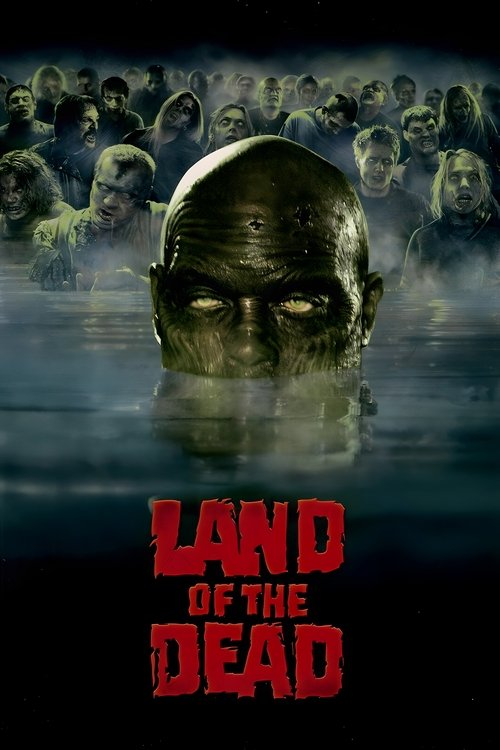
Land of the Dead
The living dead have taken over the world, and the remaining humans live in a walled city to protect themselves as they cope with the situation.
Despite a respectable budget of $15.0M, Land of the Dead became a solid performer, earning $47.1M worldwide—a 214% return.
2 wins & 17 nominations


Plot Structure
Story beats plotted across runtime


Narrative Arc
Emotional journey through the story's key moments
Story Circle
Blueprint 15-beat structure
Arcplot Score Breakdown
Weighted: Precision (70%) + Arc (15%) + Theme (15%)
Land of the Dead (2005) showcases precise narrative design, characteristic of George A. Romero's storytelling approach. This structural analysis examines how the film's 15-point plot structure maps to proven narrative frameworks across 1 hour and 33 minutes. With an Arcplot score of 6.9, the film balances conventional beats with creative variation.
Characters
Cast & narrative archetypes

Riley Denbo
Cholo DeMora
Paul Kaufman
Slack
Charlie Houk
Big Daddy
Main Cast & Characters
Riley Denbo
Played by Simon Baker
A skilled mercenary and leader of the Dead Reckoning crew who dreams of escaping to Canada, disillusioned with the corrupt system within Fiddler's Green.
Cholo DeMora
Played by John Leguizamo
An ambitious mercenary who does dirty work for Kaufman expecting to be rewarded with a place in Fiddler's Green, but turns vengeful when denied.
Paul Kaufman
Played by Dennis Hopper
The ruthless corporate overlord who controls Fiddler's Green, exploiting the class system and maintaining power through manipulation and violence.
Slack
Played by Asia Argento
A tough survivor sentenced to death in zombie gladiator fights, rescued by Riley and becomes a valuable ally in the fight against Kaufman.
Charlie Houk
Played by Robert Joy
Riley's loyal, disfigured friend and expert marksman who provides unwavering support and comic relief throughout their missions.
Big Daddy
Played by Eugene Clark
An intelligent zombie gas station attendant who leads the undead horde, developing problem-solving abilities and a desire for vengeance against the living.
Structural Analysis
The Status Quo at 1 minutes (1% through the runtime) establishes The abandoned town of Uniontown where zombies shuffle through mimicking their former lives - a gas station attendant, a band playing instruments. Big Daddy, a former mechanic, stares at a gas pump, beginning to remember. This establishes a world where the dead have inherited the earth.. Notably, this early placement immediately immerses viewers in the story world.
The inciting incident occurs at 12 minutes when During the Uniontown raid, Big Daddy witnesses the slaughter of his fellow zombies and experiences rage. He picks up a gun and begins leading the dead, showing unprecedented intelligence. The zombies are evolving, and the old rules no longer apply.. At 13% through the film, this Disruption is delayed, allowing extended setup of the story world. This beat shifts the emotional landscape, launching the protagonist into the central conflict.
The First Threshold at 23 minutes marks the transition into Act II, occurring at 25% of the runtime. This illustrates the protagonist's commitment to Cholo steals Dead Reckoning and threatens to destroy Fiddler's Green unless Kaufman pays him five million. Riley is coerced by Kaufman to retrieve the vehicle. He chooses to accept the mission, knowing it's his only way to get his car and escape - entering a conflict he wanted no part of., moving from reaction to action.
At 47 minutes, the Midpoint arrives at 50% of the runtime—precisely centered, creating perfect narrative symmetry. Of particular interest, this crucial beat Riley finds Cholo, but Cholo has been bitten. The mission seems successful but hollow - Cholo will become what he hated. Meanwhile, Big Daddy leads the zombies to discover they can walk underwater across the river. False victory: they have Dead Reckoning, but the real threat is unstoppable., fundamentally raising what's at risk. The emotional intensity shifts, dividing the narrative into clear before-and-after phases.
The Collapse moment at 70 minutes (75% through) represents the emotional nadir. Here, Fiddler's Green falls completely. Kaufman attempts to flee with his money as zombies overrun every level. Cholo, now a zombie, confronts and kills Kaufman - the ultimate class revenge. The symbol of human exploitation is destroyed by what he created. All hope for the old order dies., shows the protagonist at their lowest point. This beat's placement in the final quarter sets up the climactic reversal.
The Second Threshold at 75 minutes initiates the final act resolution at 81% of the runtime. Riley realizes he can't just save himself. He chooses to use Dead Reckoning's weapons to create an escape route for the survivors, not to destroy the zombies entirely. He sees Big Daddy leading his people away and recognizes they're "just looking for somewhere to go" - choosing coexistence over annihilation., demonstrating the transformation achieved throughout the journey.
Emotional Journey
Land of the Dead's emotional architecture traces a deliberate progression across 15 carefully calibrated beats.
Narrative Framework
This structural analysis employs systematic plot point analysis that identifies crucial turning points. By mapping Land of the Dead against these established plot points, we can identify how George A. Romero utilizes or subverts traditional narrative conventions. The plot point approach reveals not only adherence to structural principles but also creative choices that distinguish Land of the Dead within the horror genre.
George A. Romero's Structural Approach
Among the 8 George A. Romero films analyzed on Arcplot, the average structural score is 6.7, demonstrating varied approaches to story architecture. Land of the Dead represents one of the director's most structurally precise works. For comparative analysis, explore the complete George A. Romero filmography.
Comparative Analysis
Additional horror films include Thinner, A Nightmare on Elm Street and Mary Reilly. For more George A. Romero analyses, see Dawn of the Dead, Creepshow and Day of the Dead.
Plot Points by Act
Act I
SetupStatus Quo
The abandoned town of Uniontown where zombies shuffle through mimicking their former lives - a gas station attendant, a band playing instruments. Big Daddy, a former mechanic, stares at a gas pump, beginning to remember. This establishes a world where the dead have inherited the earth.
Theme
Charlie tells Riley, "They're just looking for a place to go, same as us." This statement by the scarred outsider establishes the film's thesis: the zombies are mirrors of humanity, both groups simply trying to survive and find belonging.
Worldbuilding
We see the class-divided society of Fiddler's Green: the wealthy live in luxury in Kaufman's tower while the poor survive in squalor below. Riley leads Dead Reckoning raids for supplies. Cholo aspires to join the elite. The fireworks that distract zombies are called "sky flowers."
Disruption
During the Uniontown raid, Big Daddy witnesses the slaughter of his fellow zombies and experiences rage. He picks up a gun and begins leading the dead, showing unprecedented intelligence. The zombies are evolving, and the old rules no longer apply.
Resistance
Riley returns wanting to leave for Canada, but Kaufman refuses to let him take his car. Cholo is denied entry to Fiddler's Green despite his loyal service. Riley witnesses the corruption - poor fed to zombies as entertainment. He debates staying vs. escaping this broken system.
Act II
ConfrontationFirst Threshold
Cholo steals Dead Reckoning and threatens to destroy Fiddler's Green unless Kaufman pays him five million. Riley is coerced by Kaufman to retrieve the vehicle. He chooses to accept the mission, knowing it's his only way to get his car and escape - entering a conflict he wanted no part of.
Mirror World
Riley rescues Slack from being fed to zombies in an underground arena. She represents the discarded people of this society - a former soldier thrown away. Their connection introduces the human element Riley was missing, someone worth protecting beyond his lone-wolf survival instinct.
Premise
The hunt for Dead Reckoning delivers the zombie action promised: Riley's team pursues Cholo through zombie-infested territory while Big Daddy leads his growing army toward Fiddler's Green. The class warfare plays out as the rich remain oblivious while danger approaches from all sides.
Midpoint
Riley finds Cholo, but Cholo has been bitten. The mission seems successful but hollow - Cholo will become what he hated. Meanwhile, Big Daddy leads the zombies to discover they can walk underwater across the river. False victory: they have Dead Reckoning, but the real threat is unstoppable.
Opposition
Big Daddy's army emerges from the river and breaches Fiddler's Green's defenses. The zombies use tools, communicate, show tactical thinking. Kaufman's mercenaries fall. The wealthy are slaughtered in their luxury tower. Everything Riley tried to escape is collapsing around him.
Collapse
Fiddler's Green falls completely. Kaufman attempts to flee with his money as zombies overrun every level. Cholo, now a zombie, confronts and kills Kaufman - the ultimate class revenge. The symbol of human exploitation is destroyed by what he created. All hope for the old order dies.
Crisis
Riley must decide what to do as civilization crumbles. He could simply escape now - the chaos provides cover. But survivors are trapped, dying. Charlie and Slack look to him. Running away means abandoning everything human about himself.
Act III
ResolutionSecond Threshold
Riley realizes he can't just save himself. He chooses to use Dead Reckoning's weapons to create an escape route for the survivors, not to destroy the zombies entirely. He sees Big Daddy leading his people away and recognizes they're "just looking for somewhere to go" - choosing coexistence over annihilation.
Synthesis
Riley uses Dead Reckoning to blast an escape corridor for survivors. When given the chance to destroy Big Daddy's retreating horde, he refuses - "They're just looking for a place to go." The survivors flee the burning city while the zombies march away, two tribes seeking new homes.
Transformation
Riley drives north toward Canada with Slack and Charlie, finally free. Big Daddy leads his zombie horde into the darkness, both groups moving toward uncertain futures. The parallel final images show evolved zombies and evolved humans - both have found purpose beyond mere survival, seeking a place to belong.