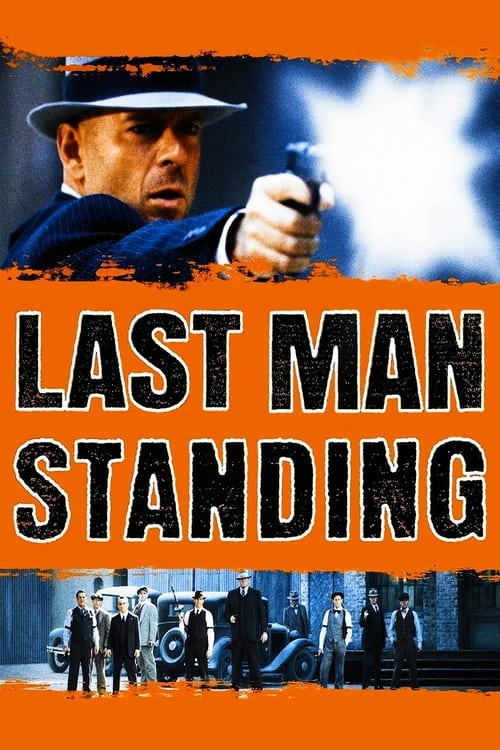
Last Man Standing
John Smith is a mysterious stranger who is drawn into a vicious war between two Prohibition-era gangs. In a dangerous game, he switches allegiances from one to another, offering his services to the highest bidder. As the death toll mounts, Smith takes the law into his own hands in a deadly race to stay alive.
The film disappointed at the box office against its moderate budget of $67.0M, earning $47.3M globally (-29% loss). While initial box office returns were modest, the film has gained appreciation for its bold vision within the crime genre.


Plot Structure
Story beats plotted across runtime


Narrative Arc
Emotional journey through the story's key moments
Story Circle
Blueprint 15-beat structure
Arcplot Score Breakdown
Weighted: Precision (70%) + Arc (15%) + Theme (15%)
Last Man Standing (1996) exhibits meticulously timed narrative architecture, characteristic of Walter Hill's storytelling approach. This structural analysis examines how the film's 15-point plot structure maps to proven narrative frameworks across 1 hour and 41 minutes. With an Arcplot score of 6.7, the film balances conventional beats with creative variation.
Characters
Cast & narrative archetypes

John Smith
Felina
Joe Monday
Doyle
Hickey
Strozzi
Sheriff Ed Galt
Main Cast & Characters
John Smith
Played by Bruce Willis
A mysterious gunfighter who arrives in a Texas border town and plays two rival gangs against each other for his own gain.
Felina
Played by Karina Lombard
A beautiful woman caught between the warring factions who becomes romantically involved with Smith.
Joe Monday
Played by William Sanderson
The bartender who serves as Smith's confidant and provides information about the town's deadly power struggle.
Doyle
Played by David Patrick Kelly
The ruthless leader of one of the criminal gangs vying for control of the town.
Hickey
Played by Christopher Walken
Doyle's brutal enforcer and right-hand man who carries out violent acts without hesitation.
Strozzi
Played by Ned Eisenberg
The Italian mobster leading the rival gang in the territorial war for bootlegging control.
Sheriff Ed Galt
Played by Bruce Dern
The corrupt local sheriff who turns a blind eye to the gang violence for personal profit.
Structural Analysis
The Status Quo at 1 minutes (1% through the runtime) establishes John Smith, a lone drifter, drives into the desolate Texas border town of Jericho during Prohibition. The town appears nearly abandoned, establishing his solitary, amoral existence as a wandering gunman.. Significantly, this early placement immediately immerses viewers in the story world.
The inciting incident occurs at 12 minutes when Smith witnesses Doyle's men brutally murder a Mexican family. Rather than flee, he sees an opportunity - he can exploit the gang war for profit by selling his gun to the highest bidder.. At 12% through the film, this Disruption aligns precisely with traditional story structure. This beat shifts the emotional landscape, launching the protagonist into the central conflict.
The First Threshold at 25 minutes marks the transition into Act II, occurring at 25% of the runtime. This demonstrates the protagonist's commitment to Smith makes his choice: he hires himself out to Doyle's gang, committing to enter the world of the gang war. This is an active decision to manipulate both sides for personal gain rather than leave town., moving from reaction to action.
At 51 minutes, the Midpoint arrives at 50% of the runtime—precisely centered, creating perfect narrative symmetry. Structural examination shows that this crucial beat Smith's manipulations reach their peak when he successfully orchestrates a major confrontation between the gangs, profiting handsomely. It appears he has complete control of the situation - a false victory, as his deception is about to unravel., fundamentally raising what's at risk. The emotional intensity shifts, dividing the narrative into clear before-and-after phases.
The Collapse moment at 76 minutes (75% through) represents the emotional nadir. Here, Smith is discovered, captured, and brutally tortured by Hickey. Joe Monday is killed trying to help him. Smith barely escapes with his life, beaten and broken, his hands shattered - the tools of his trade destroyed. The "whiff of death" as his ally dies and his own mortality is proven., indicates the protagonist at their lowest point. This beat's placement in the final quarter sets up the climactic reversal.
The Second Threshold at 81 minutes initiates the final act resolution at 80% of the runtime. Smith chooses to return to Jericho. This time not for profit, but to rescue Felina and avenge Joe Monday. He synthesizes his gunfighter skills with a newfound moral purpose - becoming more than just a mercenary., demonstrating the transformation achieved throughout the journey.
Emotional Journey
Last Man Standing's emotional architecture traces a deliberate progression across 15 carefully calibrated beats.
Narrative Framework
This structural analysis employs systematic plot point analysis that identifies crucial turning points. By mapping Last Man Standing against these established plot points, we can identify how Walter Hill utilizes or subverts traditional narrative conventions. The plot point approach reveals not only adherence to structural principles but also creative choices that distinguish Last Man Standing within the crime genre.
Walter Hill's Structural Approach
Among the 14 Walter Hill films analyzed on Arcplot, the average structural score is 7.1, reflecting strong command of classical structure. Last Man Standing takes a more unconventional approach compared to the director's typical style. For comparative analysis, explore the complete Walter Hill filmography.
Comparative Analysis
Additional crime films include The Bad Guys, Rustom and The Whole Ten Yards. For more Walter Hill analyses, see The Warriors, Johnny Handsome and The Driver.
Plot Points by Act
Act I
SetupStatus Quo
John Smith, a lone drifter, drives into the desolate Texas border town of Jericho during Prohibition. The town appears nearly abandoned, establishing his solitary, amoral existence as a wandering gunman.
Theme
Joe Monday, the bartender, warns Smith: "In this town, you're either with Doyle or you're with Strozzi. There ain't no in-between." This establishes the theme of loyalty, allegiance, and the impossibility of neutrality in a world of competing powers.
Worldbuilding
Smith learns that Jericho is controlled by two rival gangs: Irish mobster Doyle and Italian gangster Strozzi, both running bootleg liquor to Mexico. The town is a powder keg of violence where lawmen are bought and innocent people are caught in the crossfire.
Disruption
Smith witnesses Doyle's men brutally murder a Mexican family. Rather than flee, he sees an opportunity - he can exploit the gang war for profit by selling his gun to the highest bidder.
Resistance
Smith debates his options and receives warnings from Sheriff Galt (corrupt) and Joe Monday (cynical but decent). He tests both gangs, demonstrating his skills and learning their weaknesses while positioning himself as a valuable asset.
Act II
ConfrontationFirst Threshold
Smith makes his choice: he hires himself out to Doyle's gang, committing to enter the world of the gang war. This is an active decision to manipulate both sides for personal gain rather than leave town.
Mirror World
Smith encounters Felina, Doyle's kept woman who is being held against her will. She represents innocence trapped by violence, mirroring what Smith might become if he stays - and offering him a moral anchor in an amoral world.
Premise
Smith plays both sides, working for Doyle while secretly helping Strozzi, orchestrating violent encounters and escalating the gang war. He manipulates events to enrich himself while the town tears itself apart - the promise of a cunning lone wolf outsmarting everyone.
Midpoint
Smith's manipulations reach their peak when he successfully orchestrates a major confrontation between the gangs, profiting handsomely. It appears he has complete control of the situation - a false victory, as his deception is about to unravel.
Opposition
Both gangs grow suspicious of Smith. Hickey, Doyle's sadistic enforcer, begins investigating. Smith's greed and his growing conscience (particularly regarding Felina) create vulnerability. The walls close in as both sides realize they're being played.
Collapse
Smith is discovered, captured, and brutally tortured by Hickey. Joe Monday is killed trying to help him. Smith barely escapes with his life, beaten and broken, his hands shattered - the tools of his trade destroyed. The "whiff of death" as his ally dies and his own mortality is proven.
Crisis
Smith hides and recovers, processing the cost of his amorality. Joe Monday's death weighs on him. He must decide whether to flee and save himself or return to face impossible odds - not for money, but for something resembling honor.
Act III
ResolutionSecond Threshold
Smith chooses to return to Jericho. This time not for profit, but to rescue Felina and avenge Joe Monday. He synthesizes his gunfighter skills with a newfound moral purpose - becoming more than just a mercenary.
Synthesis
Smith returns to Jericho and systematically dismantles both gangs. Despite his injuries, he uses cunning and ruthlessness to kill Hickey, destroy Doyle and Strozzi's operations, and free Felina. The final confrontation sees him triumph through sheer will and skill.
Transformation
Smith drives out of Jericho with Felina freed and both gangs destroyed. Unlike the opening where he was a lone amoral drifter, he leaves having chosen principle over profit, having sacrificed for others - still a gunman, but one who found his code.