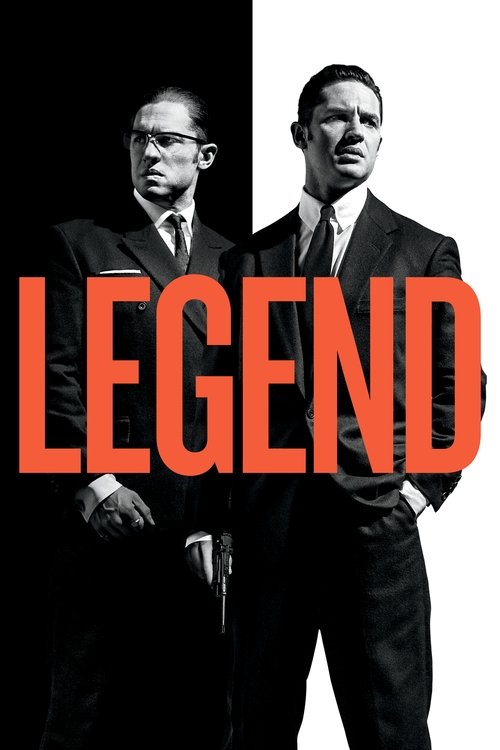
Legend
Suave, charming and volatile, Reggie Kray and his unstable twin brother Ronnie start to leave their mark on the London underworld in the 1960s. Using violence to get what they want, the siblings orchestrate robberies and murders while running nightclubs and protection rackets. With police Detective Leonard "Nipper" Read hot on their heels, the brothers continue their rapid rise to power and achieve tabloid notoriety.
Working with a respectable budget of $25.0M, the film achieved a steady performer with $43.0M in global revenue (+72% profit margin).
6 wins & 12 nominations


Plot Structure
Story beats plotted across runtime


Narrative Arc
Emotional journey through the story's key moments
Story Circle
Blueprint 15-beat structure
Arcplot Score Breakdown
Weighted: Precision (70%) + Arc (15%) + Theme (15%)
Legend (2015) exhibits precise narrative architecture, characteristic of Brian Helgeland's storytelling approach. This structural analysis examines how the film's 15-point plot structure maps to proven narrative frameworks across 2 hours and 12 minutes. With an Arcplot score of 6.9, the film balances conventional beats with creative variation.
Characters
Cast & narrative archetypes

Reggie Kray
Ronnie Kray
Frances Shea
Leslie Payne
Albert Donoghue
Jack 'The Hat' McVitie
Mad Teddy Smith
Main Cast & Characters
Reggie Kray
Played by Tom Hardy
The more controlled, business-minded twin who seeks legitimacy and respectability while running a criminal empire.
Ronnie Kray
Played by Tom Hardy
The volatile, openly gay twin with paranoid schizophrenia who embraces violence and chaos.
Frances Shea
Played by Emily Browning
Reggie's wife who becomes trapped between love and the violent criminal world, narrating the story.
Leslie Payne
Played by David Thewlis
The Krays' financial adviser and accountant who helps legitimize their business operations.
Albert Donoghue
Played by Colin Morgan
A member of the Kray firm who serves as an enforcer and trusted associate.
Jack 'The Hat' McVitie
Played by Sam Spruell
A small-time criminal and associate who becomes increasingly troublesome to the Krays.
Mad Teddy Smith
Played by Taron Egerton
Ronnie's boyfriend and companion who is part of their inner circle.
Structural Analysis
The Status Quo at 2 minutes (2% through the runtime) establishes Frances' narration introduces the Kray twins' world: Reggie as the charming, controlled gangster ruling East London while Ronnie remains institutionalized. Shows Reggie's power and magnetism in his element.. Notably, this early placement immediately immerses viewers in the story world.
The inciting incident occurs at 15 minutes when Ronnie is released from psychiatric institution and immediately returns to the criminal operation. His presence threatens the balance Reggie has maintained between legitimate business aspirations and crime.. At 12% through the film, this Disruption aligns precisely with traditional story structure. This beat shifts the emotional landscape, launching the protagonist into the central conflict.
The First Threshold at 32 minutes marks the transition into Act II, occurring at 24% of the runtime. This illustrates the protagonist's commitment to Reggie marries Frances despite her family's concerns and Ronnie's manipulations. He makes an active choice to pursue love and a "normal" life while remaining loyal to his brother and the business., moving from reaction to action.
At 64 minutes, the Midpoint arrives at 49% of the runtime—precisely centered, creating perfect narrative symmetry. Significantly, this crucial beat Ronnie murders George Cornell in the Blind Beggar pub in a psychotic rage. This public, reckless violence crosses a line—raising stakes with police and rival gangs. The fun is over; consequences become inevitable., fundamentally raising what's at risk. The emotional intensity shifts, dividing the narrative into clear before-and-after phases.
The Collapse moment at 98 minutes (74% through) represents the emotional nadir. Here, Frances dies by suicide from an overdose. The literal death of Reggie's chance at redemption and normal life. His dream of escaping through love dies with her., indicates the protagonist at their lowest point. This beat's placement in the final quarter sets up the climactic reversal.
The Second Threshold at 104 minutes initiates the final act resolution at 79% of the runtime. Reggie assists Ronnie in murdering Jack "The Hat" McVitie. Having lost Frances, Reggie fully commits to the only relationship he has left—his twin. He stops fighting his nature., demonstrating the transformation achieved throughout the journey.
Emotional Journey
Legend's emotional architecture traces a deliberate progression across 15 carefully calibrated beats.
Narrative Framework
This structural analysis employs a 15-point narrative structure framework that maps key story moments. By mapping Legend against these established plot points, we can identify how Brian Helgeland utilizes or subverts traditional narrative conventions. The plot point approach reveals not only adherence to structural principles but also creative choices that distinguish Legend within the crime genre.
Brian Helgeland's Structural Approach
Among the 5 Brian Helgeland films analyzed on Arcplot, the average structural score is 7.0, reflecting strong command of classical structure. Legend takes a more unconventional approach compared to the director's typical style. For comparative analysis, explore the complete Brian Helgeland filmography.
Comparative Analysis
Additional crime films include The Bad Guys, Rustom and The Whole Ten Yards. For more Brian Helgeland analyses, see The Order, A Knight's Tale and 42.
Plot Points by Act
Act I
SetupStatus Quo
Frances' narration introduces the Kray twins' world: Reggie as the charming, controlled gangster ruling East London while Ronnie remains institutionalized. Shows Reggie's power and magnetism in his element.
Theme
Frances' voiceover: "Everyone's got their own version of the truth." Establishes the subjective nature of love, loyalty, and self-deception that will drive the tragedy.
Worldbuilding
Establishes the Kray criminal empire, Reggie's charm and business acumen, Ronnie's violent instability, and Reggie's courtship of Frances. Shows the glamorous surface and violent undercurrent of their world.
Disruption
Ronnie is released from psychiatric institution and immediately returns to the criminal operation. His presence threatens the balance Reggie has maintained between legitimate business aspirations and crime.
Resistance
Reggie attempts to manage both his relationship with Frances and Ronnie's escalating violence. Frances warns him about his brother's influence. Reggie believes he can control both worlds—romance and crime.
Act II
ConfrontationFirst Threshold
Reggie marries Frances despite her family's concerns and Ronnie's manipulations. He makes an active choice to pursue love and a "normal" life while remaining loyal to his brother and the business.
Mirror World
The honeymoon period: Frances represents the possibility of redemption and escape. She embodies the thematic alternative to Reggie's criminal life and toxic fraternal bond.
Premise
The Krays expand their empire: nightclubs, protection rackets, negotiations with the American mafia. Reggie tries to balance married life with Frances and business with Ronnie. The glamorous criminal lifestyle at its peak.
Midpoint
Ronnie murders George Cornell in the Blind Beggar pub in a psychotic rage. This public, reckless violence crosses a line—raising stakes with police and rival gangs. The fun is over; consequences become inevitable.
Opposition
Police pressure intensifies. Frances' mental health deteriorates as Reggie chooses Ronnie repeatedly over her. Reggie's attempts to maintain both relationships fail. Frances' addiction and depression worsen; the marriage crumbles.
Collapse
Frances dies by suicide from an overdose. The literal death of Reggie's chance at redemption and normal life. His dream of escaping through love dies with her.
Crisis
Reggie processes Frances' death in anguish, realizing his loyalty to Ronnie destroyed the only good thing in his life. He confronts the emptiness of the empire they built.
Act III
ResolutionSecond Threshold
Reggie assists Ronnie in murdering Jack "The Hat" McVitie. Having lost Frances, Reggie fully commits to the only relationship he has left—his twin. He stops fighting his nature.
Synthesis
The brothers are arrested and prosecuted. The empire falls. Reggie accepts his fate with Ronnie, fully embracing the toxic bond. They are sentenced to life imprisonment.
Transformation
Frances' final narration: Reggie in prison, having lost everything but his loyalty to Ronnie. The closing image mirrors the opening but shows the cost—the glamour replaced by the cage. A tragedy of chosen bondage.