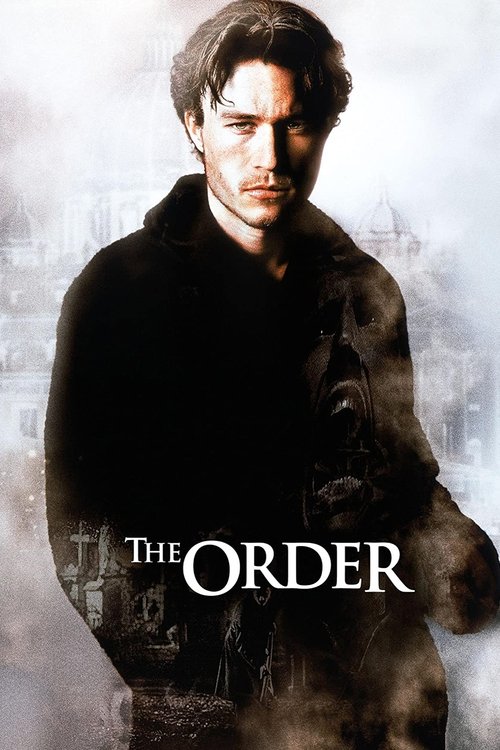
The Order
For centuries, a secret Order of priests has existed within the Church. A renegade priest, Father Alex Bernier, is sent to Rome to investigate the mysterious death of one of the Order's most revered members. Following a series of strangely similar killings, Bernier launches an investigation that forces him to confront unimaginable evil.
The film commercial failure against its mid-range budget of $35.0M, earning $11.6M globally (-67% loss). While initial box office returns were modest, the film has gained appreciation for its distinctive approach within the fantasy genre.


Plot Structure
Story beats plotted across runtime


Narrative Arc
Emotional journey through the story's key moments
Story Circle
Blueprint 15-beat structure
Arcplot Score Breakdown
Weighted: Precision (70%) + Arc (15%) + Theme (15%)
The Order (2003) exhibits meticulously timed story structure, characteristic of Brian Helgeland's storytelling approach. This structural analysis examines how the film's 15-point plot structure maps to proven narrative frameworks across 1 hour and 42 minutes. With an Arcplot score of 6.7, the film balances conventional beats with creative variation.
Structural Analysis
The Status Quo at 1 minutes (1% through the runtime) establishes Alex Bernier performs an exorcism in New York, establishing him as a priest of the obscure Carolingian Order who deals with supernatural threats while struggling with his own faith and isolation from the mainstream Church.. Structural examination shows that this early placement immediately immerses viewers in the story world.
The inciting incident occurs at 13 minutes when Alex receives word that his mentor Dominic has died under mysterious circumstances in Rome, with strange marks on his body suggesting supernatural involvement. The Church is stonewalling any investigation.. At 12% through the film, this Disruption aligns precisely with traditional story structure. This beat shifts the emotional landscape, launching the protagonist into the central conflict.
The First Threshold at 26 minutes marks the transition into Act II, occurring at 26% of the runtime. This shows the protagonist's commitment to Alex arrives in Rome and views Dominic's body, discovering the distinctive marks of a Sin Eater - a forbidden figure who absorbs sins from the dying outside Church sacraments. He commits to uncovering the truth despite the danger., moving from reaction to action.
At 52 minutes, the Midpoint arrives at 51% of the runtime—precisely centered, creating perfect narrative symmetry. Notably, this crucial beat Alex witnesses Eden perform the Sin Eater ritual and learns the terrible truth: Eden wants to pass his curse to Alex, having chosen him as his successor. The stakes shift from investigation to personal survival and the fate of Alex's soul., fundamentally raising what's at risk. The emotional intensity shifts, dividing the narrative into clear before-and-after phases.
The Collapse moment at 77 minutes (75% through) represents the emotional nadir. Here, Thomas is murdered by Eden's machinations, and Alex discovers the full extent of the Church's betrayal. Mara appears to have been killed as well, leaving Alex utterly alone and spiritually broken, his faith in both the Church and himself shattered., illustrates the protagonist at their lowest point. This beat's placement in the final quarter sets up the climactic reversal.
The Second Threshold at 82 minutes initiates the final act resolution at 80% of the runtime. Alex makes the fateful choice to accept the Sin Eater ritual from the dying Eden, taking on the immortal burden. He believes this is the only way to achieve justice and continue offering absolution outside the corrupt Church., demonstrating the transformation achieved throughout the journey.
Emotional Journey
The Order's emotional architecture traces a deliberate progression across 15 carefully calibrated beats.
Narrative Framework
This structural analysis employs systematic plot point analysis that identifies crucial turning points. By mapping The Order against these established plot points, we can identify how Brian Helgeland utilizes or subverts traditional narrative conventions. The plot point approach reveals not only adherence to structural principles but also creative choices that distinguish The Order within the fantasy genre.
Brian Helgeland's Structural Approach
Among the 5 Brian Helgeland films analyzed on Arcplot, the average structural score is 7.0, reflecting strong command of classical structure. The Order takes a more unconventional approach compared to the director's typical style. For comparative analysis, explore the complete Brian Helgeland filmography.
Comparative Analysis
Additional fantasy films include Thinner, Ella Enchanted and Conan the Barbarian. For more Brian Helgeland analyses, see Legend, A Knight's Tale and 42.
Plot Points by Act
Act I
SetupStatus Quo
Alex Bernier performs an exorcism in New York, establishing him as a priest of the obscure Carolingian Order who deals with supernatural threats while struggling with his own faith and isolation from the mainstream Church.
Theme
A Church official tells Alex that the Carolingians are considered heretics, stating that some sins cannot be forgiven through normal means - foreshadowing the central question of whether redemption can exist outside Church doctrine.
Worldbuilding
The world of the Carolingian Order is established: Alex's complicated relationship with Mara, his friendship with fellow priest Thomas, and the mysterious death of their mentor Dominic in Rome that the Church refuses to properly investigate.
Disruption
Alex receives word that his mentor Dominic has died under mysterious circumstances in Rome, with strange marks on his body suggesting supernatural involvement. The Church is stonewalling any investigation.
Resistance
Alex debates whether to defy Church orders and investigate Dominic's death. He reunites with Mara, who he once saved from demonic possession, and convinces Thomas to join him in traveling to Rome despite warnings from Church authorities.
Act II
ConfrontationFirst Threshold
Alex arrives in Rome and views Dominic's body, discovering the distinctive marks of a Sin Eater - a forbidden figure who absorbs sins from the dying outside Church sacraments. He commits to uncovering the truth despite the danger.
Mirror World
Alex's relationship with Mara deepens as she reveals her continued feelings for him. Their forbidden love becomes the emotional counterweight to his priestly vows, representing the human connection he has denied himself.
Premise
Alex investigates the Sin Eater mythology, encountering William Eden who reveals himself as the immortal Sin Eater. Eden explains his curse - eternal life bearing the weight of absorbed sins - and begins to seduce Alex with the promise of redemption outside Church control.
Midpoint
Alex witnesses Eden perform the Sin Eater ritual and learns the terrible truth: Eden wants to pass his curse to Alex, having chosen him as his successor. The stakes shift from investigation to personal survival and the fate of Alex's soul.
Opposition
Eden manipulates events to isolate Alex from the Church and draw him closer to accepting the Sin Eater mantle. Thomas grows suspicious of Eden's influence. A conspiracy within the Church is revealed, with Cardinal Driscoll secretly supporting Eden's plan to corrupt Alex.
Collapse
Thomas is murdered by Eden's machinations, and Alex discovers the full extent of the Church's betrayal. Mara appears to have been killed as well, leaving Alex utterly alone and spiritually broken, his faith in both the Church and himself shattered.
Crisis
Alex descends into despair, questioning everything he believed about God, the Church, and redemption. Eden offers him the Sin Eater power as the only path to meaning in a corrupt world, tempting Alex with the ability to offer forgiveness that the Church has denied.
Act III
ResolutionSecond Threshold
Alex makes the fateful choice to accept the Sin Eater ritual from the dying Eden, taking on the immortal burden. He believes this is the only way to achieve justice and continue offering absolution outside the corrupt Church.
Synthesis
Now the new Sin Eater, Alex confronts Cardinal Driscoll and the Church conspirators. He uses his new power to expose their sins and exact a form of dark justice, but realizes the terrible weight of what he has become - an immortal bearer of humanity's sins.
Transformation
Alex walks alone through Rome, now immortal and burdened with the sins he has absorbed. Where he began as a faithful priest seeking truth, he ends as the Sin Eater - damned to eternal life outside the Church, his transformation a tragic corruption of his original faith.