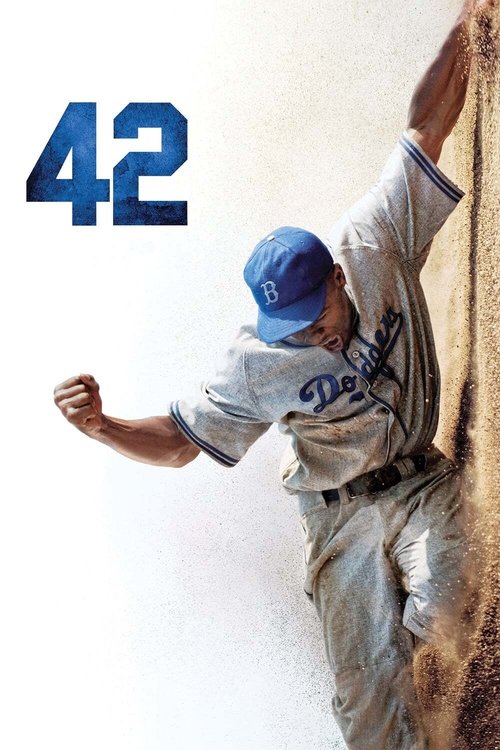
42
In 1947, Jackie Robinson becomes the first Black man to play in Major League Baseball facing unabashed racism from the public, the press and other players.
Despite a mid-range budget of $40.0M, 42 became a financial success, earning $95.0M worldwide—a 138% return.
3 wins & 21 nominations


Plot Structure
Story beats plotted across runtime


Narrative Arc
Emotional journey through the story's key moments
Story Circle
Blueprint 15-beat structure
Arcplot Score Breakdown
Weighted: Precision (70%) + Arc (15%) + Theme (15%)
42 (2013) exemplifies strategically placed narrative design, characteristic of Brian Helgeland's storytelling approach. This structural analysis examines how the film's 15-point plot structure maps to proven narrative frameworks across 2 hours and 8 minutes. With an Arcplot score of 6.7, the film balances conventional beats with creative variation.
Characters
Cast & narrative archetypes

Jackie Robinson
Branch Rickey
Rachel Robinson
Pee Wee Reese
Leo Durocher
Ben Chapman
Wendell Smith
Main Cast & Characters
Jackie Robinson
Played by Chadwick Boseman
First African American to play in Major League Baseball, breaking the color barrier in 1947 with the Brooklyn Dodgers.
Branch Rickey
Played by Harrison Ford
Brooklyn Dodgers general manager who orchestrates Jackie Robinson's integration into baseball despite opposition.
Rachel Robinson
Played by Nicole Beharie
Jackie Robinson's wife who provides unwavering support and guidance throughout his historic journey.
Pee Wee Reese
Played by Lucas Black
Brooklyn Dodgers shortstop who becomes Jackie's ally and publicly supports him against racist opposition.
Leo Durocher
Played by Christopher Meloni
Dodgers manager who initially supports Jackie but is suspended, creating additional challenges.
Ben Chapman
Played by Alan Tudyk
Philadelphia Phillies manager who leads vicious racist taunts against Jackie from the dugout.
Wendell Smith
Played by Andre Holland
Pittsburgh Courier sportswriter who covers Jackie's journey and provides counsel.
Structural Analysis
The Status Quo at 1 minutes (1% through the runtime) establishes Jackie Robinson plays for the Kansas City Monarchs in the Negro Leagues, talented but confined to segregated baseball, living in a world of separate and unequal.. The analysis reveals that this early placement immediately immerses viewers in the story world.
The inciting incident occurs at 16 minutes when Branch Rickey's scout approaches Jackie Robinson with an offer to meet Rickey about playing for the Brooklyn Dodgers organization, the first step toward breaking baseball's color barrier.. At 12% through the film, this Disruption aligns precisely with traditional story structure. This beat shifts the emotional landscape, launching the protagonist into the central conflict.
The First Threshold at 31 minutes marks the transition into Act II, occurring at 24% of the runtime. This reveals the protagonist's commitment to Jackie Robinson signs with the Montreal Royals (Dodgers' minor league team) and commits to Branch Rickey's "noble experiment," actively choosing to become the first Black player in organized white baseball despite the cost., moving from reaction to action.
At 65 minutes, the Midpoint arrives at 50% of the runtime—precisely centered, creating perfect narrative symmetry. Structural examination shows that this crucial beat Philadelphia Phillies manager Ben Chapman unleashes a brutal torrent of racist abuse from the dugout during a game. Jackie nearly breaks, gripping his bat in rage, but restrains himself—the pressure and toll are at their peak., fundamentally raising what's at risk. The emotional intensity shifts, dividing the narrative into clear before-and-after phases.
The Collapse moment at 95 minutes (74% through) represents the emotional nadir. Here, After being hit by a pitch and enduring more abuse, Jackie breaks down in the tunnel, smashing his bat and crying out in anguish. The weight of carrying this burden alone nearly destroys him—his darkest moment of despair., reveals the protagonist at their lowest point. This beat's placement in the final quarter sets up the climactic reversal.
The Second Threshold at 102 minutes initiates the final act resolution at 80% of the runtime. Pee Wee Reese publicly stands with Jackie during a game in Cincinnati, putting his arm around him in front of the hostile crowd. This act of solidarity marks a turning point—Jackie is no longer alone, and the team unifies., demonstrating the transformation achieved throughout the journey.
Emotional Journey
42's emotional architecture traces a deliberate progression across 15 carefully calibrated beats.
Narrative Framework
This structural analysis employs proven narrative structure principles that track dramatic progression. By mapping 42 against these established plot points, we can identify how Brian Helgeland utilizes or subverts traditional narrative conventions. The plot point approach reveals not only adherence to structural principles but also creative choices that distinguish 42 within the drama genre.
Brian Helgeland's Structural Approach
Among the 5 Brian Helgeland films analyzed on Arcplot, the average structural score is 7.0, reflecting strong command of classical structure. 42 takes a more unconventional approach compared to the director's typical style. For comparative analysis, explore the complete Brian Helgeland filmography.
Comparative Analysis
Additional drama films include After Thomas, South Pacific and Dirty Dancing: Havana Nights. For more Brian Helgeland analyses, see The Order, Legend and A Knight's Tale.
Plot Points by Act
Act I
SetupStatus Quo
Jackie Robinson plays for the Kansas City Monarchs in the Negro Leagues, talented but confined to segregated baseball, living in a world of separate and unequal.
Theme
Branch Rickey tells his associates: "I don't care if the man is yellow or black, or if he has stripes like a zebra. I'm the manager of this team, and I say he plays." The theme of courage to challenge injustice is stated.
Worldbuilding
Establishing the segregated world of 1945 baseball: Jackie's talent in the Negro Leagues, Branch Rickey's Brooklyn Dodgers organization, the institutional racism of Major League Baseball, and Jackie's relationship with Rachel.
Disruption
Branch Rickey's scout approaches Jackie Robinson with an offer to meet Rickey about playing for the Brooklyn Dodgers organization, the first step toward breaking baseball's color barrier.
Resistance
Jackie meets Branch Rickey, who tests him with racist scenarios and demands he have "the guts not to fight back." Jackie wrestles with whether he can endure the abuse. Rachel supports him. Jackie debates accepting this burden.
Act II
ConfrontationFirst Threshold
Jackie Robinson signs with the Montreal Royals (Dodgers' minor league team) and commits to Branch Rickey's "noble experiment," actively choosing to become the first Black player in organized white baseball despite the cost.
Mirror World
Pee Wee Reese, the white Southern shortstop, is introduced as a teammate who will become Jackie's ally. He represents the possibility of bridging racial divides through shared humanity and respect.
Premise
Jackie plays through spring training and his first season with the Dodgers, facing relentless racism: slurs from opposing teams, threats, teammates' hostility, hotels refusing him, and fan hatred. He endures it all while proving his talent on the field.
Midpoint
Philadelphia Phillies manager Ben Chapman unleashes a brutal torrent of racist abuse from the dugout during a game. Jackie nearly breaks, gripping his bat in rage, but restrains himself—the pressure and toll are at their peak.
Opposition
The racism intensifies: death threats against Jackie and his family, a pitcher intentionally hitting him, continued isolation from some teammates. The antagonistic forces close in as Jackie's restraint and dignity are tested to the breaking point.
Collapse
After being hit by a pitch and enduring more abuse, Jackie breaks down in the tunnel, smashing his bat and crying out in anguish. The weight of carrying this burden alone nearly destroys him—his darkest moment of despair.
Crisis
Branch Rickey finds Jackie in the tunnel and reminds him of their mission's importance. Jackie processes his pain and finds resolve. He recognizes he's not truly alone—he has Rachel, Rickey, and growing support.
Act III
ResolutionSecond Threshold
Pee Wee Reese publicly stands with Jackie during a game in Cincinnati, putting his arm around him in front of the hostile crowd. This act of solidarity marks a turning point—Jackie is no longer alone, and the team unifies.
Synthesis
The Dodgers rally together, supporting Jackie as he leads them toward the pennant. He steals home in a crucial game, silencing critics with his play. The team succeeds, and Jackie proves that integration works through excellence and dignity.
Transformation
Jackie stands on the field as a hero, having won Rookie of the Year. Text reveals he opened the door for integration across baseball and society. He transformed from isolated pioneer to celebrated legend who changed America.