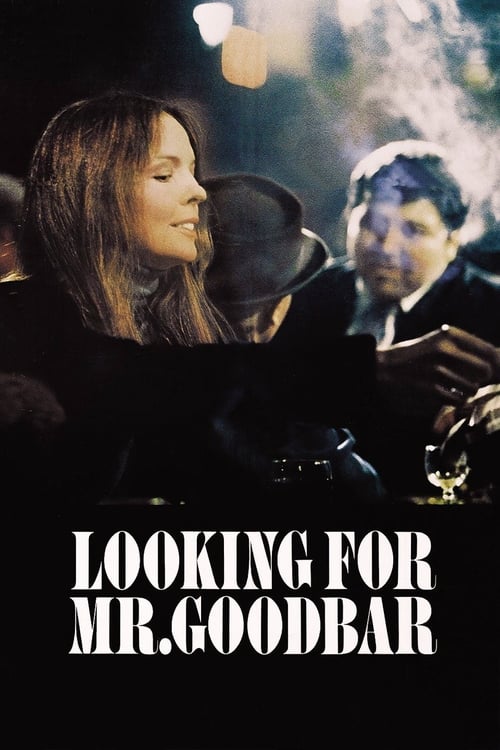
Looking for Mr. Goodbar
A short, unhappy affair with a married man leads a dedicated schoolteacher into the alcohol-and-drug fueled underworld of singles’ bars, where she begins to engage in a pattern of dangerous sexual activity.
The film earned $22.5M at the global box office.
Nominated for 2 Oscars. 1 win & 6 nominations


Plot Structure
Story beats plotted across runtime


Narrative Arc
Emotional journey through the story's key moments
Story Circle
Blueprint 15-beat structure
Arcplot Score Breakdown
Weighted: Precision (70%) + Arc (15%) + Theme (15%)
Looking for Mr. Goodbar (1977) exemplifies carefully calibrated narrative architecture, characteristic of Richard Brooks's storytelling approach. This structural analysis examines how the film's 15-point plot structure maps to proven narrative frameworks across 2 hours and 16 minutes. With an Arcplot score of 6.7, the film balances conventional beats with creative variation.
Characters
Cast & narrative archetypes

Theresa Dunn
Gary Cooper White
James Morrissey
Tony Lopanto
Katherine Dunn
Mr. Dunn
Main Cast & Characters
Theresa Dunn
Played by Diane Keaton
A lonely teacher who leads a double life, teaching deaf children by day while seeking dangerous sexual encounters in bars by night.
Gary Cooper White
Played by Tom Berenger
A charismatic but unstable drifter who becomes violently obsessed with Theresa after their brief affair.
James Morrissey
Played by William Atherton
A married social studies teacher who has an on-and-off affair with Theresa, representing conventional romance she cannot accept.
Tony Lopanto
Played by Richard Gere
A narcissistic, violent young man Theresa encounters in her nightlife, embodying the danger of her self-destructive choices.
Katherine Dunn
Played by Tuesday Weld
Theresa's traditional Catholic sister who represents the conventional family life Theresa rejects.
Mr. Dunn
Played by Richard Kiley
Theresa's strict, domineering Irish Catholic father whose oppressive presence shaped her psychology.
Structural Analysis
The Status Quo at 2 minutes (1% through the runtime) establishes Flashback to young Theresa's childhood surgery and spinal illness, establishing her as damaged and seeking escape from pain and limitation.. Significantly, this early placement immediately immerses viewers in the story world.
The inciting incident occurs at 16 minutes when Theresa meets and begins an affair with Tony, her college professor, experiencing sexual awakening and a taste of freedom from her constrained life.. At 12% through the film, this Disruption aligns precisely with traditional story structure. This beat shifts the emotional landscape, launching the protagonist into the central conflict.
The First Threshold at 34 minutes marks the transition into Act II, occurring at 25% of the runtime. This shows the protagonist's commitment to Tony callously ends their relationship, devastating Theresa. She makes the active choice to seek out casual sexual encounters in bars, crossing into a dangerous new world., moving from reaction to action.
At 68 minutes, the Midpoint arrives at 50% of the runtime—precisely centered, creating perfect narrative symmetry. The analysis reveals that this crucial beat Theresa has a violent sexual encounter that should serve as a warning, but instead of pulling back, she becomes more reckless, raising the stakes of her self-destructive behavior., fundamentally raising what's at risk. The emotional intensity shifts, dividing the narrative into clear before-and-after phases.
The Collapse moment at 102 minutes (75% through) represents the emotional nadir. Here, Theresa pushes away James and fully rejects the possibility of healthy love, choosing instead to continue her self-destructive pattern. Her isolation is complete., indicates the protagonist at their lowest point. This beat's placement in the final quarter sets up the climactic reversal.
The Second Threshold at 110 minutes initiates the final act resolution at 81% of the runtime. New Year's Eve: Theresa goes out alone to the bars one final time, fully committed to her path of self-destruction with no possibility of turning back., demonstrating the transformation achieved throughout the journey.
Emotional Journey
Looking for Mr. Goodbar's emotional architecture traces a deliberate progression across 15 carefully calibrated beats.
Narrative Framework
This structural analysis employs systematic plot point analysis that identifies crucial turning points. By mapping Looking for Mr. Goodbar against these established plot points, we can identify how Richard Brooks utilizes or subverts traditional narrative conventions. The plot point approach reveals not only adherence to structural principles but also creative choices that distinguish Looking for Mr. Goodbar within the drama genre.
Richard Brooks's Structural Approach
Among the 4 Richard Brooks films analyzed on Arcplot, the average structural score is 6.6, demonstrating varied approaches to story architecture. Looking for Mr. Goodbar represents one of the director's most structurally precise works. For comparative analysis, explore the complete Richard Brooks filmography.
Comparative Analysis
Additional drama films include After Thomas, South Pacific and Dirty Dancing: Havana Nights. For more Richard Brooks analyses, see In Cold Blood, Cat on a Hot Tin Roof and Elmer Gantry.
Plot Points by Act
Act I
SetupStatus Quo
Flashback to young Theresa's childhood surgery and spinal illness, establishing her as damaged and seeking escape from pain and limitation.
Theme
Theresa's father makes a disparaging remark about her worthiness and sexuality, planting the seed of the film's theme about self-worth and dangerous self-destruction.
Worldbuilding
Establishing Theresa's world: her work as a dedicated teacher of deaf children, her oppressive Catholic family, her sister's conventional life, and her own repressed desires.
Disruption
Theresa meets and begins an affair with Tony, her college professor, experiencing sexual awakening and a taste of freedom from her constrained life.
Resistance
Theresa's relationship with Tony develops; she debates between her old repressed self and this new sexual identity, experiencing both liberation and manipulation.
Act II
ConfrontationFirst Threshold
Tony callously ends their relationship, devastating Theresa. She makes the active choice to seek out casual sexual encounters in bars, crossing into a dangerous new world.
Mirror World
Theresa meets James, a kind social worker who represents the possibility of genuine connection and healthy love, contrasting with her self-destructive bar encounters.
Premise
Theresa lives her double life: competent teacher by day, cruising bars for dangerous sexual encounters by night, exploring the premise of hidden identity and risk-seeking behavior.
Midpoint
Theresa has a violent sexual encounter that should serve as a warning, but instead of pulling back, she becomes more reckless, raising the stakes of her self-destructive behavior.
Opposition
Theresa's two worlds collide and conflict intensifies: James wants commitment, her family judges her, and her bar encounters become increasingly dangerous and degrading.
Collapse
Theresa pushes away James and fully rejects the possibility of healthy love, choosing instead to continue her self-destructive pattern. Her isolation is complete.
Crisis
Theresa spirals deeper into darkness and isolation, her choices narrowing as she compulsively returns to the bars despite growing danger signals.
Act III
ResolutionSecond Threshold
New Year's Eve: Theresa goes out alone to the bars one final time, fully committed to her path of self-destruction with no possibility of turning back.
Synthesis
Theresa brings home Gary, an unstable drifter. Their encounter escalates from awkward to threatening as his violent, confused sexuality emerges and Theresa realizes her fatal error.
Transformation
Gary brutally murders Theresa in her apartment. The transformation is tragic: the young woman seeking escape from childhood pain has found only death, her self-destructive journey complete.