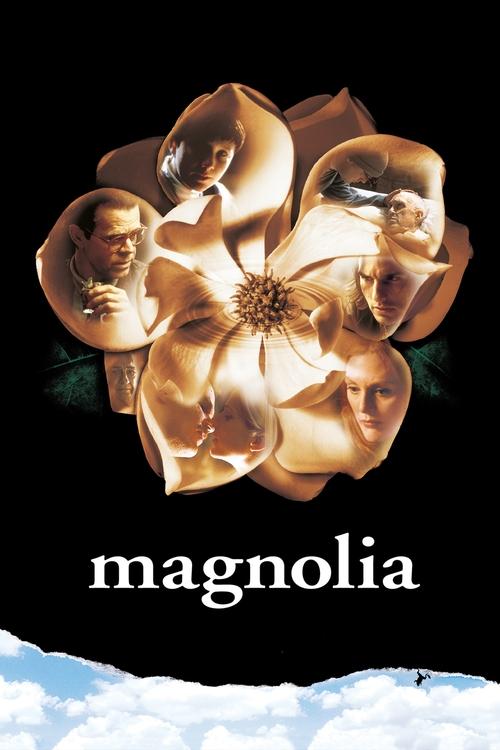
Magnolia
On one random day in the San Fernando Valley, a dying father, a young wife, a male caretaker, a famous lost son, a police officer in love, a boy genius, an ex-boy genius, a game show host and an estranged daughter will each become part of a dazzling multiplicity of plots, but one story.
Working with a mid-range budget of $37.0M, the film achieved a modest success with $48.5M in global revenue (+31% profit margin).
Nominated for 3 Oscars. 28 wins & 59 nominations


Plot Structure
Story beats plotted across runtime


Narrative Arc
Emotional journey through the story's key moments
Story Circle
Blueprint 15-beat structure
Arcplot Score Breakdown
Weighted: Precision (70%) + Arc (15%) + Theme (15%)
Magnolia (1999) exemplifies carefully calibrated plot construction, characteristic of Paul Thomas Anderson's storytelling approach. This structural analysis examines how the film's 15-point plot structure maps to proven narrative frameworks across 3 hours and 9 minutes. With an Arcplot score of 6.7, the film balances conventional beats with creative variation.
Characters
Cast & narrative archetypes

Jim Kurring
Claudia Wilson Gator
Frank T.J. Mackey
Earl Partridge
Phil Parma
Linda Partridge
Donnie Smith
Jimmy Gator
Stanley Spector
Main Cast & Characters
Jim Kurring
Played by John C. Reilly
A lonely LAPD officer seeking connection and meaning, navigating loneliness while trying to do good.
Claudia Wilson Gator
Played by Melora Walters
A troubled cocaine addict struggling with past trauma and her estranged relationship with her father, quiz show host Jimmy Gator.
Frank T.J. Mackey
Played by Tom Cruise
A charismatic misogynistic motivational speaker running "Seduce and Destroy" seminars, hiding deep pain about his dying father.
Earl Partridge
Played by Jason Robards
A dying television mogul filled with regret over abandoning his son, desperately seeking reconciliation before death.
Phil Parma
Played by Philip Seymour Hoffman
Earl Partridge's compassionate nurse who works to reunite the dying man with his estranged son Frank.
Linda Partridge
Played by Julianne Moore
Earl's young trophy wife wracked with guilt over her gold-digging past, now genuinely loving her dying husband.
Donnie Smith
Played by William H. Macy
A former quiz kid champion now working electronics sales, desperate and unhinged after losing his job and seeking love.
Jimmy Gator
Played by Philip Baker Hall
A long-time quiz show host dying of cancer, haunted by past sins and attempting to reconcile with his daughter Claudia.
Stanley Spector
Played by Jeremy Blackman
A child prodigy on the quiz show, pressured by his exploitative father and cracking under the weight of expectations.
Structural Analysis
The Status Quo at 2 minutes (1% through the runtime) establishes The prologue establishes a world of coincidence and interconnection through three seemingly impossible true stories, setting the tone for a universe where strange events bind people together in ways they cannot control or understand.. Structural examination shows that this early placement immediately immerses viewers in the story world.
The inciting incident occurs at 25 minutes when Earl's nurse Phil calls Frank T.J. Mackey to inform him his estranged father is dying and wants to see him. This external catalyst disrupts Frank's carefully constructed persona and forces him to confront the past he has built his entire identity around denying.. At 13% through the film, this Disruption is delayed, allowing extended setup of the story world. This beat shifts the emotional landscape, launching the protagonist into the central conflict.
The First Threshold at 51 minutes marks the transition into Act II, occurring at 27% of the runtime. This illustrates the protagonist's commitment to Frank T.J. Mackey makes the choice to go see his dying father despite his rage and resistance. This decision launches him into a confrontation with his past that will destroy the lies he has built his life upon. Similarly, other characters make choices: Jim enters Claudia's life, Linda chooses to stay with Earl, Stanley continues the game show despite his pain., moving from reaction to action.
At 103 minutes, the Midpoint arrives at 54% of the runtime—slightly delayed, extending Act IIa tension. Notably, this crucial beat Stanley's on-air breakdown where he demands "I want my father back" crystallizes the film's central pain: all these characters are lost children seeking the love and forgiveness they were denied. The stakes become clear - this is not about success or failure, but about whether these broken people can forgive themselves and each other before it's too late. The game show chaos mirrors the larger disorder consuming all the characters., fundamentally raising what's at risk. The emotional intensity shifts, dividing the narrative into clear before-and-after phases.
The Collapse moment at 154 minutes (82% through) represents the emotional nadir. Here, Earl Partridge dies before Frank can forgive him or receive forgiveness, leaving Frank emotionally shattered at the bedside. This death contains the literal "whiff of death" and represents the ultimate loss - the opportunity for reconciliation has passed. Frank's carefully constructed armor of hate collapses, leaving him vulnerable and broken in a way he has never allowed himself to be., demonstrates the protagonist at their lowest point. This beat's placement in the final quarter sets up the climactic reversal.
The Second Threshold at 164 minutes initiates the final act resolution at 87% of the runtime. The frogs fall from the sky - a biblical plague, an impossible event that breaks the rules of reality itself. This supernatural intervention suggests that the universe itself is saying: strange things happen, coincidences connect us, and redemption is possible even when it seems impossible. The characters receive this as a sign that they can break their own patterns, that change is possible., demonstrating the transformation achieved throughout the journey.
Emotional Journey
Magnolia's emotional architecture traces a deliberate progression across 15 carefully calibrated beats.
Narrative Framework
This structural analysis employs systematic plot point analysis that identifies crucial turning points. By mapping Magnolia against these established plot points, we can identify how Paul Thomas Anderson utilizes or subverts traditional narrative conventions. The plot point approach reveals not only adherence to structural principles but also creative choices that distinguish Magnolia within the drama genre.
Paul Thomas Anderson's Structural Approach
Among the 8 Paul Thomas Anderson films analyzed on Arcplot, the average structural score is 6.6, demonstrating varied approaches to story architecture. Magnolia represents one of the director's most structurally precise works. For comparative analysis, explore the complete Paul Thomas Anderson filmography.
Comparative Analysis
Additional drama films include After Thomas, South Pacific and Dirty Dancing: Havana Nights. For more Paul Thomas Anderson analyses, see Phantom Thread, Licorice Pizza and Boogie Nights.
Plot Points by Act
Act I
SetupStatus Quo
The prologue establishes a world of coincidence and interconnection through three seemingly impossible true stories, setting the tone for a universe where strange events bind people together in ways they cannot control or understand.
Theme
The dying producer Earl Partridge mumbles "I loved her so... and she knew what I'd done," foreshadowing the film's central theme: the weight of past sins, the need for forgiveness, and the possibility of redemption even in our final moments.
Worldbuilding
Introduction to the ensemble: Earl dying of cancer, his trophy wife Linda spiraling in guilt, his estranged son Frank T.J. Mackey running a misogynistic self-help empire, game show host Jimmy Gator dying and desperate to reconnect with his daughter, former quiz kid Donnie Smith losing everything, current quiz kid Stanley struggling under parental pressure, cop Jim Kurring seeking meaning, and Claudia battling addiction. Each character is trapped in cycles of pain and regret.
Disruption
Earl's nurse Phil calls Frank T.J. Mackey to inform him his estranged father is dying and wants to see him. This external catalyst disrupts Frank's carefully constructed persona and forces him to confront the past he has built his entire identity around denying.
Resistance
Characters resist their situations: Frank debates whether to see his father, Linda attempts suicide out of guilt over her gold-digging past, Claudia resists Jim Kurring's attempts to connect, Stanley endures the "What Kids Know" taping, Donnie plots to get money for braces to win love. Each character wrestles with whether to continue their destructive patterns or face painful truths.
Act II
ConfrontationFirst Threshold
Frank T.J. Mackey makes the choice to go see his dying father despite his rage and resistance. This decision launches him into a confrontation with his past that will destroy the lies he has built his life upon. Similarly, other characters make choices: Jim enters Claudia's life, Linda chooses to stay with Earl, Stanley continues the game show despite his pain.
Mirror World
Jim Kurring and Claudia's tentative connection begins to deepen. Their awkward, honest interaction represents the possibility of genuine human connection and forgiveness that stands in contrast to the deceit and isolation plaguing the other characters. Jim's simple decency offers a path toward redemption.
Premise
The ensemble explores their interconnected struggles: Frank sits with his dying father, unable to forgive; Linda desperately tries to change Earl's will out of guilt; Jimmy Gator attempts to reconcile with Claudia, who reveals he molested her as a child; Stanley rebels on live television, urinating himself and demanding his father let him go; Donnie's pathetic attempts at love fail; Jim and Claudia navigate their fragile connection. The characters spiral deeper into crisis.
Midpoint
Stanley's on-air breakdown where he demands "I want my father back" crystallizes the film's central pain: all these characters are lost children seeking the love and forgiveness they were denied. The stakes become clear - this is not about success or failure, but about whether these broken people can forgive themselves and each other before it's too late. The game show chaos mirrors the larger disorder consuming all the characters.
Opposition
Everything intensifies and deteriorates: Earl's condition worsens; Linda's pharmacy attempt to obtain morphine fails spectacularly; Jimmy Gator shoots himself; Donnie's robbery attempt goes wrong and he's badly injured; Frank remains unable to speak forgiveness to his father; Claudia's drug use intensifies as she sabotages her connection with Jim. The characters' flaws and past sins close in, and their attempts to escape or fix things only make matters worse.
Collapse
Earl Partridge dies before Frank can forgive him or receive forgiveness, leaving Frank emotionally shattered at the bedside. This death contains the literal "whiff of death" and represents the ultimate loss - the opportunity for reconciliation has passed. Frank's carefully constructed armor of hate collapses, leaving him vulnerable and broken in a way he has never allowed himself to be.
Crisis
In the darkness following Earl's death and the various characters' failures and crises, they sit with their pain. Frank weeps at his father's bedside. Claudia pushes Jim away, certain she doesn't deserve love. The characters face the seeming impossibility of redemption - they are who they are, they've done what they've done, and change seems impossible.
Act III
ResolutionSecond Threshold
The frogs fall from the sky - a biblical plague, an impossible event that breaks the rules of reality itself. This supernatural intervention suggests that the universe itself is saying: strange things happen, coincidences connect us, and redemption is possible even when it seems impossible. The characters receive this as a sign that they can break their own patterns, that change is possible.
Synthesis
In the aftermath of the frog storm, characters make final choices toward redemption: Jim returns to Claudia despite her pushing him away, offering unconditional acceptance; Frank shows his first genuine emotion and vulnerability; Linda stays with the dead Earl, finally accepting her love was real; Stanley sleeps peacefully after standing up to his father; Donnie survives his injuries. The finale is not about triumph but about the simple choice to forgive, to try, to be vulnerable.
Transformation
Claudia, lying in bed, looks directly at the camera and smiles - a fragile, uncertain, but genuine smile. After spending the entire film in self-destructive isolation, she accepts the possibility of love and forgiveness. This final image mirrors the opening's theme of impossible coincidence: maybe being saved is just as unlikely and just as real as frogs falling from the sky.