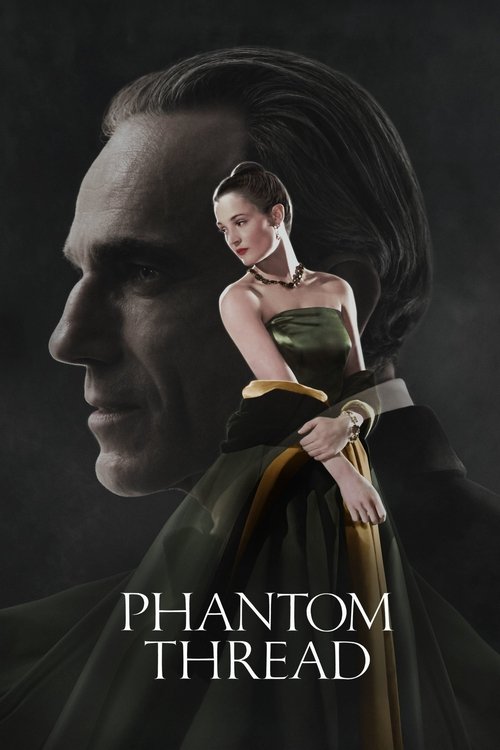
Phantom Thread
In 1950s London, a renowned dressmaker's meticulous lifestyle begins drastically changing as his relationship with his young muse intensifies.
Working with a mid-range budget of $35.0M, the film achieved a respectable showing with $47.8M in global revenue (+36% profit margin).
1 Oscar. 55 wins & 121 nominations


Plot Structure
Story beats plotted across runtime


Narrative Arc
Emotional journey through the story's key moments
Story Circle
Blueprint 15-beat structure
Arcplot Score Breakdown
Weighted: Precision (70%) + Arc (15%) + Theme (15%)
Phantom Thread (2017) exemplifies meticulously timed story structure, characteristic of Paul Thomas Anderson's storytelling approach. This structural analysis examines how the film's 15-point plot structure maps to proven narrative frameworks across 2 hours and 10 minutes. With an Arcplot score of 7.2, the film balances conventional beats with creative variation.
Characters
Cast & narrative archetypes

Reynolds Woodcock
Alma
Cyril Woodcock
Barbara Rose
Henrietta Harding
Main Cast & Characters
Reynolds Woodcock
Played by Daniel Day-Lewis
A renowned and meticulous dressmaker in 1950s London whose rigid routines and emotional unavailability mask a deep attachment to his late mother's memory.
Alma
Played by Vicky Krieps
A young waitress who becomes Reynolds' muse, lover, and eventually wife, proving herself equally stubborn and willing to fight for the relationship on her own terms.
Cyril Woodcock
Played by Lesley Manville
Reynolds' formidable older sister and business manager who runs the House of Woodcock with an iron hand and serves as gatekeeper to her brother's world.
Barbara Rose
Played by Harriet Sansom Harris
A wealthy and demanding client of the House of Woodcock whose drunken behavior at a society event humiliates Reynolds and prompts him to reclaim his dress.
Henrietta Harding
Played by Gina McKee
A loyal aristocratic client who commissions Reynolds to create her wedding dress and represents the old-money elite the House serves.
Structural Analysis
The Status Quo at 1 minutes (1% through the runtime) establishes Reynolds Woodcock meticulously prepares his morning ritual in the House of Woodcock, the acclaimed couture fashion house he runs with his sister Cyril. The opening establishes his obsessive need for control, precision, and order in every aspect of his life - from breakfast to his demanding relationships with his models and muses.. Significantly, this early placement immediately immerses viewers in the story world.
The inciting incident occurs at 15 minutes when Reynolds meets Alma, a waitress at a country hotel. Unlike his usual world, she is unpretentious, direct, and unintimidated by him. He orders an enormous breakfast and asks her to dinner. This encounter disrupts his carefully controlled pattern - Alma is different from the society women and models he typically pursues.. At 11% through the film, this Disruption aligns precisely with traditional story structure. This beat shifts the emotional landscape, launching the protagonist into the central conflict.
The First Threshold at 32 minutes marks the transition into Act II, occurring at 24% of the runtime. This shows the protagonist's commitment to Alma decisively chooses to stay in Reynolds' world despite witnessing his cruelty in dismissing Johanna, his previous muse. During a fitting, Reynolds tells Alma she has "the ideal shape" and begins to design specifically for her. Alma commits to not just being another disposable muse but to claiming permanent space in his life., moving from reaction to action.
At 63 minutes, the Midpoint arrives at 49% of the runtime—precisely centered, creating perfect narrative symmetry. Structural examination shows that this crucial beat Reynolds brutally dismisses Alma during a creative crisis, telling her to leave and that she's disrupting his life. "The tea is going out. You're staying in." This false defeat reveals the central conflict: Reynolds cannot tolerate anyone disrupting his control, but Alma will not accept being dismissed. The stakes are raised - one of them must surrender., fundamentally raising what's at risk. The emotional intensity shifts, dividing the narrative into clear before-and-after phases.
The Collapse moment at 95 minutes (73% through) represents the emotional nadir. Here, After the marriage, Reynolds returns to his old patterns of control and dismissiveness. Alma realizes that marriage has changed nothing - he still treats her as an interruption to his genius. At a New Year's party, Reynolds ignores her completely, absorbed in his work and clients. The dream of partnership dies; she is still just another muse to be managed., shows the protagonist at their lowest point. This beat's placement in the final quarter sets up the climactic reversal.
The Second Threshold at 105 minutes initiates the final act resolution at 80% of the runtime. Alma makes asparagus and mushroom omelet - she will poison him again. But this time is different: Reynolds sees her preparing it, understands what she is doing, and chooses to eat it anyway. This is the synthesis - he surrenders control by accepting her power over him. They have found their perverse equilibrium., demonstrating the transformation achieved throughout the journey.
Emotional Journey
Phantom Thread's emotional architecture traces a deliberate progression across 15 carefully calibrated beats.
Narrative Framework
This structural analysis employs a 15-point narrative structure framework that maps key story moments. By mapping Phantom Thread against these established plot points, we can identify how Paul Thomas Anderson utilizes or subverts traditional narrative conventions. The plot point approach reveals not only adherence to structural principles but also creative choices that distinguish Phantom Thread within the drama genre.
Paul Thomas Anderson's Structural Approach
Among the 8 Paul Thomas Anderson films analyzed on Arcplot, the average structural score is 6.6, demonstrating varied approaches to story architecture. Phantom Thread represents one of the director's most structurally precise works. For comparative analysis, explore the complete Paul Thomas Anderson filmography.
Comparative Analysis
Additional drama films include After Thomas, South Pacific and Dirty Dancing: Havana Nights. For more Paul Thomas Anderson analyses, see Magnolia, Licorice Pizza and Boogie Nights.
Plot Points by Act
Act I
SetupStatus Quo
Reynolds Woodcock meticulously prepares his morning ritual in the House of Woodcock, the acclaimed couture fashion house he runs with his sister Cyril. The opening establishes his obsessive need for control, precision, and order in every aspect of his life - from breakfast to his demanding relationships with his models and muses.
Theme
At breakfast in the country inn, Alma observes Reynolds' exacting nature. Later, Reynolds tells Alma: "Kiss me, my girl, before I'm sick." This captures the film's central theme: the toxic interplay between artistic genius, control, vulnerability, and the power dynamics within intimate relationships.
Worldbuilding
We see Reynolds' world: his relationship with sister Cyril who manages the business and his personal life, his cycle of muses who inevitably become too comfortable and are dismissed, the exacting standards of haute couture, his mother's ghost haunting his work, and the social world of 1950s London fashion elite.
Disruption
Reynolds meets Alma, a waitress at a country hotel. Unlike his usual world, she is unpretentious, direct, and unintimidated by him. He orders an enormous breakfast and asks her to dinner. This encounter disrupts his carefully controlled pattern - Alma is different from the society women and models he typically pursues.
Resistance
Reynolds brings Alma into his world. She becomes his model and lover, moving into the House of Woodcock. Cyril observes with her usual detachment, having seen this pattern before. Alma navigates the rules and rituals of Reynolds' controlled environment, initially compliant but gradually revealing her own strength and willfulness.
Act II
ConfrontationFirst Threshold
Alma decisively chooses to stay in Reynolds' world despite witnessing his cruelty in dismissing Johanna, his previous muse. During a fitting, Reynolds tells Alma she has "the ideal shape" and begins to design specifically for her. Alma commits to not just being another disposable muse but to claiming permanent space in his life.
Mirror World
Alma's relationship with Cyril develops as a dark mirror to Reynolds. Cyril recognizes in Alma a worthy adversary and potential equal - someone who won't simply fade away. Their dynamic becomes a subtle alliance and rivalry that will carry the film's thematic question: who truly has power in a relationship between an artist and his muse?
Premise
The promise of the premise: a gothic romance of control and submission. Alma becomes indispensable to Reynolds' work and life. We see the beauty of the dressmaking, the glamour of high society clients, and the increasingly complex power plays between Reynolds and Alma as she refuses to disappear into his routine. She makes small rebellions - buttering toast loudly, interrupting his work.
Midpoint
Reynolds brutally dismisses Alma during a creative crisis, telling her to leave and that she's disrupting his life. "The tea is going out. You're staying in." This false defeat reveals the central conflict: Reynolds cannot tolerate anyone disrupting his control, but Alma will not accept being dismissed. The stakes are raised - one of them must surrender.
Opposition
Alma fights back. She deliberately poisons Reynolds with mushrooms, making him violently ill and dependent on her care. In his vulnerability, he becomes tender and needful. She discovers that only when he is weak can he truly love. Reynolds recovers and they marry, but the fundamental conflict remains: his need for control versus her need for recognition and power.
Collapse
After the marriage, Reynolds returns to his old patterns of control and dismissiveness. Alma realizes that marriage has changed nothing - he still treats her as an interruption to his genius. At a New Year's party, Reynolds ignores her completely, absorbed in his work and clients. The dream of partnership dies; she is still just another muse to be managed.
Crisis
Alma sits in darkness contemplating her situation. She has won nothing. Reynolds will never change through conventional means. She must choose: leave and preserve her dignity, or stay and find a new way to claim power. The crisis is internal - can she accept the twisted dynamic that actually works for them?
Act III
ResolutionSecond Threshold
Alma makes asparagus and mushroom omelet - she will poison him again. But this time is different: Reynolds sees her preparing it, understands what she is doing, and chooses to eat it anyway. This is the synthesis - he surrenders control by accepting her power over him. They have found their perverse equilibrium.
Synthesis
Reynolds becomes ill again. Alma cares for him with love and devotion. In his delirium, he proposes they have a child. The finale reveals their dark bargain: she will periodically poison him to make him vulnerable and dependent, and he will surrender to her care. They have created a relationship where both have power - hers through violence, his through willing submission.
Transformation
Alma directly addresses the camera, narrating their new life together. She is pregnant. Reynolds works. The House of Woodcock continues. But the power dynamic has fundamentally shifted - Alma has claimed permanent, irreversible space in his life through their mutual acceptance of this toxic, symbiotic arrangement. She has transformed from disposable muse to equal partner in a deeply twisted love.