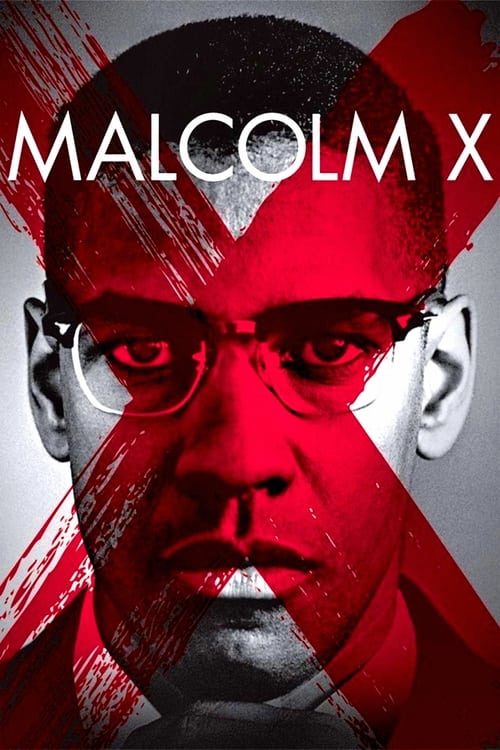
Malcolm X
A tribute to the controversial black activist and leader of the struggle for black liberation. He hit bottom during his imprisonment in the '50s, he became a Black Muslim and then a leader in the Nation of Islam. His assassination in 1965 left a legacy of self-determination and racial pride.
Working with a moderate budget of $34.0M, the film achieved a steady performer with $48.2M in global revenue (+42% profit margin).
Nominated for 2 Oscars. 19 wins & 24 nominations


Plot Structure
Story beats plotted across runtime


Narrative Arc
Emotional journey through the story's key moments
Story Circle
Blueprint 15-beat structure
Arcplot Score Breakdown
Weighted: Precision (70%) + Arc (15%) + Theme (15%)
Malcolm X (1992) reveals meticulously timed narrative design, characteristic of Spike Lee's storytelling approach. This structural analysis examines how the film's 15-point plot structure maps to proven narrative frameworks across 3 hours and 22 minutes. With an Arcplot score of 6.0, the film takes an unconventional approach to traditional narrative frameworks.
Characters
Cast & narrative archetypes

Malcolm X
Betty Shabazz
Elijah Muhammad
Baines
Shorty
West Indian Archie
Sophia
Louise Little
Main Cast & Characters
Malcolm X
Played by Denzel Washington
A young street hustler who transforms into one of America's most influential civil rights leaders through his journey with the Nation of Islam and beyond.
Betty Shabazz
Played by Angela Bassett
Malcolm's intelligent, principled wife who supports his mission while maintaining her own strong values and raising their family.
Elijah Muhammad
Played by Al Freeman Jr.
The leader of the Nation of Islam who becomes Malcolm's mentor and spiritual guide before their eventual falling out.
Baines
Played by Albert Hall
A charismatic fellow prisoner who introduces Malcolm to the teachings of Elijah Muhammad and the Nation of Islam.
Shorty
Played by Spike Lee
Malcolm's loyal childhood friend and partner in crime during his hustling days in Boston and Harlem.
West Indian Archie
Played by Delroy Lindo
A powerful Harlem numbers runner who mentors young Malcolm in street life but later becomes his dangerous adversary.
Sophia
Played by Kate Vernon
An affluent white woman who becomes Malcolm's girlfriend during his hustling years, representing his self-destructive phase.
Louise Little
Played by Lonette McKee
Malcolm's mother who struggles with mental health issues after her husband's death, profoundly impacting Malcolm's childhood.
Structural Analysis
The Status Quo at 3 minutes (2% through the runtime) establishes Malcolm Little as "Detroit Red" - a zoot-suited street hustler in 1940s Boston and Harlem, living a life of crime, drugs, and self-destruction. The conk scene symbolizes Black self-hatred and denial of natural identity.. Significantly, this early placement immediately immerses viewers in the story world.
The inciting incident occurs at 43 minutes when Malcolm is arrested for burglary and armed robbery. Sentenced to 8-10 years in Charlestown State Prison. His street life ends violently - the law catches up, his criminal world collapses, forcing confrontation with consequences.. At 21% through the film, this Disruption is delayed, allowing extended setup of the story world. This beat shifts the emotional landscape, launching the protagonist into the central conflict.
The First Threshold at 64 minutes marks the transition into Act II, occurring at 32% of the runtime. This reveals the protagonist's commitment to Malcolm makes active choice to embrace the Nation of Islam. Writes his first letter to Elijah Muhammad, addresses him as "Dear Holy Apostle." Begins intensive self-education, copying the dictionary, reading philosophy and history. Transforms from "Satan" to student, enters the world of knowledge and NOI doctrine., moving from reaction to action.
At 104 minutes, the Midpoint arrives at 52% of the runtime—precisely centered, creating perfect narrative symmetry. Notably, this crucial beat Malcolm reaches peak power as National Representative of the Nation of Islam. False victory: massive influence, media attention, feared by government, respected by followers. But cracks appear - jealousy from other ministers, tension with Elijah Muhammad's family. Stakes raised: success breeds enemies within his own organization., fundamentally raising what's at risk. The emotional intensity shifts, dividing the narrative into clear before-and-after phases.
The Collapse moment at 138 minutes (68% through) represents the emotional nadir. Here, Malcolm's home is firebombed in the middle of the night with Betty and their four daughters inside. Whiff of death - his family nearly killed, complete break with NOI, everything he built within the organization is lost. Former brothers now want him dead. His spiritual father has become his executioner., indicates the protagonist at their lowest point. This beat's placement in the final quarter sets up the climactic reversal.
The Second Threshold at 122 minutes initiates the final act resolution at 61% of the runtime. Hajj pilgrimage to Mecca - the synthesis moment. Malcolm sees Muslims of all races praying together as equals. Writes letter about true Islam transcending racial boundaries. Realization: combines his Black pride and militant activism with universal human rights philosophy. Takes name El-Hajj Malik El-Shabazz. Returns with evolved consciousness beyond racial separatism., demonstrating the transformation achieved throughout the journey.
Emotional Journey
Malcolm X's emotional architecture traces a deliberate progression across 15 carefully calibrated beats.
Narrative Framework
This structural analysis employs systematic plot point analysis that identifies crucial turning points. By mapping Malcolm X against these established plot points, we can identify how Spike Lee utilizes or subverts traditional narrative conventions. The plot point approach reveals not only adherence to structural principles but also creative choices that distinguish Malcolm X within the drama genre.
Spike Lee's Structural Approach
Among the 13 Spike Lee films analyzed on Arcplot, the average structural score is 7.0, demonstrating varied approaches to story architecture. Malcolm X takes a more unconventional approach compared to the director's typical style. For comparative analysis, explore the complete Spike Lee filmography.
Comparative Analysis
Additional drama films include After Thomas, South Pacific and Dirty Dancing: Havana Nights. For more Spike Lee analyses, see Summer of Sam, Inside Man and Clockers.
Plot Points by Act
Act I
SetupStatus Quo
Malcolm Little as "Detroit Red" - a zoot-suited street hustler in 1940s Boston and Harlem, living a life of crime, drugs, and self-destruction. The conk scene symbolizes Black self-hatred and denial of natural identity.
Theme
Baines (later in prison) will state the core theme: "You don't even know who you are. You don't know your true name. You wouldn't recognize your true language if you heard it." Theme of identity, self-knowledge, and transformation from psychological slavery to liberation.
Worldbuilding
Establishing Malcolm's world as Detroit Red: street hustling, numbers running, drug dealing, robbery crews with Sophia and Shorty. Shows the Roseland Ballroom, the vibrant but dangerous Harlem nightlife, relationships with white girlfriend Sophia, and descent into increasingly dangerous criminal activity.
Disruption
Malcolm is arrested for burglary and armed robbery. Sentenced to 8-10 years in Charlestown State Prison. His street life ends violently - the law catches up, his criminal world collapses, forcing confrontation with consequences.
Resistance
Malcolm in prison, initially resistant and called "Satan" by inmates. Baines serves as mentor/guide, introducing him to the Nation of Islam teachings. Malcolm debates, resists, but gradually opens to new ideas. His brother Reginald visits, urging him to stop eating pork and smoking - first steps toward NOI.
Act II
ConfrontationFirst Threshold
Malcolm makes active choice to embrace the Nation of Islam. Writes his first letter to Elijah Muhammad, addresses him as "Dear Holy Apostle." Begins intensive self-education, copying the dictionary, reading philosophy and history. Transforms from "Satan" to student, enters the world of knowledge and NOI doctrine.
Mirror World
Elijah Muhammad introduced as spiritual father figure and leader of the Nation of Islam. Represents the thematic mirror - the path from self-hatred to Black pride. Later, Betty Shabazz (around 1:20) becomes the romantic B-story, representing stability, family, and grounding force during Malcolm's rise.
Premise
The promise of the premise: Malcolm X as rising star of the Nation of Islam. Released from prison, becomes minister, delivers fiery speeches, builds Temple Number Seven in Harlem, confronts police brutality, marries Betty, has children. The powerful, charismatic Malcolm X the audience came to see - confronting white power, building Black consciousness, massive rallies.
Midpoint
Malcolm reaches peak power as National Representative of the Nation of Islam. False victory: massive influence, media attention, feared by government, respected by followers. But cracks appear - jealousy from other ministers, tension with Elijah Muhammad's family. Stakes raised: success breeds enemies within his own organization.
Opposition
Bad guys close in from multiple directions: FBI surveillance intensifies, other NOI ministers plot against him, discovers Elijah Muhammad's adultery and illegitimate children (shattering his faith), JFK assassination comment leads to 90-day silencing, receives death threats from NOI members, realizes his spiritual father has betrayed him and wants him dead.
Collapse
Malcolm's home is firebombed in the middle of the night with Betty and their four daughters inside. Whiff of death - his family nearly killed, complete break with NOI, everything he built within the organization is lost. Former brothers now want him dead. His spiritual father has become his executioner.
Crisis
Dark night of the soul: Malcolm processes the betrayal, the danger to his family, the loss of his NOI identity. Prepares for what he knows is coming. Tender moments with Betty and children. Accepts that assassination is inevitable but continues his work. Emotional reckoning with mortality and legacy.
Act III
ResolutionSecond Threshold
Hajj pilgrimage to Mecca - the synthesis moment. Malcolm sees Muslims of all races praying together as equals. Writes letter about true Islam transcending racial boundaries. Realization: combines his Black pride and militant activism with universal human rights philosophy. Takes name El-Hajj Malik El-Shabazz. Returns with evolved consciousness beyond racial separatism.
Synthesis
Finale: Malcolm delivers final speeches with evolved message of human rights and international solidarity. February 21, 1965 - Audubon Ballroom. Final moments with family. The assassination. Death juxtaposed with immortal legacy: archival footage of real Malcolm X, Nelson Mandela teaching children "I am Malcolm X," Ossie Davis eulogy: "Our shining Black prince."
Transformation
Closing image mirrors opening but shows complete transformation: from Malcolm Little (colonized self-hatred) to Detroit Red (self-destruction) to Malcolm X (Black consciousness) to El-Hajj Malik El-Shabazz (universal humanity). Physical death, ideological immortality. Children of all races declaring "I am Malcolm X."