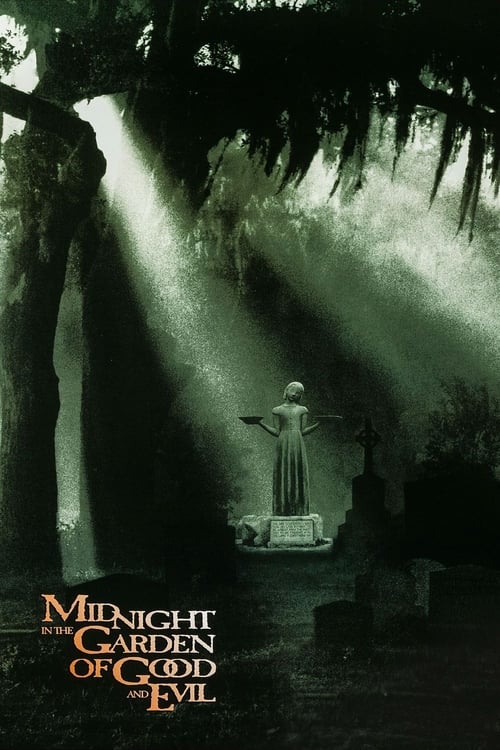
Midnight in the Garden of Good and Evil
A visiting city reporter's assignment suddenly revolves around the murder trial of a local millionaire, whom he befriends.
The film struggled financially against its moderate budget of $35.0M, earning $25.1M globally (-28% loss). While initial box office returns were modest, the film has gained appreciation for its distinctive approach within the mystery genre.
1 win & 4 nominations


Plot Structure
Story beats plotted across runtime


Narrative Arc
Emotional journey through the story's key moments
Story Circle
Blueprint 15-beat structure
Arcplot Score Breakdown
Weighted: Precision (70%) + Arc (15%) + Theme (15%)
Midnight in the Garden of Good and Evil (1997) exhibits deliberately positioned narrative design, characteristic of Clint Eastwood's storytelling approach. This structural analysis examines how the film's 15-point plot structure maps to proven narrative frameworks across 2 hours and 35 minutes. With an Arcplot score of 6.6, the film balances conventional beats with creative variation.
Characters
Cast & narrative archetypes

John Kelso
Jim Williams
The Lady Chablis
Minerva
Mandy Nicholls
Sonny Seiler
Billy Hanson
Main Cast & Characters
John Kelso
Played by John Cusack
A journalist from New York sent to cover a Christmas party in Savannah, who becomes entangled in a murder case involving the city's elite.
Jim Williams
Played by Kevin Spacey
A wealthy antiques dealer and respected Savannah socialite accused of murdering his volatile lover Billy Hanson.
The Lady Chablis
Played by The Lady Chablis
A flamboyant drag queen and beloved local personality who befriends Kelso and provides insight into Savannah's underground culture.
Minerva
Played by Irma P. Hall
A voodoo priestess hired by Jim Williams to help with his legal troubles through spiritual intervention.
Mandy Nicholls
Played by Alison Eastwood
A young woman who befriends Kelso and becomes his romantic interest while he navigates Savannah's mysteries.
Sonny Seiler
Played by Jack Thompson
Jim Williams' defense attorney who represents him through multiple murder trials.
Billy Hanson
Played by Jude Law
Jim Williams' volatile and unpredictable lover whose death sparks the central murder case.
Structural Analysis
The Status Quo at 2 minutes (1% through the runtime) establishes John Kelso, a New York journalist for Town & Country, is established in his Manhattan office receiving an assignment call. He's urbane, professional, detached—a fish about to leave his familiar pond.. The analysis reveals that this early placement immediately immerses viewers in the story world.
The inciting incident occurs at 19 minutes when Jim Williams shoots and kills Billy Hanson, his volatile young lover, in Mercer House. What was supposed to be a puff-piece assignment suddenly becomes a murder story, trapping Kelso in Savannah.. At 13% through the film, this Disruption is delayed, allowing extended setup of the story world. This beat shifts the emotional landscape, launching the protagonist into the central conflict.
The First Threshold at 39 minutes marks the transition into Act II, occurring at 25% of the runtime. This shows the protagonist's commitment to Kelso actively chooses to stay in Savannah and write a book about the Williams case, committing himself to this world. He moves from observer to participant, entering Savannah's moral labyrinth., moving from reaction to action.
At 78 minutes, the Midpoint arrives at 50% of the runtime—precisely centered, creating perfect narrative symmetry. Significantly, this crucial beat The first trial ends in a hung jury—a false victory for Williams. While he avoids conviction, the mistrial means he'll be tried again. The stakes are raised; this won't end cleanly. Kelso realizes he's in deeper than he thought., fundamentally raising what's at risk. The emotional intensity shifts, dividing the narrative into clear before-and-after phases.
The Collapse moment at 116 minutes (75% through) represents the emotional nadir. Here, Williams is convicted of murder in the third trial and faces prison. The verdict feels inevitable and final. The whiff of death: Williams' world, his freedom, and his carefully constructed identity die in this moment., demonstrates the protagonist at their lowest point. This beat's placement in the final quarter sets up the climactic reversal.
The Second Threshold at 124 minutes initiates the final act resolution at 80% of the runtime. Williams' conviction is overturned on appeal due to improper venue. A fourth trial is ordered in a different location. New hope emerges from the darkness—a final chance at acquittal. Kelso sees that justice in Savannah operates by different rules., demonstrating the transformation achieved throughout the journey.
Emotional Journey
Midnight in the Garden of Good and Evil's emotional architecture traces a deliberate progression across 15 carefully calibrated beats.
Narrative Framework
This structural analysis employs a 15-point narrative structure framework that maps key story moments. By mapping Midnight in the Garden of Good and Evil against these established plot points, we can identify how Clint Eastwood utilizes or subverts traditional narrative conventions. The plot point approach reveals not only adherence to structural principles but also creative choices that distinguish Midnight in the Garden of Good and Evil within the mystery genre.
Clint Eastwood's Structural Approach
Among the 32 Clint Eastwood films analyzed on Arcplot, the average structural score is 6.5, demonstrating varied approaches to story architecture. Midnight in the Garden of Good and Evil represents one of the director's most structurally precise works. For comparative analysis, explore the complete Clint Eastwood filmography.
Comparative Analysis
Additional mystery films include Lone Star, The Wicker Man and A Soldier's Story. For more Clint Eastwood analyses, see True Crime, Million Dollar Baby and The Gauntlet.
Plot Points by Act
Act I
SetupStatus Quo
John Kelso, a New York journalist for Town & Country, is established in his Manhattan office receiving an assignment call. He's urbane, professional, detached—a fish about to leave his familiar pond.
Theme
Upon arriving in Savannah, a local tells Kelso: "This place is like Gone with the Wind on mescaline." The theme: Savannah exists outside normal rules—a place where surface gentility masks darker truths, and outsiders must navigate between good and evil.
Worldbuilding
Kelso arrives in Savannah and encounters its eccentric characters: the Lady Chablis, Joe Odom, and the enigmatic antiques dealer Jim Williams. He observes Williams' lavish Christmas party at Mercer House, establishing the opulent, gothic world of Savannah society.
Disruption
Jim Williams shoots and kills Billy Hanson, his volatile young lover, in Mercer House. What was supposed to be a puff-piece assignment suddenly becomes a murder story, trapping Kelso in Savannah.
Resistance
Kelso debates whether to stay and cover the murder trial. He's drawn into Williams' orbit as Williams hires top lawyers and maintains his innocence, claiming self-defense. Kelso meets Mandy, a local woman who becomes his guide to Savannah's hidden culture.
Act II
ConfrontationFirst Threshold
Kelso actively chooses to stay in Savannah and write a book about the Williams case, committing himself to this world. He moves from observer to participant, entering Savannah's moral labyrinth.
Mirror World
Kelso's relationship with Mandy deepens. She represents authentic Savannah—earthy, sensual, connected to the place in ways Williams' aristocratic world is not. She teaches him to see beyond surfaces and embrace the ambiguity of this world.
Premise
Kelso explores Savannah's eccentric underbelly while covering the trial. He encounters voodoo priestess Minerva, witnesses the Lady Chablis' performances, and navigates the peculiar social codes. The first trial proceeds with conflicting testimonies about whether the shooting was murder or self-defense.
Midpoint
The first trial ends in a hung jury—a false victory for Williams. While he avoids conviction, the mistrial means he'll be tried again. The stakes are raised; this won't end cleanly. Kelso realizes he's in deeper than he thought.
Opposition
The second and third trials proceed. Williams becomes more isolated as Savannah society quietly distances itself. Evidence and testimonies grow more contradictory. Minerva warns of a curse on Mercer House. Kelso's relationship with Mandy strains as his obsession with the case grows.
Collapse
Williams is convicted of murder in the third trial and faces prison. The verdict feels inevitable and final. The whiff of death: Williams' world, his freedom, and his carefully constructed identity die in this moment.
Crisis
Williams sits in despair. Kelso grapples with what he's witnessed—the ambiguity of truth, the impossibility of knowing what really happened. The darkness of Savannah's secrets weighs on him. Minerva performs a ritual to break the curse.
Act III
ResolutionSecond Threshold
Williams' conviction is overturned on appeal due to improper venue. A fourth trial is ordered in a different location. New hope emerges from the darkness—a final chance at acquittal. Kelso sees that justice in Savannah operates by different rules.
Synthesis
The fourth trial takes place. Williams is finally acquitted. He returns to Mercer House and attempts to resume his life, hosting another Christmas party. Kelso completes his book, synthesizing years of observation into his narrative. But the victory feels hollow.
Transformation
Just months after his acquittal, Jim Williams dies of a heart attack in the same room where he shot Billy Hanson. Kelso reflects on the ultimate ambiguity: was Williams guilty or innocent? The garden contains both good and evil, forever intertwined, unknowable.