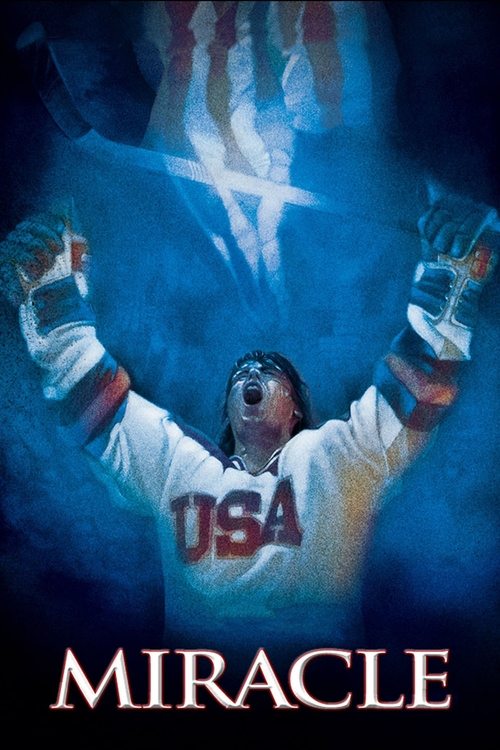
Miracle
When college coach Herb Brooks is hired to helm the 1980 U.S. men's Olympic hockey team, he brings a unique and brash style to the ice. After assembling a team of hot-headed college all-stars, who are humiliated in an early match, Brooks unites his squad against a common foe: the heavily-favored Soviet team.
Despite a moderate budget of $28.0M, Miracle became a financial success, earning $64.4M worldwide—a 130% return.
2 wins & 4 nominations


Plot Structure
Story beats plotted across runtime


Narrative Arc
Emotional journey through the story's key moments
Story Circle
Blueprint 15-beat structure
Arcplot Score Breakdown
Weighted: Precision (70%) + Arc (15%) + Theme (15%)
Miracle (2004) showcases strategically placed narrative design, characteristic of Gavin O'Connor's storytelling approach. This structural analysis examines how the film's 15-point plot structure maps to proven narrative frameworks across 2 hours and 15 minutes. With an Arcplot score of 7.3, the film balances conventional beats with creative variation.
Characters
Cast & narrative archetypes

Herb Brooks
Mike Eruzione
Jim Craig
Rob McClanahan
Jack O'Callahan
Patty Brooks
Craig Patrick
Main Cast & Characters
Herb Brooks
Played by Kurt Russell
Driven head coach of the 1980 U.S. Olympic hockey team who uses unconventional methods to forge a team capable of defeating the Soviets.
Mike Eruzione
Played by Patrick O'Brien Demsey
Team captain and forward who embodies the blue-collar work ethic Brooks demands, scores the winning goal against the USSR.
Jim Craig
Played by Eddie Cahill
Talented goaltender dealing with his father's recent death while carrying the weight of the team's defensive responsibilities.
Rob McClanahan
Played by Nathan West
Skilled forward from Minnesota who must overcome initial rivalry with Boston University players to unite as a team.
Jack O'Callahan
Played by Michael Mantenuto
Tough defenseman from Boston University who initially clashes with Minnesota players but becomes a team leader.
Patty Brooks
Played by Patricia Clarkson
Herb Brooks' supportive but concerned wife who struggles with her husband's obsessive commitment to the team.
Craig Patrick
Played by Noah Emmerich
Assistant coach and former player who serves as the bridge between Brooks' intensity and the players' humanity.
Structural Analysis
The Status Quo at 1 minutes (1% through the runtime) establishes Herb Brooks drives alone through snowy Minnesota roads to the tryout arena. A solitary, driven man returning to his past - the 1960 Olympic rink where he was cut from the team. His face shows determination mixed with old wounds.. Notably, this early placement immediately immerses viewers in the story world.
The inciting incident occurs at 16 minutes when Herb announces his final roster, shocking everyone by cutting established stars. "I'm not looking for the best players, I'm looking for the right players." Players and hockey officials are outraged. He's chosen a team of college kids with bitter rivalries over proven talent.. At 12% through the film, this Disruption aligns precisely with traditional story structure. This beat shifts the emotional landscape, launching the protagonist into the central conflict.
The First Threshold at 33 minutes marks the transition into Act II, occurring at 25% of the runtime. This illustrates the protagonist's commitment to During the brutal "again" drills, Mike Eruzione finally answers Herb's question: "Who do you play for?" with "I play for the United States of America!" Herb stops the drill. The team has made their choice - they're no longer BU or Minnesota players, they're Team USA. They commit to the mission., moving from reaction to action.
At 68 minutes, the Midpoint arrives at 50% of the runtime—precisely centered, creating perfect narrative symmetry. Of particular interest, this crucial beat Team USA plays the Soviet Union in an exhibition match at Madison Square Garden - a final test before the Olympics. The Soviets destroy them 10-3. The Americans are physically and mentally dominated. The gap seems insurmountable. False defeat: they're not ready, and the whole world just witnessed it., fundamentally raising what's at risk. The emotional intensity shifts, dividing the narrative into clear before-and-after phases.
The Collapse moment at 100 minutes (74% through) represents the emotional nadir. Here, Minutes before facing the Soviets, Herb reads the team a speech: "You were born to be hockey players. This is your time." But there's death in his eyes - the death of the player he once was, cut from the 1960 team. The whiff of death: Herb confronts his own ghost. If they lose, his life's mission dies with this moment., illustrates the protagonist at their lowest point. This beat's placement in the final quarter sets up the climactic reversal.
The Second Threshold at 106 minutes initiates the final act resolution at 78% of the runtime. Mike Eruzione scores to give USA a 4-3 lead with 10 minutes left. Herb tells them: "If we played them ten times, they might win nine. But not this game. Not tonight." The synthesis moment - everything Herb taught them (speed, conditioning, team play) combined with their youthful belief creates possibility. They see they can win., demonstrating the transformation achieved throughout the journey.
Emotional Journey
Miracle's emotional architecture traces a deliberate progression across 15 carefully calibrated beats.
Narrative Framework
This structural analysis employs proven narrative structure principles that track dramatic progression. By mapping Miracle against these established plot points, we can identify how Gavin O'Connor utilizes or subverts traditional narrative conventions. The plot point approach reveals not only adherence to structural principles but also creative choices that distinguish Miracle within the drama genre.
Gavin O'Connor's Structural Approach
Among the 5 Gavin O'Connor films analyzed on Arcplot, the average structural score is 6.4, demonstrating varied approaches to story architecture. Miracle represents one of the director's most structurally precise works. For comparative analysis, explore the complete Gavin O'Connor filmography.
Comparative Analysis
Additional drama films include After Thomas, South Pacific and Dirty Dancing: Havana Nights. For more Gavin O'Connor analyses, see Pride and Glory, Warrior and The Way Back.
Plot Points by Act
Act I
SetupStatus Quo
Herb Brooks drives alone through snowy Minnesota roads to the tryout arena. A solitary, driven man returning to his past - the 1960 Olympic rink where he was cut from the team. His face shows determination mixed with old wounds.
Theme
Craig Patrick tells Herb, "The name on the front is a hell of a lot more important than the one on the back." This establishes the central theme: individual ego must submit to collective purpose. Team over self.
Worldbuilding
Tryouts begin. We meet the players - college rivals from Boston University and Minnesota who hate each other. Herb watches coldly, taking notes. He's not looking for the best players, but the right players. The Cold War context established: Soviet dominance, American humiliation at Lake Placid '60.
Disruption
Herb announces his final roster, shocking everyone by cutting established stars. "I'm not looking for the best players, I'm looking for the right players." Players and hockey officials are outraged. He's chosen a team of college kids with bitter rivalries over proven talent.
Resistance
Training begins. Herb drives them mercilessly with brutal conditioning. Players resist and complain - they don't understand his methods. The BU/Minnesota rivalry festers. After a tie against Norway, Herb punishes the team with "again" suicide drills until they drop. Players begin to break, questioning whether this suffering has purpose.
Act II
ConfrontationFirst Threshold
During the brutal "again" drills, Mike Eruzione finally answers Herb's question: "Who do you play for?" with "I play for the United States of America!" Herb stops the drill. The team has made their choice - they're no longer BU or Minnesota players, they're Team USA. They commit to the mission.
Mirror World
Herb visits his wife Patti at home. She grounds him emotionally, reminding him what he's sacrificing and why it matters. "You're missing your family for this." Their relationship represents the human cost of obsession and the love that sustains purpose beyond ambition.
Premise
Team USA tours Europe, playing exhibition games. The promise of the premise: watching underdogs develop chemistry and skill. They bond as brothers. Herb continues his psychological warfare, keeping them unified through a common "enemy" - himself. They study Soviet game film obsessively. A bar fight in Norway cements team unity - they fight together now.
Midpoint
Team USA plays the Soviet Union in an exhibition match at Madison Square Garden - a final test before the Olympics. The Soviets destroy them 10-3. The Americans are physically and mentally dominated. The gap seems insurmountable. False defeat: they're not ready, and the whole world just witnessed it.
Opposition
The team arrives at Lake Placid demoralized. Herb intensifies pressure, making lineup changes. Players doubt themselves. Olympic round begins - they must win every game. Scrappy victories over Sweden, Czechoslovakia, Norway, Romania, West Germany. Each game is grueling. The press questions whether they can compete. The Soviet machine looms.
Collapse
Minutes before facing the Soviets, Herb reads the team a speech: "You were born to be hockey players. This is your time." But there's death in his eyes - the death of the player he once was, cut from the 1960 team. The whiff of death: Herb confronts his own ghost. If they lose, his life's mission dies with this moment.
Crisis
First period against USSR - the Soviets score quickly, dominating. Team USA looks overmatched again. The dream seems to be dying. Herb pulls goalie Jim Craig, a devastating psychological moment. Then puts him back in. Players process their fear. Patti Brooks watches in agony from the stands, knowing what this means to Herb.
Act III
ResolutionSecond Threshold
Mike Eruzione scores to give USA a 4-3 lead with 10 minutes left. Herb tells them: "If we played them ten times, they might win nine. But not this game. Not tonight." The synthesis moment - everything Herb taught them (speed, conditioning, team play) combined with their youthful belief creates possibility. They see they can win.
Synthesis
Final 10 minutes against USSR - Team USA defends desperately, playing the best hockey of their lives. Jim Craig makes miraculous saves. Al Michaels counts down: "Do you believe in miracles? YES!" They beat the Soviets 4-3. But they must still beat Finland for the gold. The Finland game tests whether the miracle was luck or transformation - they fall behind, then storm back to win 4-2. Gold medal achieved.
Transformation
Herb Brooks walks away from the celebrating team, alone in the tunnel - mirroring his solitary drive in the opening. But transformed: no longer haunted by being cut in 1960. He fulfilled his purpose. The team he built didn't need him on the ice - they became something greater than individuals. His ghost is laid to rest.