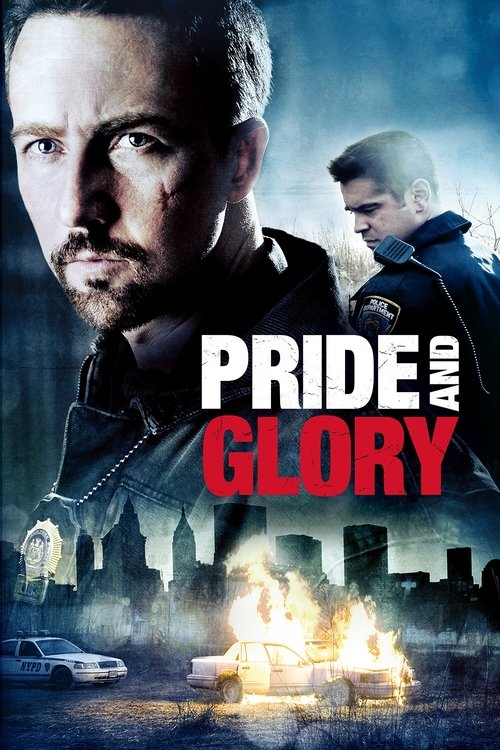
Pride and Glory
A saga centered on a multi-generational family of New York City Police officers. The family's moral codes are tested when Ray Tierney, investigates a case that reveals an incendiary police corruption scandal involving his own brother-in-law. For Ray, the truth is revelatory, a Pandora's Box that threatens to upend not only the Tierney legacy but the entire NYPD.
Working with a moderate budget of $30.0M, the film achieved a respectable showing with $31.2M in global revenue (+4% profit margin).


Plot Structure
Story beats plotted across runtime


Narrative Arc
Emotional journey through the story's key moments
Story Circle
Blueprint 15-beat structure
Arcplot Score Breakdown
Weighted: Precision (70%) + Arc (15%) + Theme (15%)
Pride and Glory (2008) exhibits carefully calibrated plot construction, characteristic of Gavin O'Connor's storytelling approach. This structural analysis examines how the film's 15-point plot structure maps to proven narrative frameworks across 2 hours and 10 minutes. With an Arcplot score of 7.2, the film balances conventional beats with creative variation.
Characters
Cast & narrative archetypes

Ray Tierney
Jimmy Egan
Francis Tierney Sr.
Francis Tierney Jr.
Abby Tierney
Megan Egan
Sandy
Kenny Dugan
Main Cast & Characters
Ray Tierney
Played by Edward Norton
A principled detective forced to investigate his own family when four officers are murdered in a drug-related ambush.
Jimmy Egan
Played by Colin Farrell
Ray's brother-in-law and a corrupt NYPD officer willing to use violence and intimidation to protect himself.
Francis Tierney Sr.
Played by Jon Voight
The Tierney family patriarch and high-ranking NYPD official who struggles between loyalty to family and the law.
Francis Tierney Jr.
Played by Noah Emmerich
Ray's older brother, a police captain whose precinct is under investigation, torn between his brothers and his duties.
Abby Tierney
Played by Jennifer Ehle
Francis Jr.'s wife and sister to Jimmy Egan, caught in the moral crossfire of her family's corruption.
Megan Egan
Played by Lake Bell
Jimmy's wife and Francis Jr.'s sister, a cancer patient whose illness adds urgency to the family crisis.
Sandy
Played by Carmen Ejogo
A prostitute and informant who becomes a key witness in the corruption investigation.
Kenny Dugan
Played by Shea Whigham
A corrupt cop in Jimmy's crew involved in drug dealing and the cover-up of the officers' murders.
Structural Analysis
The Status Quo at 1 minutes (1% through the runtime) establishes Ray Tierney lives in the shadow of his police family legacy, working missing persons while his brother Francis Jr. Runs a precinct and Jimmy is a decorated street cop. The Tierney family represents four generations of NYPD.. The analysis reveals that this early placement immediately immerses viewers in the story world.
The inciting incident occurs at 16 minutes when Four police officers are killed in a drug raid ambush in Washington Heights. The victims include members of Jimmy's unit under Francis Jr.'s command, making it a family crisis and departmental catastrophe.. At 12% through the film, this Disruption aligns precisely with traditional story structure. This beat shifts the emotional landscape, launching the protagonist into the central conflict.
The First Threshold at 33 minutes marks the transition into Act II, occurring at 25% of the runtime. This demonstrates the protagonist's commitment to Ray accepts the position as lead investigator, crossing into the world of corruption. He commits to uncovering the truth despite knowing it may destroy his family., moving from reaction to action.
At 66 minutes, the Midpoint arrives at 50% of the runtime—precisely centered, creating perfect narrative symmetry. Significantly, this crucial beat Ray discovers that Jimmy and his unit staged the drug operation and arranged the murders to cover up their corruption. He now knows his brother-in-law is responsible for killing four cops, and his brother Francis Jr. May be complicit. The stakes become personal and unbearable., fundamentally raising what's at risk. The emotional intensity shifts, dividing the narrative into clear before-and-after phases.
The Collapse moment at 97 minutes (75% through) represents the emotional nadir. Here, Jimmy kidnaps Ray's infant nephew and threatens the baby with an iron in a brutal confrontation, revealing the complete moral collapse of family bonds. The "whiff of death" is literal—a child's life hangs in the balance, and the family Ray tried to protect is destroyed., reveals the protagonist at their lowest point. This beat's placement in the final quarter sets up the climactic reversal.
The Second Threshold at 104 minutes initiates the final act resolution at 80% of the runtime. Ray chooses integrity over loyalty. He realizes true honor means breaking the blue wall, even if it costs him everything. He synthesizes his investigative skills with newfound moral courage to bring his family to justice., demonstrating the transformation achieved throughout the journey.
Emotional Journey
Pride and Glory's emotional architecture traces a deliberate progression across 15 carefully calibrated beats.
Narrative Framework
This structural analysis employs systematic plot point analysis that identifies crucial turning points. By mapping Pride and Glory against these established plot points, we can identify how Gavin O'Connor utilizes or subverts traditional narrative conventions. The plot point approach reveals not only adherence to structural principles but also creative choices that distinguish Pride and Glory within the crime genre.
Gavin O'Connor's Structural Approach
Among the 5 Gavin O'Connor films analyzed on Arcplot, the average structural score is 6.4, demonstrating varied approaches to story architecture. Pride and Glory represents one of the director's most structurally precise works. For comparative analysis, explore the complete Gavin O'Connor filmography.
Comparative Analysis
Additional crime films include The Bad Guys, Rustom and The Whole Ten Yards. For more Gavin O'Connor analyses, see Miracle, Warrior and The Way Back.
Plot Points by Act
Act I
SetupStatus Quo
Ray Tierney lives in the shadow of his police family legacy, working missing persons while his brother Francis Jr. runs a precinct and Jimmy is a decorated street cop. The Tierney family represents four generations of NYPD.
Theme
Francis Sr. tells Ray at a family gathering: "The job is about the guys next to you. That's what matters." This establishes the central conflict between loyalty and integrity that will define the story.
Worldbuilding
Introduction to the Tierney family dynasty, the tight-knit blue wall culture, Ray's estrangement from his wife and child, Francis Jr.'s ambitions, and Jimmy's street unit. We see the pride and corruption that coexist in this world.
Disruption
Four police officers are killed in a drug raid ambush in Washington Heights. The victims include members of Jimmy's unit under Francis Jr.'s command, making it a family crisis and departmental catastrophe.
Resistance
Ray is reluctantly drafted by his father to lead the investigation to protect the family. He resists taking the assignment, knowing it will force him into the corrupt system. Francis Sr. pressures him with family loyalty, while Ray suspects the shooting wasn't random.
Act II
ConfrontationFirst Threshold
Ray accepts the position as lead investigator, crossing into the world of corruption. He commits to uncovering the truth despite knowing it may destroy his family.
Mirror World
Ray connects with Sandy, Jimmy's wife, who represents innocent victimhood in this corrupt system. Their relationship becomes the emotional and thematic counterpoint—she doesn't know her husband is dirty, just as Ray doesn't want to know.
Premise
Ray investigates the shooting while discovering the depth of corruption in Jimmy's unit. He uncovers planted drugs, shakedowns, and murdered witnesses. The premise delivers on cop-drama investigation while Ray gets closer to the horrifying truth about his own family.
Midpoint
Ray discovers that Jimmy and his unit staged the drug operation and arranged the murders to cover up their corruption. He now knows his brother-in-law is responsible for killing four cops, and his brother Francis Jr. may be complicit. The stakes become personal and unbearable.
Opposition
Jimmy realizes Ray is onto him and becomes dangerous. Francis Jr. tries to manage both sides. The family fractures as Ray pushes the investigation forward. Jimmy becomes desperate and violent, while Francis Sr. pressures Ray to protect the family name over justice.
Collapse
Jimmy kidnaps Ray's infant nephew and threatens the baby with an iron in a brutal confrontation, revealing the complete moral collapse of family bonds. The "whiff of death" is literal—a child's life hangs in the balance, and the family Ray tried to protect is destroyed.
Crisis
Ray sits in the darkness of what his family has become. Francis Jr. faces the reality of his complicity. The Tierney legacy of honor is revealed as a lie. Ray must decide whether to turn in his family or continue the cycle of corruption.
Act III
ResolutionSecond Threshold
Ray chooses integrity over loyalty. He realizes true honor means breaking the blue wall, even if it costs him everything. He synthesizes his investigative skills with newfound moral courage to bring his family to justice.
Synthesis
Ray orchestrates the final confrontation with Jimmy. The corrupt cops are exposed. Francis Jr. must face consequences. Ray executes justice despite the personal cost, dismantling the corrupt system from within and ending the Tierney legacy of compromised honor.
Transformation
Ray stands alone, having destroyed his family to save his integrity. Unlike the opening image of family unity, he is isolated but morally whole. The Tierney dynasty is broken, but so is the cycle of corruption. Ray has chosen truth over tribe.