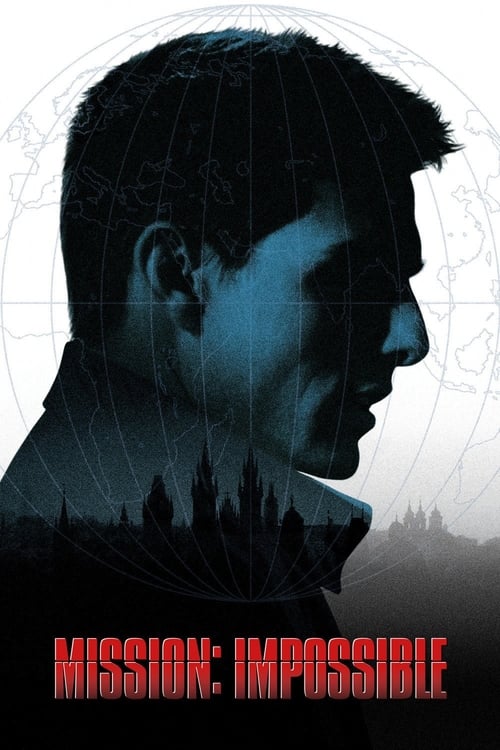
Mission: Impossible
An American agent, under false suspicion of disloyalty, must discover and expose the real spy without the help of his organization.
Despite a considerable budget of $80.0M, Mission: Impossible became a financial success, earning $457.7M worldwide—a 472% return.
3 wins & 17 nominations


Plot Structure
Story beats plotted across runtime


Narrative Arc
Emotional journey through the story's key moments
Story Circle
Blueprint 15-beat structure
Characters
Cast & narrative archetypes

Ethan Hunt
Jim Phelps
Claire Phelps
Eugene Kittridge
Luther Stickell
Franz Krieger
Max
Main Cast & Characters
Ethan Hunt
Played by Tom Cruise
IMF agent framed for betrayal who must clear his name and uncover the real mole within his organization.
Jim Phelps
Played by Jon Voight
Ethan's mentor and team leader who appears to die during the botched Prague mission.
Claire Phelps
Played by Emmanuelle Béart
Jim's wife and team member who survives the Prague massacre and becomes Ethan's uncertain ally.
Eugene Kittridge
Played by Henry Czerny
IMF Director who believes Ethan is the mole and relentlessly pursues him throughout the investigation.
Luther Stickell
Played by Ving Rhames
Computer hacker and tech expert who joins Ethan's rogue team to execute the CIA infiltration.
Franz Krieger
Played by Jean Reno
Pilot and mercenary recruited by Ethan for the Langley heist, with ambiguous loyalties.
Max
Played by Vanessa Redgrave
Mysterious arms dealer who brokers the NOC list and manipulates events from the shadows.
Structural Analysis
The Status Quo at 1 minutes (1% through the runtime) establishes Ethan Hunt completes a successful IMF operation in Prague, establishing him as a skilled, trusted agent working seamlessly with his team. The world is orderly, professional, controlled.. Notably, this early placement immediately immerses viewers in the story world.
The inciting incident occurs at 12 minutes when The Prague mission goes catastrophically wrong. The entire team is systematically killed in a brutal ambush. Ethan watches helplessly as Jim Phelps is shot, and Ethan himself barely escapes with his life.. At 11% through the film, this Disruption aligns precisely with traditional story structure. This beat shifts the emotional landscape, launching the protagonist into the central conflict.
The First Threshold at 27 minutes marks the transition into Act II, occurring at 24% of the runtime. This shows the protagonist's commitment to Ethan makes the active choice to go rogue and steal the real NOC list from CIA headquarters at Langley. This irreversible decision transforms him from loyal agent to fugitive, crossing into a world where he can trust no one., moving from reaction to action.
At 56 minutes, the Midpoint arrives at 50% of the runtime—precisely centered, creating perfect narrative symmetry. The analysis reveals that this crucial beat False victory becomes defeat: Krieger is revealed as a traitor working with the real mole. Jack Harmon is killed, and Ethan realizes the theft was part of a larger conspiracy. The stakes escalate—someone on his original team was the traitor all along., fundamentally raising what's at risk. The emotional intensity shifts, dividing the narrative into clear before-and-after phases.
The Collapse moment at 83 minutes (75% through) represents the emotional nadir. Here, Jim Phelps reveals himself alive—HE is the traitor who killed the team. Ethan's mentor, father figure, and symbol of IMF integrity is the villain. Everything Ethan believed in dies. The "whiff of death" is the death of innocence and trust itself., demonstrates the protagonist at their lowest point. This beat's placement in the final quarter sets up the climactic reversal.
The Second Threshold at 89 minutes initiates the final act resolution at 80% of the runtime. Ethan synthesizes the lesson: trust must be earned through actions, not words. He reveals he's been recording Jim's confession and has alerted Kittridge. He chooses loyalty to principle over personal relationships. New clarity enables the final confrontation., demonstrating the transformation achieved throughout the journey.
Emotional Journey
Mission: Impossible's emotional architecture traces a deliberate progression across 15 carefully calibrated beats.
Narrative Framework
This structural analysis employs systematic plot point analysis that identifies crucial turning points. By mapping Mission: Impossible against these established plot points, we can identify how Brian De Palma utilizes or subverts traditional narrative conventions. The plot point approach reveals not only adherence to structural principles but also creative choices that distinguish Mission: Impossible within the action genre.
Brian De Palma's Structural Approach
Among the 18 Brian De Palma films analyzed on Arcplot, the average structural score is 6.7, demonstrating varied approaches to story architecture. Mission: Impossible exemplifies the director's characteristic narrative technique. For comparative analysis, explore the complete Brian De Palma filmography.
Comparative Analysis
Additional action films include The Bad Guys, Puss in Boots and Venom: The Last Dance. For more Brian De Palma analyses, see Obsession, Carrie and The Black Dahlia.
Plot Points by Act
Act I
SetupStatus Quo
Ethan Hunt completes a successful IMF operation in Prague, establishing him as a skilled, trusted agent working seamlessly with his team. The world is orderly, professional, controlled.
Theme
Jim Phelps discusses trust and loyalty with his team before the mission. "Trust no one" becomes the underlying theme—in a world of deception, who can you believe?
Worldbuilding
The IMF team receives their mission to prevent the theft of the NOC list at the embassy party in Prague. We meet the team dynamics, see Ethan's relationship with Jim and Claire, and understand the stakes of their covert world.
Disruption
The Prague mission goes catastrophically wrong. The entire team is systematically killed in a brutal ambush. Ethan watches helplessly as Jim Phelps is shot, and Ethan himself barely escapes with his life.
Resistance
Ethan contacts IMF handler Kittridge and realizes he's suspected of being the mole. He discovers his team was a setup to flush out a traitor. Ethan debates his options, realizes he's alone, and begins assembling evidence. He recruits Luther and Franz Krieger.
Act II
ConfrontationFirst Threshold
Ethan makes the active choice to go rogue and steal the real NOC list from CIA headquarters at Langley. This irreversible decision transforms him from loyal agent to fugitive, crossing into a world where he can trust no one.
Mirror World
Claire Phelps—Jim's wife and Ethan's teammate—reveals herself alive. She represents the emotional/trust subplot that mirrors the theme. Can Ethan trust her? Does she trust him? Their relationship will test the theme.
Premise
The promise of the premise: the iconic Langley heist. Ethan plans and executes the impossible—breaking into the most secure facility on Earth, dangling from cables, evading motion sensors and sound detectors, stealing the NOC list in a masterclass of spy craft.
Midpoint
False victory becomes defeat: Krieger is revealed as a traitor working with the real mole. Jack Harmon is killed, and Ethan realizes the theft was part of a larger conspiracy. The stakes escalate—someone on his original team was the traitor all along.
Opposition
Ethan sets up a meet with arms dealer Max to exchange the NOC list. Kittridge and IMF close in. Ethan's flaws (trusting Claire, underestimating the conspiracy) catch up. He plants false information to smoke out the real traitor while evading capture from all sides.
Collapse
Jim Phelps reveals himself alive—HE is the traitor who killed the team. Ethan's mentor, father figure, and symbol of IMF integrity is the villain. Everything Ethan believed in dies. The "whiff of death" is the death of innocence and trust itself.
Crisis
Ethan processes the betrayal. Jim tries to recruit him, offering money and escape with Claire. Ethan must choose between the easy path (join Jim, take the money) and the hard path (stay loyal to what IMF should represent). Dark night of moral reckoning.
Act III
ResolutionSecond Threshold
Ethan synthesizes the lesson: trust must be earned through actions, not words. He reveals he's been recording Jim's confession and has alerted Kittridge. He chooses loyalty to principle over personal relationships. New clarity enables the final confrontation.
Synthesis
The finale: helicopter chase on the Chunnel train. Ethan defeats Krieger in brutal combat, Jim dies in the helicopter explosion, and Claire makes her choice. Ethan uses everything he learned—his skills AND his moral clarity—to win. Kittridge acknowledges the truth.
Transformation
Ethan receives a new mission on a plane with a new team, mirroring the opening. But he's transformed: no longer naive, he understands that trust in this world must be vigilant, earned, and verified. He's wiser, tested, reborn as a leader who knows deception's cost.