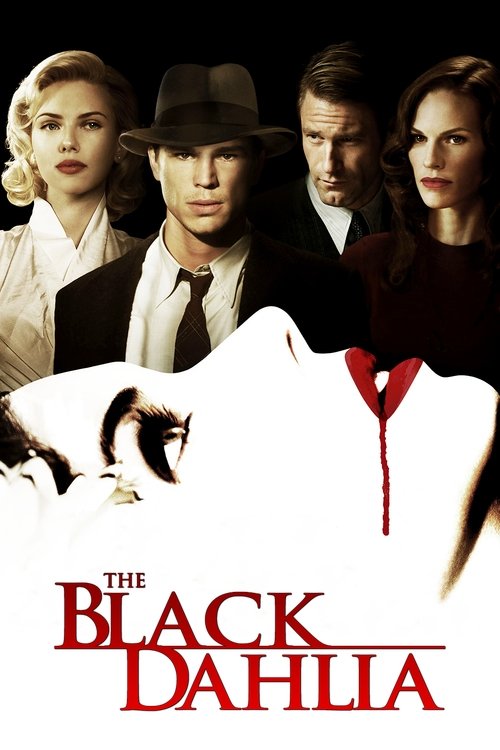
The Black Dahlia
In 1940s Los Angeles, two former boxers-turned-cops must grapple with corruption, narcissism, stag films and family madness as they pursue the killer of an aspiring young actress.
The film struggled financially against its mid-range budget of $50.0M, earning $49.3M globally (-1% loss).
Nominated for 1 Oscar. 4 wins & 16 nominations


Plot Structure
Story beats plotted across runtime


Narrative Arc
Emotional journey through the story's key moments
Story Circle
Blueprint 15-beat structure
Arcplot Score Breakdown
Weighted: Precision (70%) + Arc (15%) + Theme (15%)
The Black Dahlia (2006) showcases meticulously timed plot construction, characteristic of Brian De Palma's storytelling approach. This structural analysis examines how the film's 15-point plot structure maps to proven narrative frameworks across 2 hours and 1 minutes. With an Arcplot score of 7.3, the film balances conventional beats with creative variation.
Characters
Cast & narrative archetypes

Bucky Bleichert
Lee Blanchard
Kay Lake
Madeleine Linscott
Emmett Linscott
Ramona Linscott
Elizabeth Short
Main Cast & Characters
Bucky Bleichert
Played by Josh Hartnett
An ambitious LAPD detective and former boxer who becomes obsessed with solving the Black Dahlia murder case.
Lee Blanchard
Played by Aaron Eckhart
Bucky's partner and mentor, a driven detective haunted by his sister's disappearance who becomes consumed by the Dahlia case.
Kay Lake
Played by Scarlett Johansson
Lee's sophisticated girlfriend who develops a complicated relationship with Bucky.
Madeleine Linscott
Played by Hilary Swank
A wealthy, enigmatic woman who bears a striking resemblance to the murder victim and becomes Bucky's dangerous obsession.
Emmett Linscott
Played by John Kavanagh
Madeleine's wealthy, corrupt real estate mogul father with dark secrets.
Ramona Linscott
Played by Fiona Shaw
Madeleine's emotionally damaged mother hiding family secrets.
Elizabeth Short
Played by Mia Kirshner
The Black Dahlia herself, an aspiring actress whose brutal murder drives the investigation.
Structural Analysis
The Status Quo at 2 minutes (2% through the runtime) establishes Opening montage of 1940s Los Angeles. Bucky Bleichert is introduced as a rising LAPD officer and former boxer, partnered with the charismatic Lee Blanchard. Their world is one of controlled violence and male camaraderie in post-war LA.. Structural examination shows that this early placement immediately immerses viewers in the story world.
The inciting incident occurs at 14 minutes when The mutilated body of Elizabeth Short (the Black Dahlia) is discovered in a vacant lot. The grotesque nature of the crime immediately captures public attention and disrupts the normalcy of police work.. At 12% through the film, this Disruption aligns precisely with traditional story structure. This beat shifts the emotional landscape, launching the protagonist into the central conflict.
The First Threshold at 30 minutes marks the transition into Act II, occurring at 25% of the runtime. This shows the protagonist's commitment to Bucky makes the active choice to fully commit to the Black Dahlia investigation, even as he recognizes it's pulling Lee into dangerous obsession. He crosses the threshold from observer to participant in the darkness., moving from reaction to action.
At 61 minutes, the Midpoint arrives at 50% of the runtime—precisely centered, creating perfect narrative symmetry. Notably, this crucial beat Lee Blanchard disappears after a violent confrontation, abandoning both the case and Kay. What seemed like progress in the investigation reveals itself as false—the case is unraveling them rather than being solved. The stakes escalate dramatically., fundamentally raising what's at risk. The emotional intensity shifts, dividing the narrative into clear before-and-after phases.
The Collapse moment at 92 minutes (76% through) represents the emotional nadir. Here, Bucky discovers Lee Blanchard's dead body in a rundown building. His partner and friend is gone, destroyed by his obsessions. This literal death represents the cost of losing oneself to the past. Bucky faces the darkness that consumed Lee., shows the protagonist at their lowest point. This beat's placement in the final quarter sets up the climactic reversal.
The Second Threshold at 98 minutes initiates the final act resolution at 81% of the runtime. Bucky pieces together the final connections—Madeleine's family's involvement in Elizabeth Short's death, the web of corruption and depravity. He gains clarity through Lee's sacrifice, understanding what he must do to find truth and escape the cycle of obsession., demonstrating the transformation achieved throughout the journey.
Emotional Journey
The Black Dahlia's emotional architecture traces a deliberate progression across 15 carefully calibrated beats.
Narrative Framework
This structural analysis employs systematic plot point analysis that identifies crucial turning points. By mapping The Black Dahlia against these established plot points, we can identify how Brian De Palma utilizes or subverts traditional narrative conventions. The plot point approach reveals not only adherence to structural principles but also creative choices that distinguish The Black Dahlia within the crime genre.
Brian De Palma's Structural Approach
Among the 18 Brian De Palma films analyzed on Arcplot, the average structural score is 6.7, demonstrating varied approaches to story architecture. The Black Dahlia represents one of the director's most structurally precise works. For comparative analysis, explore the complete Brian De Palma filmography.
Comparative Analysis
Additional crime films include The Bad Guys, Rustom and The Whole Ten Yards. For more Brian De Palma analyses, see Obsession, Carrie and The Fury.
Plot Points by Act
Act I
SetupStatus Quo
Opening montage of 1940s Los Angeles. Bucky Bleichert is introduced as a rising LAPD officer and former boxer, partnered with the charismatic Lee Blanchard. Their world is one of controlled violence and male camaraderie in post-war LA.
Theme
Lee Blanchard warns Bucky about the dangers of obsession, saying some cases "get inside you." This foreshadows the thematic exploration of how obsession destroys those who cannot let go of the past.
Worldbuilding
Establishment of 1940s LAPD culture, the boxing match publicity stunt between Bucky and Lee, introduction of Kay Lake (Lee's girlfriend), and the complex relationship dynamics. We learn about Lee's obsession with finding the man who kidnapped his sister years ago.
Disruption
The mutilated body of Elizabeth Short (the Black Dahlia) is discovered in a vacant lot. The grotesque nature of the crime immediately captures public attention and disrupts the normalcy of police work.
Resistance
Bucky and Lee are assigned to the case. They debate whether to pursue it, knowing it could consume them. Lee becomes increasingly fixated despite warnings. They begin investigating Elizabeth Short's background, interviewing witnesses and following leads through LA's underworld.
Act II
ConfrontationFirst Threshold
Bucky makes the active choice to fully commit to the Black Dahlia investigation, even as he recognizes it's pulling Lee into dangerous obsession. He crosses the threshold from observer to participant in the darkness.
Mirror World
Bucky meets Madeleine Linscott at a lesbian nightclub during the investigation. She bears an uncanny resemblance to Elizabeth Short. This relationship becomes the thematic mirror—exploring obsession, identity, and the destruction caused by trying to resurrect the dead.
Premise
The investigation deepens through LA's seedy underbelly. Bucky becomes entangled with Madeleine while Lee spirals deeper into obsession. They pursue leads through pornographers, socialites, and Hollywood wannabes. The noir atmosphere delivers on the promise of dark mystery and corruption.
Midpoint
Lee Blanchard disappears after a violent confrontation, abandoning both the case and Kay. What seemed like progress in the investigation reveals itself as false—the case is unraveling them rather than being solved. The stakes escalate dramatically.
Opposition
Bucky searches desperately for Lee while continuing to investigate the Dahlia case. His relationship with Madeleine intensifies dangerously. The Linscott family's dark secrets emerge. Kay withdraws. Pressure mounts from all sides as Bucky realizes the case connects to powerful, corrupt forces.
Collapse
Bucky discovers Lee Blanchard's dead body in a rundown building. His partner and friend is gone, destroyed by his obsessions. This literal death represents the cost of losing oneself to the past. Bucky faces the darkness that consumed Lee.
Crisis
Bucky mourns Lee and processes the horror of what obsession has wrought. He confronts the reality that he too has been consumed by the case and by Madeleine. He must decide whether to continue down Lee's path or break free.
Act III
ResolutionSecond Threshold
Bucky pieces together the final connections—Madeleine's family's involvement in Elizabeth Short's death, the web of corruption and depravity. He gains clarity through Lee's sacrifice, understanding what he must do to find truth and escape the cycle of obsession.
Synthesis
Bucky confronts the Linscott family, uncovering the truth about Elizabeth Short's murder at their hands. The final confrontation reveals the full horror of the crime and the corruption that protected it. Madeleine's mother is revealed as the killer. Bucky chooses truth over obsession, justice over darkness.
Transformation
Bucky walks away alone, damaged but alive. Unlike Lee, he survived the case, but at tremendous cost. He has lost Lee, lost Madeleine, and lost his innocence. The final image shows a man transformed by darkness—no longer the bright young officer from the opening, but someone who has stared into the abyss.